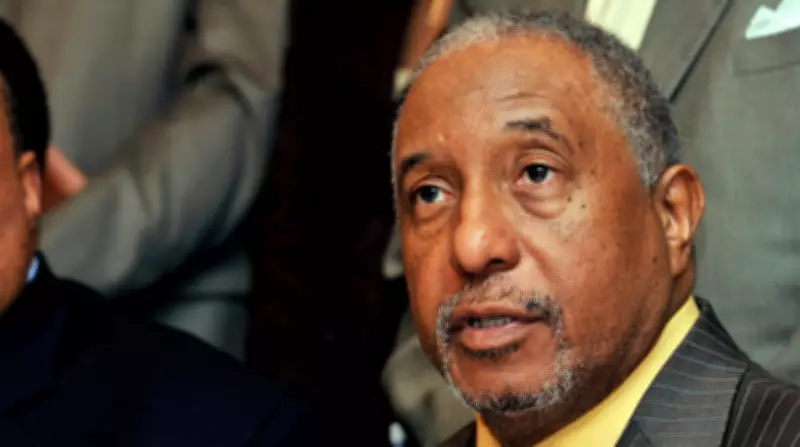
Civil Rights Pioneer Bernard LaFayette, Architect of Selma Voting Campaign, Dies at 85
Bernard LaFayette, the civil rights leader who performed the dangerous advance work for the historic voter registration campaign in Selma, Alabama, that ultimately resulted in the passage of the landmark Voting Rights Act of 1965, has passed away. His son, Bernard LaFayette III, confirmed that his father died on Thursday morning following a heart attack. He was 85 years old.
The Foundation for Bloody Sunday
While the brutal beating of future congressman John Lewis and other voting rights marchers on Selma's Edmund Pettus Bridge on March 7, 1965—an event known as "Bloody Sunday"—captured national attention and shocked the country into action, it was LaFayette who had quietly laid the essential groundwork two years earlier. His efforts created the momentum that made Selma a pivotal battleground in the struggle for voting rights.
LaFayette was part of a delegation of Nashville students who, in 1960, helped establish the Student Nonviolent Coordinating Committee (SNCC), an organization that spearheaded desegregation and voting rights campaigns throughout the American South. Initially, SNCC had removed Selma from its list of targets after preliminary assessments concluded that "the white folks were too mean and the Black folks were too scared," as LaFayette later recounted. Despite this daunting assessment, LaFayette insisted on attempting to organize there.

Building Leadership Amid Extreme Danger
Appointed director of the Alabama Voter Registration Campaign in 1963, LaFayette moved to Selma. Together with his former wife, Colia Liddell, he methodically worked to build the leadership capacity of local residents, convincing them that meaningful change was achievable and fostering an unstoppable momentum. He documented this critical period in his 2013 memoir, In Peace and Freedom: My Journey in Selma.
The perils he faced were severe and constant. On the same night civil rights activist Medgar Evers was murdered in Mississippi in 1963—part of what the FBI described as a conspiracy to kill civil rights workers—LaFayette survived an assassination attempt. He was beaten outside his home before his assailant pointed a gun at him. His calls for help brought a neighbor armed with a rifle. In a tense moment, LaFayette found himself standing between the two men, pleading with his neighbor not to shoot.
Reflecting on that harrowing experience, LaFayette wrote that he felt "an extraordinary sense of internal strength instead of fear." He chose to look his attacker directly in the eyes, embodying his belief that nonviolence is a struggle "to win that person over, a struggle of the human spirit." He also later acknowledged that his neighbor's rifle may have been what ultimately saved his life.
A Life Dedicated to Nonviolent Activism
By the time the Selma campaign reached its climax in 1965, LaFayette had already moved to Chicago to begin a new project. He had planned to join the Selma-to-Montgomery march on its second day, which meant he missed the violent confrontation of Bloody Sunday. "I felt helpless at a distance," he wrote. "I was stricken with grief, concerned that so many people in my beloved community were hurt, possibly killed." His response was swift and decisive: he mobilized people in Chicago and arranged transportation to Alabama for the subsequent march, which commenced two weeks later as a victory march following President Lyndon Johnson's introduction of the Voting Rights Act to Congress.
LaFayette's commitment to justice was forged early. He recalled a childhood incident in Tampa, Florida, when he was seven years old. Attempting to board a segregated trolley with his grandmother, they were forced to pay at the front and walk to the back to enter. The conductor drove off before they could board, causing his grandmother to fall. "I felt like a sword cut me in half, and I vowed I would do something about this problem one day," he wrote. His grandmother, believing he was destined for the ministry, arranged for him to attend the American Baptist Theological Seminary (now American Baptist College) in Nashville.

There, he roomed with John Lewis. Together, they played key roles in the nonviolent civil disobedience campaign that led Nashville to become the first major Southern city to desegregate its downtown accommodations. Just weeks after the Supreme Court banned segregation in interstate travel in 1960, the two roommates integrated a Greyhound bus while traveling home for Christmas, sitting defiantly at the front. President Barack Obama, eulogizing Lewis in 2020, highlighted their immense courage: "Imagine the courage of these two people ... to challenge an entire infrastructure of oppression. Nobody was there to protect them. There were no camera crews to record events."
Expanding the Movement
In 1961, LaFayette left college during final exams to join an official Freedom Ride, part of the broader effort to force Southern compliance with desegregation rulings. He was beaten in Montgomery, Alabama, and arrested in Jackson, Mississippi, becoming one of over 300 Freedom Riders incarcerated at Parchman Prison.
His activism continued in Chicago, where he trained Black youth for the Chicago Freedom Movement and helped organize tenant unions. "The tenant protections we have today are really a direct outcome of that work in Chicago," noted Mary Lou Finley, a professor emeritus at Antioch University Seattle who collaborated with LaFayette. He also organized high school students to screen toddlers for lead poisoning, pushing Chicago to develop the nation's first mass screening program for the condition.
"Bernard has always worked quietly behind the scenes," Finley said. "He has avoided the spotlight. In some ways, I think he felt like he could do more if he were doing it quietly."
LaFayette worked with Andrew Young and the Southern Christian Leadership Conference to prepare for Rev. Martin Luther King Jr.'s challenging Northern campaign. By 1968, he was national coordinator of King's Poor People's Campaign and was with King at the Lorraine Motel on the morning of his assassination. King's final words to him emphasized the need to "institutionalize and internationalize" the nonviolence movement—a mission LaFayette embraced for the rest of his life.
A Global Legacy of Peace
After King's death, LaFayette completed his bachelor's degree at American Baptist College and earned a master's and doctorate from Harvard University. His subsequent roles were numerous and impactful: director of Peace and Justice in Latin America; chairperson of the Consortium on Peace Research, Education and Development; director of the Center for Nonviolence and Peace Studies at the University of Rhode Island; distinguished senior scholar-in-residence at Emory University's Candler School of Theology; and minister of the Westminster Presbyterian Church in Tuskegee, Alabama.
"Bernard did work in Latin America with violent groups there. He did nonviolence workshops in South Africa with the African National Congress. He went to Nigeria when the civil war was happening there," Andrew Young remarked. "Bernard literally went everywhere he was invited as sort of a global prophet of nonviolence."
DeMark Liggins, president of the Southern Christian Leadership Conference, stated that LaFayette's "legacy lives in the thousands if not hundreds of thousands of people he helped both in America and abroad."
In his memoir, LaFayette reflected that the constant threat of death during the early years of organizing taught him that the value of life "lies not in longevity, but in what people do to give it significance." His life was a profound testament to that belief, leaving an indelible mark on the fight for civil rights and the global pursuit of nonviolent change.