

Eyewitness Videos Contradict Official Account of ICE Shooting in Minneapolis
Cellphone videos captured by bystanders during the fatal shooting of Alex Pretti by an Immigration and Customs Enforcement agent in Minneapolis have emerged as crucial evidence challenging the Trump administration's version of events. While federal officials labeled Pretti "an assassin," multiple eyewitness recordings show a different sequence: Pretti assisting a protester who had been pepper-sprayed before being restrained on the ground and shot.
Discrepancies Between Official Statements and Visual Evidence
The Department of Homeland Security initially claimed in an official statement that Pretti approached officers while brandishing a handgun. However, publicly available videos clearly depict him holding only a cellphone as officers approached. This stark contradiction between government accounts and visual evidence has sparked national outrage and renewed discussions about accountability in law enforcement operations.
The Constitutional Right to Record Faces Government Opposition
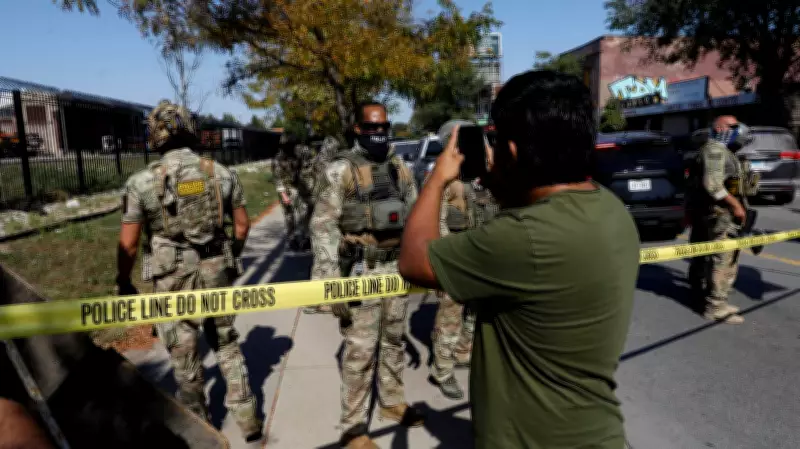
While the First Amendment protects the right to record law enforcement activities in public spaces, federal officials have repeatedly criticized this practice. Last year, Department of Homeland Security Secretary Kristi Noem characterized videotaping agents during operations as "violence." In response to inquiries about recording policies, ICE stated: "The public has the right to peacefully record law enforcement operations from a safe location, as long as they do not impede law enforcement actions or endanger the safety of law enforcement officers."

Nithya Nathan-Pineau, a policy attorney at the Immigrant Legal Resource Center, notes the concerning reality: "Even if what you are doing is constitutionally protected, it doesn't mean that DHS will treat you with respect and allow you to continue that activity." The risks extend beyond mere disapproval; observers have faced retaliation including revoked travel privileges and, in Pretti's case, lethal consequences.
Practical Guidelines for Recording ICE Encounters Safely
Despite significant personal risks, documentation remains powerful. David Huerta, senior digital security trainer at Freedom of the Press Foundation, acknowledges: "There's no guaranteed safe way to record ICE right now, but there are ways to at least do so with as many safety measures as one could put in place." Experts have developed comprehensive guidelines for those choosing to document enforcement actions.
Preparation Before Recording
Device Security: If using your primary phone, disable Face ID and create a strong alphanumeric passcode. Huerta emphasizes: "The good thing about both iPhones and Android phones is that you have the ability to have alphanumeric codes, so you can have letters and numbers," which significantly enhances security. Ensure all operating system updates are current to protect against forensic extraction tools used by federal agents.
Safety in Numbers: Never record alone. Nathan-Pineau stresses: "I think that's super important, because it also adds to the protection of the observers to have other observers there." Multiple observers filming simultaneously creates corroborating evidence that counters potential claims of fabrication or AI-generated content. Jaime Longoria of the Disinformation Defense League explains: "The one thing that AI has so much trouble doing is producing video of the exact same incident from different angles. So corroboration with other eyewitness media is the best."
Documentation Techniques During Recording
Verification Through Narration: Verbally state the time, date, and approximate location while filming. Longoria advises: "Make sure to mention the time, the date and an approximate location, so that whoever is seeing this video can actually pin it down to a specific location or time during the day." Capturing landmarks and street signs further aids verification.
The SALUTE Acronym: Nathan-Pineau teaches observers to remember:

- S - Size or strength: Note the number of officers and vehicles
- A - Activity: Describe what officers are doing
- L - Location: Identify the specific setting
- U - Uniform: Describe officer attire and masking
- T - Time or date: Record when the encounter occurs
- E - Equipment: Note weapons and special tools being used
Maintaining Appropriate Boundaries
Nathan-Pineau clarifies the observer's role: "You're there to observe. You are not there to physically put yourself between the officer and the person being arrested. This is about documentation." If officers request distance, comply verbally while continuing to record: "Say out loud, 'I hear you, and I'm stepping back.' And then you're recording yourself saying that too."
When challenged about recording in public spaces, Nathan-Pineau suggests responding: "I'm standing on a public sidewalk. I am allowed to stand here and film."
Protecting Privacy and Evidence
Focus on Agents: Whenever possible, avoid capturing faces of detained individuals. If faces are recorded, obscure them before sharing footage. Experts generally discourage livestreaming because it may expose identities without consent and potentially escalate officer hostility.
Preserving Footage: If phone seizure appears imminent, stop recording and power down completely. Huerta explains this "is probably the best protection, because then it's in a fully encrypted state at that point."
Maintaining Original Files: For verification purposes, never edit recordings with cuts, text, overlays, or voiceovers. Don't modify metadata or even change file names. Longoria emphasizes: "Taking these extra steps makes a huge difference, because you want to make sure that you are dealing with an unmodified piece of media through and through."
Secure Distribution of Evidence
Share footage first with trusted organizations like immigrant rights groups or established media outlets. This protects observer identities and ensures proper verification. Longoria notes: "If you are the person on the ground sending the video and you post from a personal account, that's also a way for other folks to identify you and to potentially make you a target as well."
Why Documentation Matters Despite Significant Risks
Following the fatal shooting of Renee Good in Minnesota, Governor Tim Walz urged residents: "Carry your phone with you at all times and hit record when they see ICE agents in neighborhoods. Help us create a database of the atrocities against Minnesotans, not just to establish a record for posterity, but to bank evidence for future prosecution."
Despite the dangers, public interest in monitoring ICE activities has surged. After Pretti's death, Nathan-Pineau witnessed overwhelming response to observer training in the Washington, D.C. area: "More than 1,700 people signed up for a training with a capacity of 1,000. And I think that really says something about how many people feel that what Alex Pretti was doing is something that is important to keep doing."
Nathan-Pineau reflects on the current climate: "It's unfortunately a really scary time to be engaged in this work, but we are still seeing a huge interest in people who want to come out and protect their neighbors." The tragic case of Alex Pretti demonstrates both the vital importance of eyewitness documentation and the sobering realities facing those who exercise this constitutional right.





