

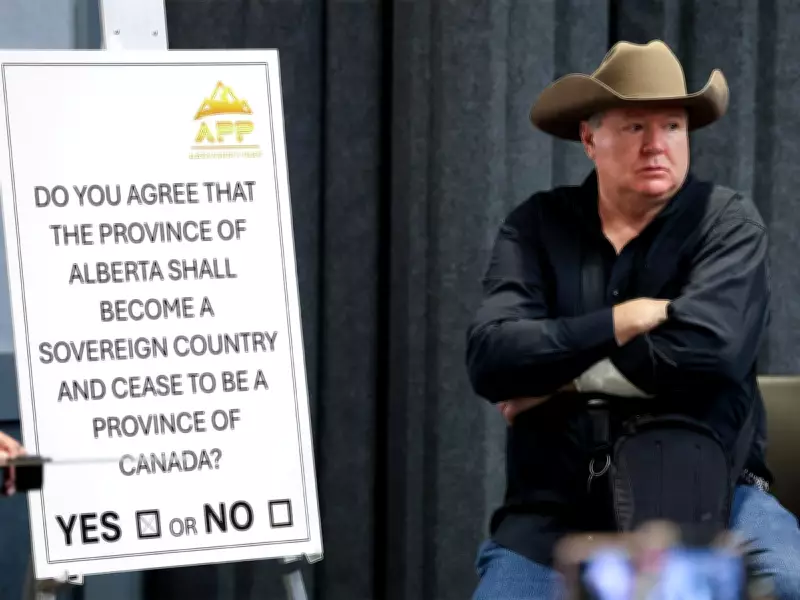
Alberta Separatists Confident Fall Vote on Independence Will Proceed
Jeffrey Rath, a prominent figure within the Alberta Prosperity Project, is expressing considerable optimism about the ongoing petition campaign that seeks to place the question of Alberta's separation from Canada on a provincial ballot this autumn. Rath, speaking from Calgary, described the current momentum as overwhelmingly positive, with signature collection efforts progressing at a rapid pace.
Petition Drive Gaining Significant Traction
According to Rath, the campaign has witnessed substantial public engagement, with lineups forming across the province as residents brave cold weather to add their names to the petition. The initiative requires 177,732 valid signatures to trigger a provincewide vote on independence, a threshold Rath believes will be comfortably met.
"We're crushing the 12,000 signature-a-week benchmark," Rath stated emphatically. "As far as getting to the 178,000 signatures, we're well ahead of the curve. We're crushing our goal on that."

Organizational Growth and Ambitious Targets
The campaign has reportedly overcome initial organizational challenges, now boasting over 5,000 registered canvassers actively collecting signatures. While the primary goal of 177,732 signatures appears within reach, Rath acknowledged a more ambitious secondary target of one million signatures presents a steeper challenge, requiring approximately 62,500 signatures weekly—a pace he admits they are currently "behind the curve" on achieving.
Political Dynamics and Criticism
The petition drive has ignited considerable political debate. Rath claims that multiple members of the legislature from Premier Danielle Smith's United Conservative Party (UCP) have signed the petition, with others reportedly prepared to do so. He criticized Premier Smith for what he characterized as preventing these MLAs from publicly endorsing the petition, calling the approach "undemocratic."
The campaign has also faced vocal opposition. Former Alberta Premier Jason Kenney recently dismissed the separatists as "a small minority of kooks," while British Columbia Premier David Eby has also been critical. Rath, however, views such attacks as beneficial to his cause. "Every time Jason Kenney attacks us or B.C. Premier David Eby attacks us, it just reminds another 100,000 Albertans to go out and sign the petition," he remarked. "Keep it up. We love it. It's awesome."
Broader Context and Public Sentiment
Rath addressed those who doubt the campaign's seriousness, suggesting that underestimation only fuels further support. "The more they underestimate us, the more they insult us, the more they denigrate us, the more it reminds Albertans to sign the petition," he said.
The situation in Alberta unfolds against a backdrop of renewed separatist sentiment elsewhere in Canada, notably in Quebec, where a separatist political party stands a strong chance of winning an upcoming election. This parallel highlights the ongoing national conversation about provincial autonomy and constitutional arrangements.
With the fall target date approaching, the Alberta independence petition campaign represents a significant political movement, one that its leaders believe is steadily building toward a historic vote on the province's future within Confederation.






