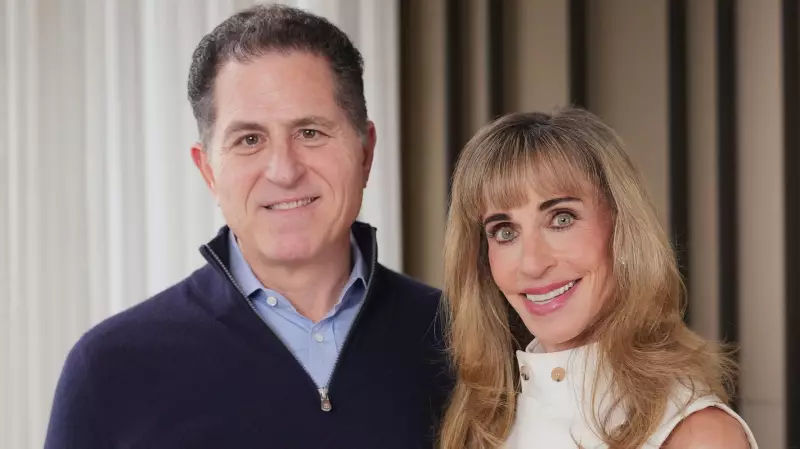
In a landmark act of philanthropy, billionaire tech mogul Michael Dell and his wife Susan have pledged an unprecedented $6.25 billion to support a new federal program designed to build wealth for American children. The commitment, announced on GivingTuesday, is believed to be the largest single private gift ever directed toward U.S. children.
A Historic Gift for a New Generation
The Dells' massive donation will provide a direct boost to the recently enacted "Trump Accounts" program. This initiative, part of President Donald Trump's signature tax and spending legislation signed into law in July 2025, sees the U.S. Treasury deposit $1,000 into an investment account for every American child born between January 1, 2025, and December 31, 2028.
The Dell family's contribution will utilize the same infrastructure to provide an additional $250 to each eligible child under the age of 11. Their gift is specifically targeted at children living in ZIP codes with a median family income of $150,000 or less who will not receive the initial $1,000 federal deposit.

"We believe that if every child can see a future worth saving for, this program will build something far greater than an account. It will build hope and opportunity and prosperity for generations to come," said Michael Dell, founder and CEO of Dell Technologies, whose net worth is estimated at $148 billion.
How the 'Trump Accounts' Program Works
Under the new law, "Trump Accounts" are available to any American child under 18 with a Social Security number. Contributions must be invested in an index fund tracking the overall stock market. Funds become accessible when the account holder turns 18 and can be used for education, a first home purchase, or to start a business.
The Dells explained that using ZIP codes to target their gift was "the clearest way to ensure the contribution reaches the greatest number of children who would benefit most," a method permitted by federal law for outside donors.
While the accounts were signed into law in July 2025, they are scheduled to officially launch on July 4, 2026, a date chosen by the Dells to mark the 250th anniversary of U.S. independence. "We want these kids to know that not only do their families care, but their communities care, their government, their country cares about them," Susan Dell told The Associated Press.
Political and Philanthropic Implications
The rollout of these accounts carries significant political weight. The initial $1,000 deposits from the Treasury are set to begin in the midst of the 2026 midterm elections and are slated to end just after the 2028 presidential election, providing a tangible benefit to millions of voters.
The White House welcomed the Dells' commitment, with spokesperson Kush Desai calling it a model for others. "The One Big Beautiful Bill’s Trump Accounts are a revolutionary investment by the federal government into the next generation of American children," Desai said. "It’s also President Trump’s call to action for American businesses and philanthropists to do their part, too."
Philanthropy experts and policy advocates see potential in the program's structure. Brad Gerstner, a venture capitalist who advocated for the legislation, noted the challenge of giving effectively at scale. "It’s hard to give effective dollars away at scale, particularly to the country’s neediest kids in a way that you have confidence that those dollars are going to compound with the upside of the U.S. economy," he said.
Ray Boshara, a senior policy adviser, expressed optimism, comparing the program's evolution to other major policies like Social Security. "They start off fairly flawed, but get much better and more progressive and inclusive over time. And that’s how we think about Trump Accounts. It’s a down payment on a big idea," Boshara stated.
The Dells, through their foundation, have reported giving $2.9 billion since 1999, primarily focused on education. Susan Dell indicated this latest commitment grew over time. "We’re thrilled to be spearheading this in the philanthropy sector... we know that more people are going to jump on board," she said.

While the accounts aim to build long-term assets, experts caution they are not an immediate poverty solution. Cuts to Medicaid, food stamps, and child care included in the same spending package may reduce support for low-income families in the near term.
The Dells hope their historic pledge will encourage families to claim the accounts and contribute additional funds, however small, allowing the investments to grow alongside the market for nearly two decades before the children gain access.