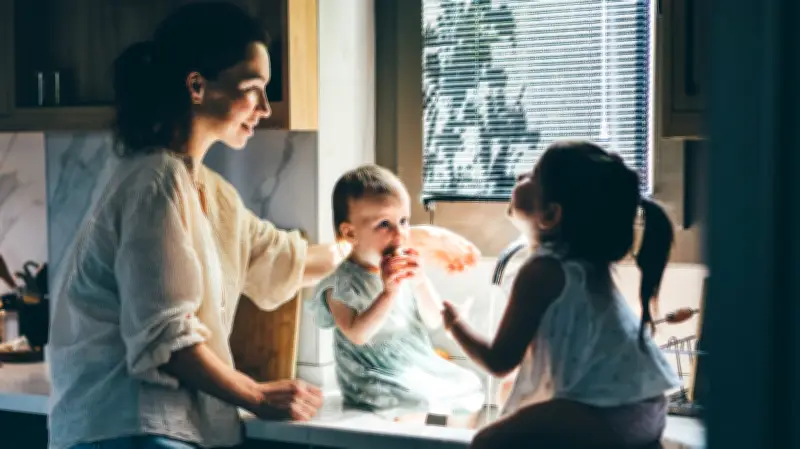
When a nanny steps into a new home for the first time, they are not just entering a workplace but also gaining an intimate glimpse into a family's personal life, complete with routines, rules, traditions, and eccentricities. Professional nannies agree that the initial meeting offers a wealth of clues about how a household functions, from cleanliness to refrigerator contents and television choices.
Kitchen Organization Reveals Family Flow
Nannies universally agree that the kitchen is a key indicator of a family's inner workings. Shannon Parola, a California-based childcare specialist and longtime professional nanny, told HuffPost, "You can usually tell pretty quickly whether a family is an 'everything has a place' household or a 'we are surviving the week' household." She noted that the organization of snack drawers, lunch containers, coffee stations, and water bottles reveals "the true flow of the home." Parola added, "I always notice this because the kitchen is often the command center for children's routines."
What's on the Fridge Tells a Story
Chloe Savage, a part-time nanny from Tennessee, considers the refrigerator the family's "center of gravity" and loves examining its front. "It feels like a little personality board for the family," she said. "Kids' artwork always stands out to me because it's just so honest and unfiltered. You can tell when kids are really encouraged to be creative because the fridge turns into this full-on rotating gallery. When there's nothing on it, it also stands out in a different way, almost like the home is more minimal or fast-paced. Neither is good or bad, it just tells you something about the rhythm of the household."

Inside the Fridge: The Ozempic Effect
Alie Moya, founder of Brooklyn Manny & Nanny and a former professional nanny, focuses on fridge contents. She coined the term "Ozempic fridge" to describe homes where parents are taking weight loss drugs. "You can spot it the second you open the fridge. A couple condiments, some sparkling water, maybe one sad yogurt. Meanwhile the nanny is in there starving," Moya said. However, she stressed that children are not neglected, as kid-friendly snacks and produce are always available. In such cases, nannies often need to pack lunch or arrange a DoorDash stipend. Parola added that fridge contents reveal "which kids are in a picky eating phase, which parent meal preps, who buys aspirational vegetables and which condiments have somehow become permanent residents."
Dishwasher Rules: A Personality Test
Moya calls dishwasher loading "the ever controversial dishwasher saga," noting that some families rinse dishes before loading while others load them covered in food. Niihalani Teare, a Florida-based former nanny and household manager who now works as a domestic recruitment specialist for Household Staffing, described dishwasher rules as "a personality test." She said, "Every family has strong opinions about where things go and somehow nobody agrees with each other. The same goes for toilet paper. Some families are passionate about over, others swear by under and everyone thinks their way is the only correct way. Those little household quirks always made me smile because every family has these tiny debates and routines that become part of their identity."
Cleanliness and Burnout Risk
Hailey Boylan, a Massachusetts-based nanny, emphasized that overall home care signals respect. "I know I feel valued and respected when I do not have to come in after the weekend to a pile of dirty dishes in the sink, the toy room absolutely destroyed, or the dogs hair and muddy paws all over the furniture. I have been in positions where this was not the case, and I burned out quickly," she said. Lisa Stenach, an Alaska-based nanny, noted that overly clean homes may have strict structure, while extremely messy homes suggest a lack of routine. "My experience says that structure and routine don't ever happen there, and I should expect to have an ever-changing schedule and duties, and I'll be lucky to be told about birthday parties, swim lessons and appointments five minutes before they start," Stenach said. She described a "lived-in" home as ideal, indicating balance and flexibility.

Toys and Play Areas Reveal Parenting Style
Jamie Wolverton, a Washington state-based nanny, looks for age-appropriate toys, especially for children aged 9 months to 1.5 years, to gauge if parents invest in milestone achievement. She also notes whether play areas are designated or the whole home is kid-friendly. "That tells me a lot about their flexibility, adjustability and whether they embrace the chaos of having children," Wolverton said.
Atmosphere vs. Vibe
Teare pays attention to whether a home feels warm and lived-in, citing books on couches, scattered toys, and cooking smells as more revealing than perfect organization. Moya cautioned that families often claim to be "super relaxed," which she takes as a wish rather than reality. "Meanwhile, the relaxed family has a laminated schedule on the fridge and very real feelings about where the snacks go. I love them for it," she said. "'Relaxed' is the vibe board. The house is the reality."