Motherhood Rewired: Finding Adventure and Stability Through Family Relocations
When our plane touched down in Spain, I anticipated the usual relocation challenges: bureaucratic paperwork, language barriers, and finding quality schools for my children. Surprisingly, none of these proved to be the true difficulty.
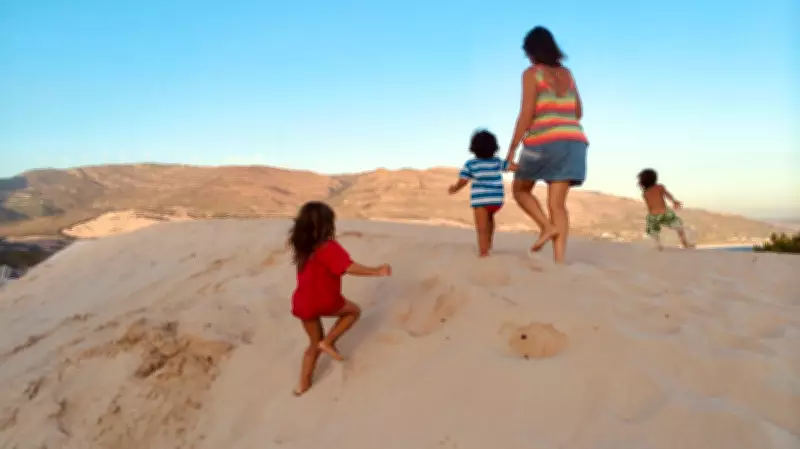
One afternoon shortly after our arrival, I took my son to the beach. He spotted a pod of dolphins swimming near the shore and erupted in shouts of pure excitement before I could even process the sight. His joy was unrestrained—loud, physical, and vibrantly alive. Standing there, I felt a sudden realization wash over me: somewhere along my journey into motherhood, I had unconsciously accepted that moments of pure wonder and awe were no longer meant for me.
The Unspoken Shift in Motherhood Expectations
This experience highlighted what society rarely voices about motherhood. You don't stop craving adventure; you simply learn that such desires are no longer encouraged. The cultural expectation shifts toward providing stability—becoming the constant background hum that keeps family life running smoothly.

Before having children, I lived abroad extensively, exploring over fifty countries and considering myself someone who thrived on change. Yet when I became a mother, a subtle but persistent message began to emerge: the responsible choice was to stay put. I never stopped wanting to explore the world, but I started questioning whether I was still permitted to pursue that longing.
For our family's first few years, we settled into a conventional London lifestyle characterized by:
- Rigid routines and work schedules
- Daily nursery runs and school commitments
- The unspoken assumption that novelty had surrendered to stability
Despite this structured existence, my restlessness never completely disappeared.
The Relocation Experiment That Became a Lifestyle
Our decision to move to Spain began as an experiment—an opportunity to experience life somewhere different while our children remained young enough to adapt easily. This initial relocation established a pattern that would define our family's journey.
Over the years, we moved eight times as a family unit, living in:
- Spain
- Italy
- Switzerland
- Northern Ireland
Some moves were motivated by language learning objectives, while others simply represented our desire to experience different rhythms of life. Through these transitions, our children developed remarkable adaptability skills:
- Mastering quick introductions and meaningful farewells
- Acquiring fragments of multiple languages with creative mixed spellings
- Maintaining friendships across time zones and continents
Beneath these practical outcomes lay our deeper intention: to teach our children that the world extends far beyond any single location and to help them develop comfort within multiple cultural contexts. Yet I still carried quiet guilt, wondering if our frequent uprooting exposed them to instability they should have been shielded from.
The Reality Behind the Glamorous Facade
Relocation appears glamorous from a distance but reveals itself as a series of practical puzzles in reality:
- Securing housing with adequate heating systems
- Translating school communications and administrative documents
- Explaining cultural differences like 3 p.m. lunch schedules that nobody questions
Beyond these logistical challenges exists the emotional labor of starting over repeatedly. When one of my children began acting out after a particularly difficult move, I initially dismissed it as normal adjustment stress. Only later did I recognize it as grief—the low-level variety that manifests through bad moods and exhaustion rather than overt tears.
This realization prompted a fundamental shift in our approach. While we had become skilled at discussing the excitement of new beginnings, we had neglected to acknowledge what we were leaving behind. Before subsequent moves, we began intentionally discussing both losses and potential gains:

- Friendships that would change but not necessarily end
- Familiar streets and neighborhood landmarks
- Local shops and community connections
These conversations didn't eliminate the pain of goodbyes, but they introduced honesty into our transition process.
Redefining Stability Through Family Rituals
Observing my children's adaptation forced me to reconsider what stability truly means. For our family, anchors emerged through simple but consistent rituals:
- Family dinners where everyone could express what they missed and what excited them
- Space for contradictory emotions to coexist in the same conversation
- Recognition that stability resides in emotional connection rather than physical permanence
Children frequently demonstrate greater transition skills than adults. They immerse themselves in new environments and form connections rapidly, while parents often cling to familiar structures, mistakenly equating routine with safety.
Stability isn't about one permanent postal code. Perhaps it's about feeling emotionally anchored wherever life places you.
The Unexpected Gifts of Global Parenting
Gradually, I began recognizing what our children were gaining through these experiences:
- Comfort entering unfamiliar spaces and situations
- Early understanding that people live differently across the world
- Natural curiosity about cultural and linguistic differences
- Perspectives they wouldn't have developed in a smaller world
They learned that identity can stretch across multiple places, languages, and communities. They discovered that belonging doesn't require attachment to a single passport or geography. These are substantial lessons by any measure.
Slowly, I also understood what these moves were teaching me about motherhood itself: Raising children isn't about protecting them from change; it's about demonstrating how to navigate through it with resilience and openness.
Rewiring Motherhood's Narrative
For years, I believed motherhood had narrowed my world. In reality, it rewired my understanding of adventure and possibility. Adventure doesn't necessarily mean extreme physical risks; for our family, it meant moving toward lives that felt authentic, even when they diverged from societal expectations.
That beach afternoon with my son shouting at dolphins reminded me of what I had forgotten: adventure and awe aren't exclusive possessions of the young or exceptionally brave. They remain available to anyone willing to pay attention and remain open to wonder.
Perhaps this represents the most valuable lesson I hope my children carry forward: their world is permitted to be expansive, changeable, and continuously full of new beginnings. Motherhood didn't end my adventure—it transformed it into a shared journey of discovery that continues to reshape our family's understanding of home, belonging, and what truly matters.