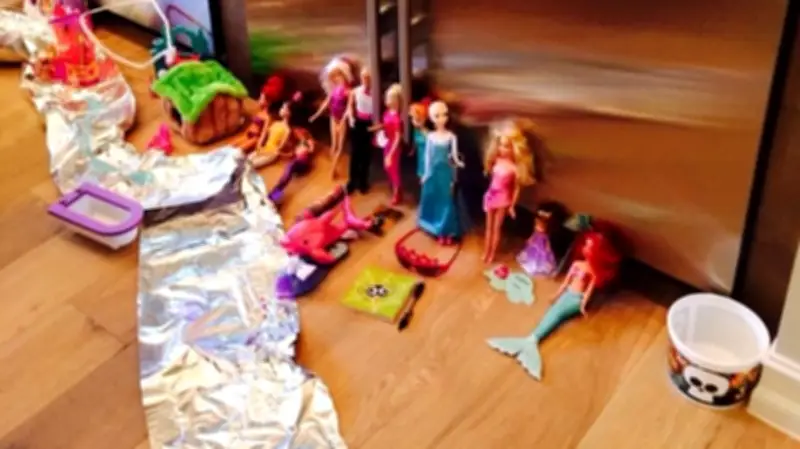
When our daughter was preschool-aged, Princess Ariel dolls filled every corner of our home. Our once peaceful interior, a mix of coastal and cottage design, resembled a neglected aquarium filled with plastic ornaments but no real fish.
Living the Mermaid Fantasy
Our child dressed the part as well: whether heading to the playground or the grocery store, her tiny toes peeked out from under a sparkling green fishtail. As a former clinical social worker, I understood that imaginative play is crucial for child development, but I worried about the extent of fantasy we were encouraging. I was also exhausted. While she twirled in a red wig, I was cast unwillingly as Prince Eric. My throat ached from forcing a deep voice every day.
One evening, I found rose petals scattered around plastic doll furniture and knew a wedding was imminent, but I couldn't endure another moment of make-believe. I begged my husband, Tomer, to take over. "No way," our daughter said. "Daddy's no good at dolls. Mommy's the best."

It was a contest I wanted to lose, but never did. Tomer insisted he lacked creativity, but I suspected he was feigning incompetence to gain personal time. When would I reclaim an adult life? His career was flourishing, while I had traded mine for full-time parenting. Tomer tried to help, but when left alone with our kid, he took her shopping for more toys—a strategy to avoid actual playtime.
"I can't sit on the floor," he said. "It hurts my back."
One morning, I found scissors beside a life-size styling head and followed a trail of synthetic hair into the bathroom, where red clumps clogged the toilet. As I plunged the bowl, guilt churned my stomach. After all, I depended on their shopping sprees for a break.
A New Approach
Determined to change course, I insisted Tomer try something new—perhaps an art project—while seated comfortably at the table. Later that afternoon, laughter echoed from the dining room. Were they crafting? Yes. It seemed a miracle until I looked up and saw toilet paper, probably three rolls of it, dangling from the chandelier. "It's a coral reef," they explained.
Tomer winked. "I did the parts she couldn't reach." Our daughter jumped around. "I did the rest all by myself." The "rest" included stacked paper cups and piled pillows. A roll of aluminum foil covered our wood flooring to mimic water's reflective quality. In the middle of the table was a silver-plated fork.
She beamed. "That's Ariel's hairbrush."
I frowned. "That's fancy cutlery."
"That we never used," Tomer said. What could I say? The man had done as I asked. I went to bed feeling a mix of hope and dread. By morning, the coral reef had grown. Paper cups climbed the stairs; aluminum foil lined the banister. I could have cleaned up or made them do it, but I lacked energy, so the reef kept expanding.
Creativity and Concern
Whatever our daughter didn't own, she created from found materials. For a mermaid carnival, she sprinkled sugar on lint gathered from the clothes dryer and called it cotton candy. I couldn't help but feel proud of her resourcefulness; moreover, since the mess was homemade, I thought things were improving. Then, Disney released a new movie. Tomer took our daughter to see it, and when they returned, she ran straight to the chandelier and ripped off the toilet paper. As Scott Tissue drifted down, our kid shouted, "Let it snow!" By nightfall, a new cast of characters moved in. For every Queen Elsa, there was also a Princess Anna. A single snowman named Olaf seemed to reproduce despite having no mate. Ariel's ocean turned to ice, but our daughter still invited mermaids to every "Frozen"-themed event.
When I complained about the new purchases, Tomer pushed back. "It makes me happy to see her happy, and nothing makes her happier than another doll."
But there was one night that Tomer seemed to share my concern. He came home hungry, peered into the refrigerator, and found nothing but dolls, apple juice, and faux food. "Olaf is hosting an ice cream social," I explained. "This is out of control," he said. "But look at her creativity." I pointed at the bottom shelf, where she had placed a sea monster molded from Play-Doh and green Jell-O. Tomer sighed and ordered a pizza.

Seesaw Parenting
Our marriage dynamic resembled a seesaw. When one of us overindulged, the other would try to contain the madness. Then, we would swap places all over again. Meanwhile, we never conquered the clutter, and I worried the mess amounted to worse than aesthetic harm. "What if she ends up caring more about material possessions than human relationships?"
"She's not going to care about toys forever," Tomer said.
Time proved him right. In late 2019, our daughter stopped playing. It seemed sudden and felt sad. Then, the COVID pandemic arrived, and we got stuck at home with all those abandoned toys. Like everyone else, we ran low on toilet paper, too. Oftentimes, I caught myself gazing at the chandelier, longing for the backup supply that had once draped down.
A Heartwarming Turn
Another month into lockdown, I learned through Facebook that a local family's home had caught fire. Everyone survived, but they had lost all their possessions. Our daughter made an announcement. "Those kids need toys, and my toys need kids. I want to give everything away." Together, we moved her playthings outside the front door. Our daughter used ribbon to tie makeshift masks over every miniature mouth. She hid lollipops and Post-it notes inside Queen Elsa's ice castle. "Enjoy! Stay safe!" Tears leaked from my eyes as she kissed each Olaf goodbye. We watched from the window as a truck pulled into the driveway. Out popped the parents and their three kids. They ran toward the mountain of toys, and what had seemed like too much for one child instantly transformed into the perfect amount to share. Our daughter grinned. "Look. They're so happy."
Her empathy exposed my foolishness. I had wasted precious years worried that our daughter's attachment to toys amounted to selfishness, but our daughter had always demonstrated kindness in all of her imagined scenarios. No doll was ever bullied or left out. I had been focused on the cluttered surface and missed the deeper level where our child had been developing interpersonal skills and moral character all along. Regret overwhelmed me. I wanted to go back, but of course, time kept moving forward.
Reflections on Growth
More recently, our daughter celebrated her Sweet 16. Before we started decorating, she insisted on removing the final traces of the coral reef: three plush mermaids were still hanging from the chandelier. They had watched over our holiday meals for longer than a decade.
Today, the mermaid trio sits in my office. Maybe a future grandchild will spark generosity, but for now, they are all mine. A source of inspiration whenever I am facing a new challenge, I notice the pastel plushies decorating my bookshelf and am reminded to search for deeper meaning in whatever seems to be taking up too much time and space.