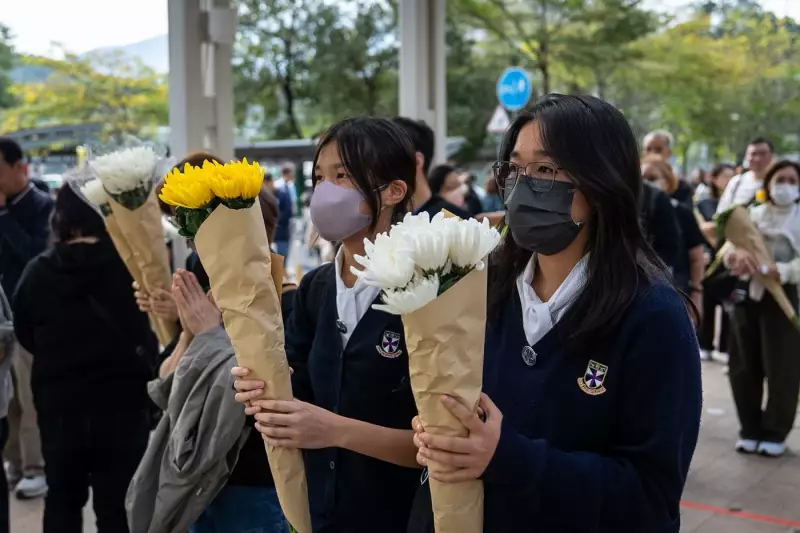
An official investigation into a devastating residential fire in Hong Kong has identified unsafe netting as a critical factor in the tragedy. The findings come as the public continues to mourn the victims, and the city's government faces scrutiny over its handling of dissent in the wake of the disaster.
Probe Points to Critical Safety Failure
The fire broke out on Wednesday, November 26, 2025, at Wang Fuk Court, a public housing estate located in the Tai Po district of Hong Kong's New Territories. The subsequent probe, details of which were revealed on Monday, December 1, concluded that unsafe netting installed on the building's exterior contributed significantly to the rapid spread of flames and smoke. This netting, often used for construction or safety purposes, failed to meet fire safety standards, trapping heat and accelerating the blaze.
A City in Mourning
Throughout the week, residents have gathered near the charred building to pay their respects. On Monday, December 1, 2025, people were seen laying flowers and offering condolences near the site. The somber scenes reflect a community grappling with profound loss. The exact number of casualties has not been independently verified in this report, but the incident has been described as one of Hong Kong's deadliest residential fires in recent years.

Government Response and Control of Narrative
While the public mourns, the Hong Kong government has been actively managing the aftermath. Authorities have moved quickly to launch the investigation and promise accountability. However, parallel efforts to stifle public dissent and control the narrative surrounding the fire have been reported. This includes monitoring gatherings and restricting public discussions that could be perceived as critical of the government's building safety regulations or emergency response. The approach highlights the ongoing tension in the city between public expression and governmental control.
The tragedy at Wang Fuk Court has exposed a dire lapse in building safety enforcement and has become a focal point for public grief. As the investigation continues, questions remain about regulatory oversight and the future prevention of similar disasters in Hong Kong's densely populated urban areas.