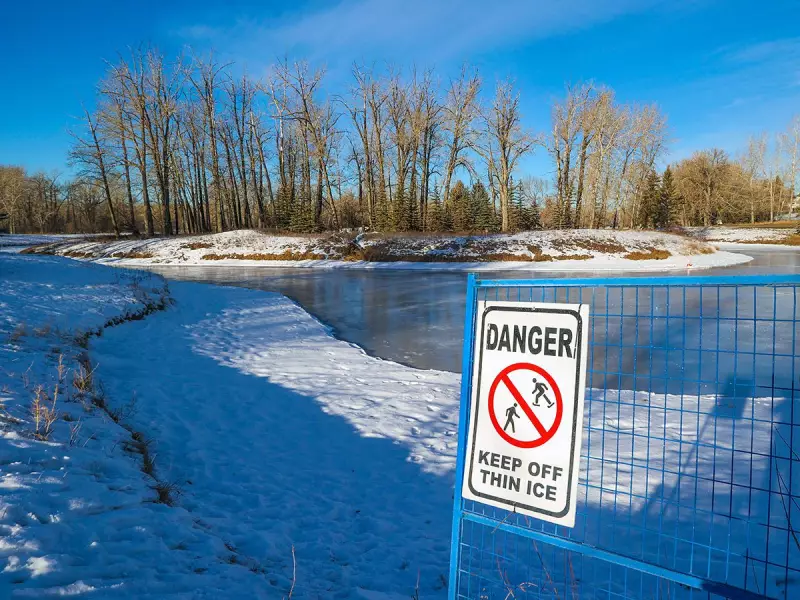
Calgary's signature winter weather, known for its dramatic temperature swings, creates a hidden peril across the city: deceptively dangerous stormwater ponds. While these frozen basins may appear to be perfect natural skating rinks, authorities are issuing a stern warning that they are unsafe for recreation year-round.
Unpredictable Ice Poses Constant Threat
The core of the danger lies in the very function of these storm ponds. Alex Kwan, a spokesman for the Calgary Fire Department, emphasized in a recent statement that the constant movement of water through these systems undermines ice stability. "Because water is constantly moving through these systems — and carrying sediment and roadway runoff — the ice can weaken without any warning," Kwan explained.
He stressed that this makes the ice capricious and hazardous. "Even in long cold stretches, the ice on storm ponds is unpredictable and never safe to walk, skate, or play on." This warning remains crucial throughout the entire cold season, regardless of how solid and inviting the surface may look.

A Visual Reminder of the Risk
The message is visibly reinforced in Calgary's parks. A file photo from January 2, 2024, taken by Gavin Young of Postmedia, shows clear "Thin Ice" signs posted in Carbon Park, cautioning the public. These signs serve as a constant, physical reminder of the invisible dangers lurking beneath a seemingly frozen surface.
Essential Safety Guidelines for Calgarians
Residents are urged to heed the following critical do's and don'ts regarding water retention ponds:
- DO NOT walk, skate, play, or let pets onto the ice of any storm pond.
- DO obey all posted warning signs in parks and near water bodies.
- DO educate children and visitors about the specific dangers of storm ponds, which differ from natural, maintained lakes.
- DO seek out designated, City-approved skating areas that are regularly inspected for safety.
The fluctuating nature of Calgary's winters, where a deep freeze can be quickly followed by a chinook, only amplifies the risk. Ice that seems thick one day can become treacherously thin the next due to underlying water flow and temperature changes. Public safety officials continue to drive home the point that for storm ponds, no ice is safe ice.