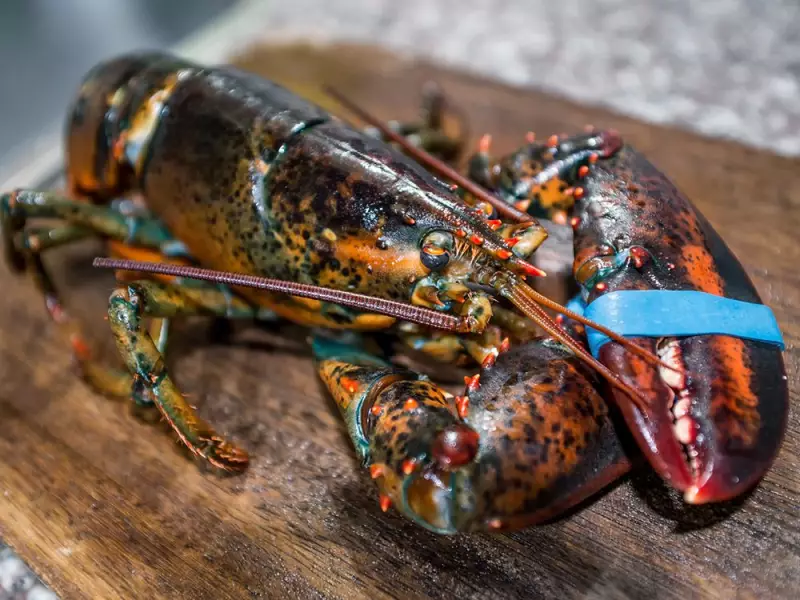
The United Kingdom has become the latest nation to officially declare the boiling of live lobsters an inhumane practice, introducing new guidance that mandates stunning the crustaceans before cooking. This move, however, is being met with strong skepticism from within Canada's fishing industry, where one veteran fisherman asserts such a ban will never gain traction domestically.
New U.K. Guidance Labels Live Boiling "Unacceptable"
On Monday, December 26, 2025, the U.K. government's Department for Environment, Food and Rural Affairs (DEFRA) unveiled new animal welfare guidance. The policy explicitly states that "live boiling is not an acceptable killing method" for lobsters, crabs, and similar decapod crustaceans. The recommended alternative is to stun the animals before they are placed in boiling water, a practice already adopted by countries including Norway, New Zealand, and Switzerland.
This decision follows a pivotal 2022 U.K. law that legally recognized invertebrates like lobsters and crabs as sentient beings capable of feeling pain. The recent guidance puts that recognition into actionable practice for the food industry.

Canadian Fisherman Dismisses Possibility of a Domestic Ban
Despite the international trend, Jonathan Lamade-Fuentes, a fisherman and co-owner of Moby Nick Fishing Charter in Mississauga, Ontario, believes a parallel ban is inconceivable in Canada. In an interview with the National Post, Lamade-Fuentes stated that legislation similar to the U.K.'s will never pass in Canada "and there is no point in Canada discussing this."
He defended the traditional practice, arguing that preparing seafood fresh is a long-standing custom. "I do not see an issue (with boiling live lobster), eating seafood fresh has been what has been happening for the last thousands of years," Lamade-Fuentes said.
Public Pressure and Industry Pushback in the U.K.
The U.K.'s policy shift is largely credited to sustained advocacy by animal welfare groups. The organization Crustacean Compassion has campaigned since 2016 for regulations against inhumane cooking methods. Their efforts culminated in 2025 with 4,000 emails and postcards being sent to DEFRA officials, urging action.
"Boiling animals alive is a cruel practice that has no place today. Scientific evidence clearly shows animals like crabs and lobsters can feel pain," said ambassador Wendy Turner Webster in a press release. Public opinion appears to support this view; a February 2025 YouGov poll commissioned by Crustacean Compassion found 65 per cent of British adults oppose the live boiling of crabs and lobster, a significant increase from 51 per cent in 2021.
Nevertheless, the new rules face opposition from the U.K.'s shellfish industry. David Jarrad, CEO of the Shellfish Association of Great Britain, warned that the requirement for stunning equipment—which can cost around £3,500 (approximately $6,640 CAD)—will burden businesses. He fears restaurants may simply switch to importing cheaper, frozen seafood from countries without such regulations.
Some restaurateurs also question the practicality of the ban. Richard Wilkins, owner of the fine dining establishment 104 Restaurant in London's Notting Hill, expressed concerns about added staff costs and questioned how the government plans to enforce the new measure effectively.
As the debate between animal welfare and culinary tradition continues abroad, Canada's industry stance suggests the familiar sight of a live lobster entering a pot is unlikely to disappear from Canadian kitchens and seafood boils anytime soon.