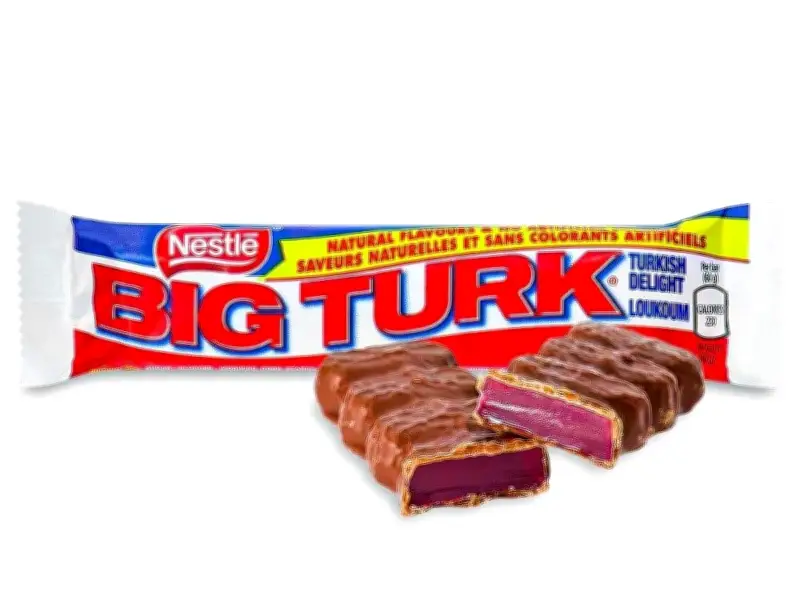
Nestle's Big Turk candy bar, a Canadian exclusive, boasts a history that stretches back centuries. The treat combines chocolate with Turkish delight, a confection that originated in Constantinople in 1777 when Haci Bekir Effendi created loukoum from wheat flour and honey or dried fruit, according to BBC Travel.
Nutritional Profile and Weight
At 230 calories and 34 grams of sugar per 60-gram bar, the Big Turk packs 60% less fat than the average chocolate bar, Nestle claims. The bar's 3.5 grams of fat contrasts sharply with other candies: Mr. Big bars, also 60 grams, contain 14 grams of fat. Big Turk is heavier than Snickers (48 g), Wunderbar (49 g), Twix (50 g), and Oh Henry! (58 g).
Historical Evolution of Turkish Delight
Cornstarch eventually replaced flour as the binding agent in loukoum, giving it the chewy texture familiar today, Snackhistory.com reports. Refined sugar entered the recipe when it reached the region at the end of the 19th century, per Britannica.com. Nestle's version adds a thin chocolate layer but omits stronger antique flavors like rosewater or bergamot, as well as nuts and dates.

Cultural Appeal and Fan Endorsement
Canadian rocker Danko Jones, known for his 1990s work with the band Lovercall, praised the bar in a 2013 HuffPost column. He recalled his Grade 5 teacher introducing him to the treat. "It's an irresistible cultural blend of east-meets-west and qualified successor to the Reese Peanut Butter Cup," Jones said. "You might be pleasantly surprised."
The Big Turk bar remains a uniquely Canadian indulgence, born in 1867, just a year younger than the United States. Its roots in 18th-century Ottoman confectionery make it a sweet piece of culinary history.