Stellantis Exits Windsor Battery Plant Partnership with LG Energy Solutions
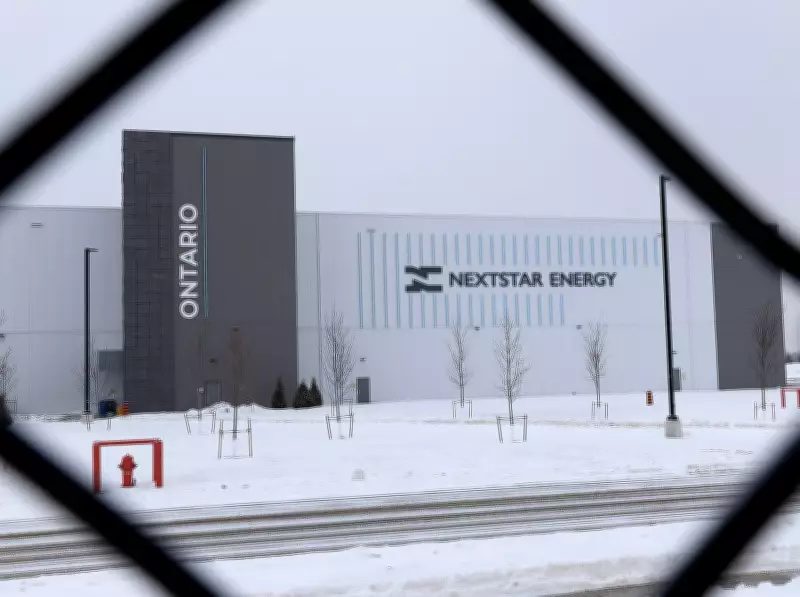
In a significant shift within the electric vehicle manufacturing landscape, global automaker Stellantis has announced the sale of its stake in the NextStar Energy battery plant located in Windsor, Ontario. The company is divesting its 49% share to its original partner, South Korea's LG Energy Solutions, granting the latter full ownership of the facility.
Details of the Strategic Divestment
The transaction, finalized in early February 2026, sees LG Energy Solutions assume complete control over the $6-billion Windsor operation. While specific financial terms remain undisclosed, this move marks a pivotal realignment for Stellantis as it navigates evolving market dynamics. The Windsor plant currently employs more than 1,300 workers, with projections indicating that number could rise to approximately 2,500 as production scales up.
David Kim, Chief Executive Officer of LG Energy Solutions, emphasized the strategic rationale behind the acquisition in an official statement. "Full ownership of NextStar Energy will enable us to respond swiftly to the growing demand from the ESS market and position us to play a key role in Canada's EV industry by securing additional North American-based customers," Kim stated, highlighting the company's ambitions within the energy storage and electric vehicle sectors.

Government Support and Industry Reactions
The NextStar Energy plant has been a focal point of substantial governmental investment, receiving billions of dollars in support from both the Ontario provincial government and federal authorities. Ontario Premier Doug Ford characterized Stellantis's decision as a sound business maneuver. "Stellantis is making a financial decision, they're still going to use their batteries for their vehicles, LG is going to hold onto the 800 employees there," Ford remarked. "I think it's a good business decision, to be frank."
However, the announcement coincided with a notable downturn for Stellantis on the financial markets. On the day of the news, the automaker experienced its largest single-day stock price decline in company history, with shares plummeting 22% on the New York Stock Exchange. This downturn reflects broader challenges within the electric vehicle sector, as Stellantis has recently absorbed a substantial US$26-billion writedown linked to model cancellations and supplier compensations amid a strategic pivot away from an all-EV focus.
Broader Context: EV Market Softening and Policy Shifts
The divestment occurs against a backdrop of shifting electric vehicle market conditions and evolving governmental policies. According to reports from Bloomberg News, Stellantis CEO Antonio Filosa attributed previous strategic missteps to his predecessor, Carlos Tavares, for overcommitting to electric vehicles despite emerging market signals.
Concurrently, the Canadian government has recalibrated its approach to electric vehicle adoption. On the eve of the Stellantis announcement, authorities halted the contentious Trudeau-era mandate that would have required 100% of new car sales to be fully electric by 2035. Instead, new emissions standards will be introduced, alongside the reinstatement of consumer subsidies for purchases of new electric and plug-in hybrid vehicles.
This policy adjustment mirrors actions taken in the United States, where President Donald Trump rescinded a similar federal EV mandate program shortly after returning to office. These developments underscore a period of transition and reassessment within the North American automotive industry, as manufacturers and governments alike adapt to changing consumer preferences and economic realities.
The sale of Stellantis's stake in the Windsor battery plant represents a strategic realignment for both companies involved, with LG Energy Solutions poised to expand its influence in the North American EV supply chain, while Stellantis recalibrates its investment portfolio in response to market pressures.