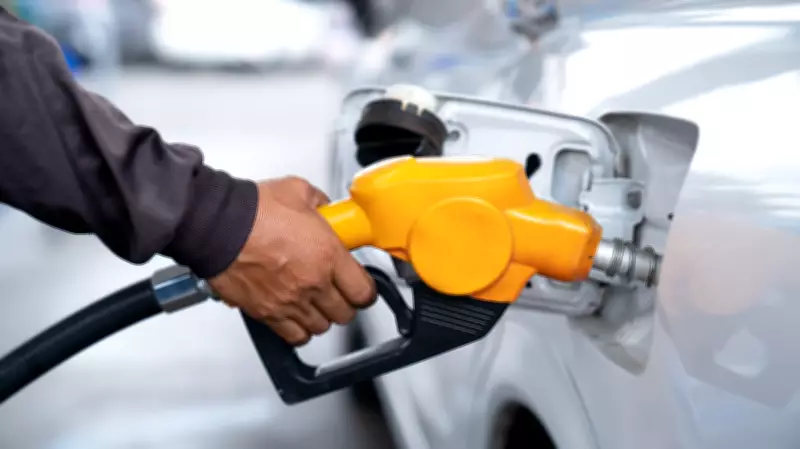
Owning a vehicle represents a significant financial commitment that extends far beyond the initial purchase price. Even when major mechanical failures are avoided, owners consistently face ongoing expenses for fuel, routine oil changes, car washes, replacement wiper blades, and numerous other costs. The cumulative financial burden can feel overwhelming. So, how can drivers effectively reduce these expenses without adding complex, time-consuming tasks to their already packed schedules?
Insights from an Automotive Authority
This pressing question was explored by Raj Punjabi-Johnson and Noah Michelson, co-hosts of HuffPost's "Am I Doing It Wrong?" podcast, during a conversation with Chaya M. Milchtein, widely known as the Mechanic Shop Femme. Milchtein is a respected automotive industry expert who educates consumers on proper vehicle care, navigating repair shops, and maximizing car ownership value.
The Critical Importance of Tire Pressure
"Monitoring and adjusting your tire pressure delivers substantial benefits for your vehicle's performance, your financial wellbeing, and most importantly, your personal safety," emphasized Milchtein, author of "Mechanic Shop Femme's Guide To Car Ownership."

When tires are inflated to their optimal pounds per square inch (PSI) — as specified on the sticker typically located in the driver's side door jamb or within the owner's manual — rolling resistance is minimized. This optimization means your vehicle operates more efficiently, requiring less energy to function properly. Essentially, improperly inflated tires lose their ideal shape, creating increased friction with road surfaces and forcing your engine to consume more fuel. This inefficiency directly translates to higher gasoline expenditures.
Maintaining correct tire pressure also extends tire lifespan, providing another financial advantage. "Properly inflated tires can last approximately 5,000 additional miles compared to underinflated tires," Milchtein explained. "That equates to nearly five extra months of driving. Considering that new tire sets often cost between $700 and $900, and even more for larger vehicles and SUVs, this represents significant savings."
A Safety Imperative Beyond Economics
Tire maintenance transcends financial considerations to become a genuine safety concern. According to recent statistics, 646 fatalities occurred in tire-related crashes during 2023, with nearly 11,000 tire-related accidents reported annually across the United States. Performing regular pressure checks is therefore critical for safety and requires minimal effort — just 30 seconds with an inexpensive manual tire gauge.
"If your vehicle has functional tire pressure monitoring sensors, you should still verify pressure manually once monthly," Milchtein advised. "For vehicles with non-functional sensors or those manufactured before 2008 without such systems, pressure checks should be conducted at least twice monthly."
Additional Fuel-Saving Strategies
The automotive expert shared several other practical techniques for reducing fuel consumption:
- Utilize Cruise Control: "Cruise control systems typically manage gasoline usage more efficiently than human drivers," Milchtein noted.
- Remove Unnecessary Weight: Eliminate heavy objects like unused bike racks from vehicle roofs, as added weight increases fuel requirements.
- Strategic Window Management: "When driving at regular road speeds, keeping windows open while turning off air conditioning usually saves fuel," she explained. "However, at highway velocities, open windows create air resistance that reduces aerodynamics, forcing engines to work harder. In these situations, keep windows completely closed."
Comprehensive Automotive Guidance
During the extensive podcast discussion, Milchtein addressed numerous additional vehicle maintenance topics, including methods for identifying trustworthy mechanics, considerations before purchasing high-octane gasoline, and various other cost-saving recommendations. The Mechanic Shop Femme provides detailed instructional resources, including tutorials on proper tire pressure verification techniques.

For drivers seeking to optimize their automotive expenditures while enhancing safety, these expert insights offer practical, easily implementable solutions that deliver measurable benefits without demanding excessive time or specialized knowledge.