Canada's Automotive Future Demands Strategic Reboot Amid Global Trade Realignments
As 2026 unfolds with significant developments on the international trade landscape, the Canadian automotive sector finds itself at a critical juncture requiring decisive action and forward-thinking strategy. The recent agreement signed on January 16 between Chinese President Xi Jinping and Prime Minister Mark Carney represents a pivotal moment for one of Canada's most vital industries.
Historical Context Meets Contemporary Challenges
The timing of this new agreement carries particular historical significance, coinciding with the 61st anniversary of the landmark Canada-U.S. Auto Pact signed in 1965. For three generations, this framework has supported Canadian automotive manufacturing, but its foundations now face unprecedented pressure from multiple directions.
The current geopolitical environment presents complex challenges for Canadian auto manufacturers. The Trump administration has repeatedly emphasized its intention to repatriate automotive manufacturing to the United States, with President Trump recently reaffirming his belief in using tariffs as tools to achieve this objective. These developments create substantial uncertainty for an industry that has long operated within a North American integrated market.

Investment Paradox and Market Realities
Despite substantial government commitments exceeding $50 billion in federal and provincial support for electric vehicle and component production since 2020, the Canadian automotive sector has experienced significant setbacks. Major manufacturers including Stellantis, Ford, and General Motors have withdrawn targets, scaled back investment commitments, and downsized production lines at Canadian facilities.
This investment paradox highlights the need for more than just financial support. As industry undertakings evaporate, Canadian authorities now face the additional challenge of recovering taxpayer dollars allocated to support these manufacturers, creating a complex situation requiring nuanced policy responses.
The China Agreement and Market Implications
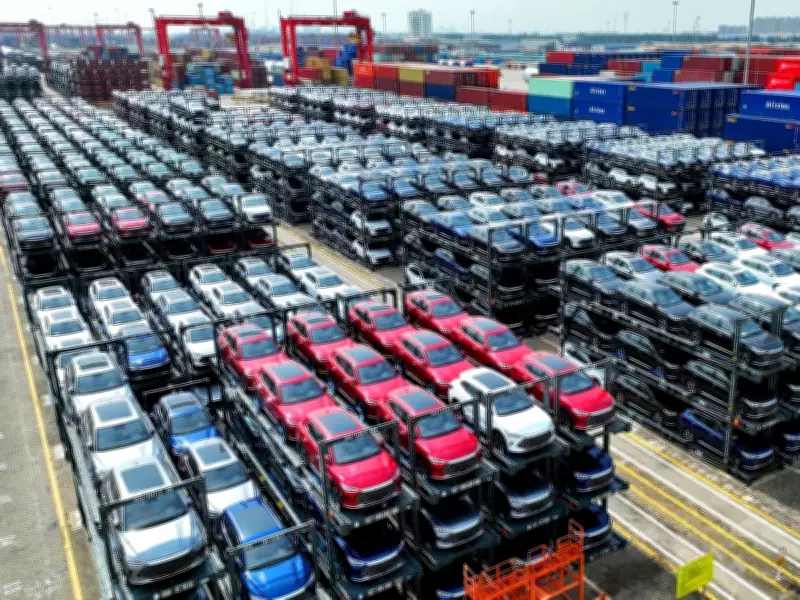
The new Canada-China arrangement introduces important market dynamics that could reshape the Canadian automotive landscape. The agreement will initially permit 49,000 Chinese-made electric vehicles to enter the Canadian market annually under a 6.1 percent tariff rate quota, representing a significant opening through the 100 percent tariff wall established in 2024.
Notably, half of these imported vehicles must be priced at $35,000 or less, creating an affordability measure that partially addresses the withdrawal of government rebates for Canadian EV purchasers. This development comes as access to European markets has already driven Chinese manufacturer BYD to establish full manufacturing facilities in Hungary and Turkey, with plans underway for a Spanish plant.
Strategic Imperatives for Canadian Leadership
The current situation demands more than reactive measures. With legitimate concerns about the impact on approximately 125,000 Canadian auto workers, the nation requires a comprehensive strategy that addresses both immediate challenges and long-term opportunities. As Prime Minister Carney noted in his World Economic Forum address, "nostalgia is not a strategy," yet the automotive sector must learn from its history while embracing future possibilities.
The Auto Pact may represent Canada's last coherent automotive strategy, making the current moment particularly significant. The industry needs a plan that can effectively guide the transition away from dependency on U.S. markets while simultaneously transforming Canada into a leader in electric vehicle production. This requires addressing multiple factors including trade relationships, manufacturing capabilities, workforce development, and technological innovation.
Charting a Path Forward
Developing a successful automotive strategy for Canada involves navigating complex international relationships while building domestic capacity. The industry must balance immediate economic realities with long-term strategic positioning in the rapidly evolving global electric vehicle market.

Canadian policymakers and industry leaders face the dual challenge of protecting existing jobs and investments while positioning the country for leadership in next-generation automotive technologies. This requires coordinated efforts across government, industry, labor, and educational institutions to create an ecosystem supportive of innovation and sustainable growth.
The road ahead demands clear vision, strategic investment, and collaborative approaches that recognize both the challenges and opportunities presented by global trade realignments and technological transformation. Canada's automotive future depends on developing and implementing a strategy that addresses these complex dynamics while positioning the industry for success in the electric vehicle era.