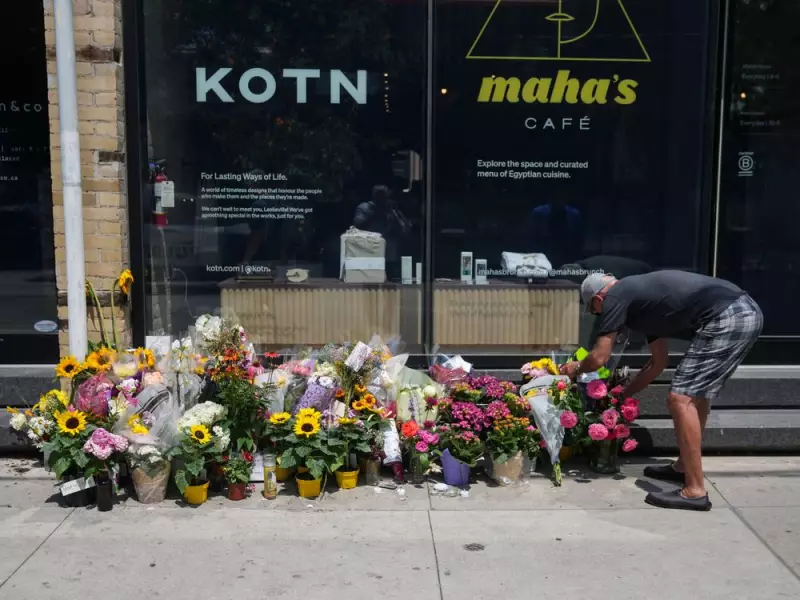
The murder trial of Damian Hudson, the man charged with fatally shooting Karolina Huebner-Makurat outside a supervised injection site in Toronto, has concluded, leaving a jury to deliberate a case that has cast a harsh spotlight on the realities of drug-trade violence surrounding such facilities. The proceedings, which began with what seemed like an open-and-shut case, evolved into a complex examination of self-defence, urban safety, and the role of harm reduction services in Canadian communities.
The Fatal Incident and the Central Question of Self-Defence
On July 7, 2023, Karolina Huebner-Makurat, a 44-year-old mother of two young girls, was struck and killed by a stray bullet on a busy Toronto street. The shooting occurred in front of the South Riverdale Community Health Centre's supervised consumption site. Damian Hudson, a drug dealer, admitted in an agreed statement of facts that he was present that day and fired the fatal shot.
The incident was largely captured by security cameras, dashcams, and smartphones. The footage showed Hudson being ambushed and robbed by two other drug dealers, Ahmed Ibrahim and Ahmed Ali, in front of the injection site. A struggle ensued over a satchel containing drugs and cash. However, a critical three-second gap in the video, obscured by a tree and a concrete planter, became the focal point of the trial.

Hudson's defence lawyer, Charn Gill, argued this gap created reasonable doubt. The central question for the jury became whether Hudson brought his own gun or picked up one dropped by Ibrahim during the struggle, firing at Ali in what could be considered a reasonable act of self-defence. Crown prosecutor Paul Zambonini presented the case for murder. By the time closing arguments were delivered on December 15, the trial had effectively put the South Riverdale injection site itself under scrutiny.
A Community's Concerns and a Family's Tragedy
The trial revealed that security footage from the site showed six different drug dealers operating outside the facility mere seconds before the fatal shooting, highlighting the persistent illegal activity that neighbours had complained about for years. These long-standing community concerns about safety and crime escalation around the site formed a backdrop to the tragic event.
Karolina Huebner-Makurat's husband, Adrian Makurat, and their daughters have since moved to British Columbia. Makurat, who observed the trial remotely, returned to Toronto for the closing arguments, as did Karolina's parents. In an interview with CTV News three months after her death, Makurat stated he did not blame the injection site, calling his wife's death the "short end of the straw" of urban living. His comments were cited by supporters of the site who viewed the shooting as a random, isolated incident.
Broader Implications for Safe Injection Sites and Urban Policy
The case transcends the fate of one man and has ignited a fierce debate about the operation and oversight of supervised consumption sites in Canada. Proponents argue they are essential, life-saving healthcare services, while critics point to incidents like this as evidence of collateral damage to community safety when enforcement and management are perceived as inadequate.
The trial laid bare the violent underground economy that can flourish in the vicinity of these sites, regardless of their public health mandate. The jury's verdict will deliver a conclusion to the criminal case, but the broader questions about balancing harm reduction for drug users with the safety and security of surrounding neighbourhoods remain unresolved for policymakers and communities across the country.
The outcome of the Hudson trial is awaited, but the testimony and evidence have already provided a stark, detailed narrative of the day a mother's life was tragically cut short, forcing a city and a nation to confront the complex, often painful realities at the intersection of public health, crime, and community life.