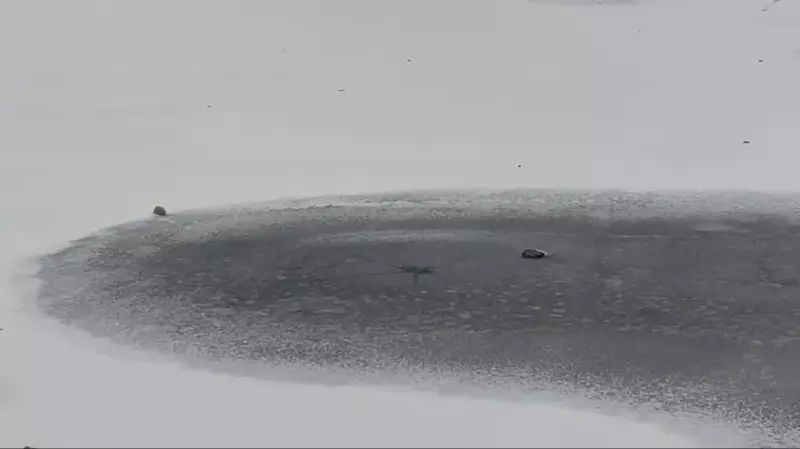
The Saskatchewan Royal Canadian Mounted Police (RCMP) has issued a critical public safety warning as winter sets in: the ice on lakes, rivers, and ponds across the province remains dangerously thin and is not safe for walking or any other activities. This annual reminder comes with renewed urgency to prevent tragic accidents.
The Persistent Danger of Early Winter Ice
Despite cold temperatures, the RCMP emphasizes that ice requires consistent, prolonged freezing to become stable. Early-season ice is often deceptively thin, uneven, and weak, especially near shorelines, inlets, outlets, and areas with moving water or currents. A layer of snow can further insulate the ice, preventing it from thickening and hiding cracks or weak spots.
The force issued this warning on December 01, 2025, a time when many may be tempted to venture onto frozen surfaces for recreation. Authorities stress that no ice should ever be considered 100% safe, and caution is paramount.

Essential Ice Safety Guidelines
To ensure public safety, the Saskatchewan RCMP and safety advocates recommend adhering to strict guidelines before considering any ice activity. These are not mere suggestions but potentially life-saving rules.
First and foremost, check the ice thickness. Clear, blue ice is the strongest. General guidelines suggest a minimum of:
- 15 cm (6 inches) for walking or ice fishing alone.
- 20 cm (8 inches) for group activities like skating or a small snowmobile.
- Significantly more for larger vehicles like cars or trucks.
Never test the ice thickness alone. Always go with a buddy, inform others of your plans and expected return time, and carry safety equipment such as ice picks, a rope, and a personal flotation device. Parents and guardians are urged to closely supervise children and educate them about the severe risks of playing on or near ice.
What to Do If You Fall Through Ice
Knowing how to react in an emergency is crucial. If you fall through the ice, the RCMP advises:
- Try not to panic. Control your breathing.
- Turn toward the direction you came from, as the ice was strong enough to hold you until that point.
- Place your hands and arms on the unbroken surface of the ice.
- Kick your feet to try to get your body into a horizontal position, then use your ice picks to slowly pull yourself onto the ice.
- Once out, roll away from the hole—do not stand up—to distribute your weight until you are on solid, thick ice.
- Get to shelter, remove wet clothing, and warm up immediately to prevent hypothermia.
If you witness someone else falling through, do not go onto the ice after them. Call 911 immediately. Try to reach the person with a long pole, branch, rope, or extension cord from the shore. If you can safely throw them a flotation device, do so.
The Saskatchewan RCMP's message is clear: the beauty of a frozen landscape masks a significant hazard. When in doubt, stay off the ice. A moment of caution can prevent a lifetime of regret and ensure that winter activities remain safe and enjoyable for everyone in the community.