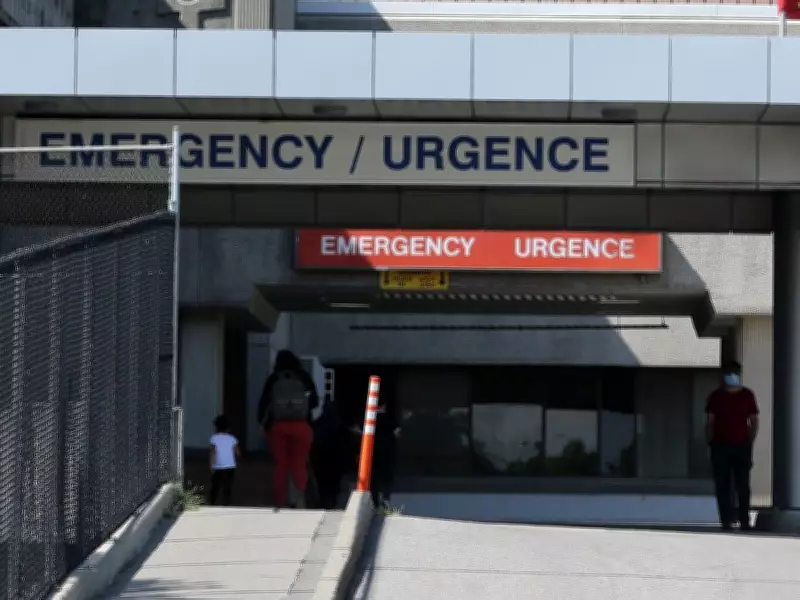
Refugee and Immigrant Children Less Likely to Visit Hospital Emergency for Minor Ailments: Study
A groundbreaking Ontario study is challenging widespread assumptions about healthcare system pressure attributed to newcomers in Canada. The research, conducted by the Institute for Clinical Evaluative Sciences (ICES) and The Hospital for Sick Children (SickKids) in Toronto, reveals that children of refugees and immigrants are significantly less likely to visit emergency departments for minor illnesses compared to their Ontario-born counterparts.
Research Methodology and Key Findings
The comprehensive study tracked 113,098 refugee and immigrant children during their first four years in Canada, alongside 345,499 Ontario-born children over the same period. Researchers discovered that newcomer children had substantially more primary care visits for minor health issues but far fewer emergency department visits for similar conditions than children born in Ontario.
Dr. Susitha Wanigaratne, senior research associate at the Edwin S.H. Leong Centre for Healthy Children and SickKids, emphasized that this research "contributes to the growing body of evidence that disproves the belief that newcomers misuse healthcare services."

Understanding Healthcare Navigation Patterns
Researchers identified several factors that might explain these differing healthcare utilization patterns:
- Newcomer families often receive extensive healthcare navigation support during their initial settlement period in Canada
- This support system appears to effectively direct families toward appropriate primary care rather than emergency services
- After approximately two years, researchers noted a slight shift with decreased primary care visits and a modest increase in emergency visits
- Even with this shift, newcomer children continued using emergency departments at lower rates than Ontario-born peers
The study suggests that reduced resettlement financial support and challenges accessing primary care during regular work hours might contribute to this gradual change in healthcare seeking behavior.
Timely Research Amid Political Debates
This research, published in the prestigious medical journal JAMA Network Open, arrives at a critical juncture in Canadian public discourse. Support for immigration among Canadians has been declining, with pressure on the healthcare system frequently cited as a primary concern.
Across Canada, health systems face extraordinary pressure with long emergency department waits and the normalization of hallway medicine. Both federal and provincial politicians have increasingly focused on healthcare capacity issues, making this research particularly relevant to current policy discussions.
The Conservative Party of Canada recently proposed a motion to curtail federal benefits for refugee and asylum claimants living in Canada. Although this motion failed, the federal government has indicated plans to require claimants to cover a share of certain costs, highlighting the ongoing political sensitivity surrounding newcomer healthcare utilization.
Broader Implications for Healthcare Policy
This study provides crucial evidence that contradicts common narratives about healthcare system strain caused by newcomers. The findings suggest that:
- Newcomer families may actually be more efficient healthcare users during their initial settlement period
- Targeted support systems for healthcare navigation appear effective in reducing unnecessary emergency department visits
- Understanding these patterns could inform more effective healthcare policies for all Canadian families
As Canada continues to welcome newcomers while managing healthcare system challenges, this research offers valuable insights into how different populations interact with medical services and where support systems prove most effective.