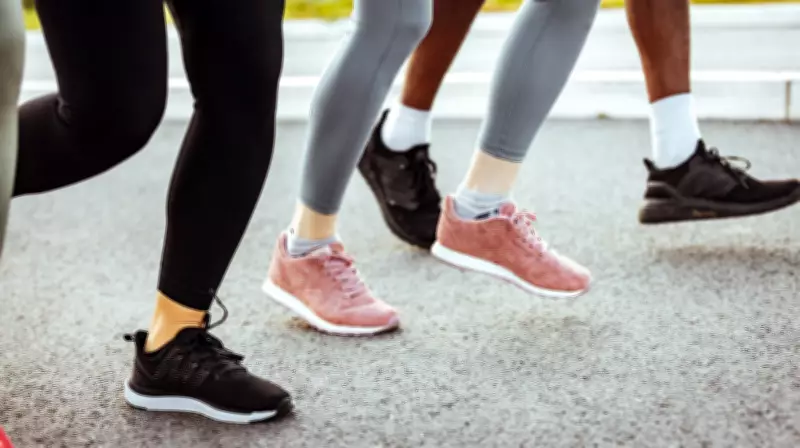
Walking remains an accessible and popular exercise for many reasons. It requires no fancy equipment, benefits heart health, improves sleep, enhances mood, and offers a simple way to get fresh air. Various methods can keep walks engaging, and lately, a trend called "rucking" has gained traction on social media as a way to enhance your daily stroll.
What Is Rucking?
"Rucking is simply just walking with weight on your body ... weight on your back, technically," said Nichele Cihlar, director of training at GORUCK, a rucking gear company. Like regular walking, rucking is accessible, and you likely already have the necessary gear at home. All you need is a weighted backpack or rucksack, and you start moving.
"It's a low-impact exercise that is pretty much based on military training — think about how the military trains a lot for endurance, they do a fair amount of running, but they also have to carry a lot of heavy equipment, so that's kind of how rucking started," said Mathew Welch, an exercise physiologist at the Hospital for Special Surgery in New York.

Health Benefits of Rucking
Rucking adds resistance training to your walk, offering extra health rewards beyond regular walking. It brings more challenge, which is beneficial for those looking to work their body in a new way. "Physically, walking is awesome, but sometimes we want to amplify that, and the easy way to do that is adding weight," Cihlar said. "Resistance training is key, especially as we age, in helping our bone health and our muscle growth because that naturally deteriorates as we get older, starting in our 30s."
Rucking transforms a cardio exercise into cardio plus resistance training. Experts recommend 20 minutes of strength training twice a week, but research shows most people do not meet that minimum. Rucking can help achieve that goal.
Rucking also benefits cardiovascular endurance. Welch explained that it improves "cardiac output, it's going to help with the efficiency of your heart pumping the blood out," which can lower blood pressure and improve heart rate. Additionally, rucking enhances posture and back strength. "The ruck is kind of pulling you back, so it really forces you to maintain your posture," Welch said, noting it offsets the effects of prolonged sitting.
Mental Health Advantages
Rucking is an outdoor exercise, and being outside is linked to lower stress and better mood, according to Mental Health America. Sunlight exposure helps the body produce vitamin D, which supports bone health and may reduce depression and anxiety symptoms. "You're going to always say you never come back from a ruck in a bad mood. It gives you time to clear your head," Cihlar said.
How to Start Rucking
Starting rucking is simple. "What's nice is you can literally start with a backpack you have in your closet and ... throw some magazines in it ... your water bottle," Cihlar explained. Alternatively, you can use a rucksack and rucksack weights designed for the sport. Both experts recommend a rucksack for safety, as a regular backpack may sit low on your back and cause issues with heavy loads. If using a backpack, ensure it doesn't sag too low.
Regarding weight, start low and build up. "I always say start low because you can always grow from there. You don't want to start heavy and get discouraged," Cihlar said. Beginners should start with 5 or 10 pounds and increase gradually. For distance, begin with one mile and assess how you feel. "If you're someone that is regularly active and you lift weights, you could probably do a 20-pound plate, a 30-pound plate in your ruck," Cihlar added.
Welch suggests starting with a mile and increasing to a mile and a half or more if not challenged. For an extra challenge, try hilly terrain. Ultimately, you can design a rucking regimen that fits your fitness goals and level. Start small with light weights and short walks, or opt for heavier backpacks on inclines. Listen to your body and know your limits — there is no wrong way to begin incorporating this exercise.