As a bitter cold snap tightens its grip on Montreal, with temperatures diving well below zero, the city's frontline shelter organizations are issuing a heartfelt plea to residents: show grace and compassion towards those experiencing homelessness.
A Collective Responsibility in the Cold
Shelter managers emphasize that the community has a shared duty to protect its most vulnerable members during the dangerous winter months. Sam Watts, CEO of Welcome Hall Mission, stressed this collective responsibility. "We have to recognize that we have a responsibility collectively towards people who are struggling and people who are vulnerable," Watts said. He noted that while the holiday season often inspires generosity, that reflex can fade as winter drags into January and February.
The urgency of the message is underscored by the severe weather. Environment Canada issued a special weather statement warning of freezing rain for southern Quebec. The mercury plunged to -18°C on Christmas night, with overnight lows around -15°C expected over the weekend.

Scenes of Resilience and Struggle
The harsh reality of the cold was visible on the city's streets and in its transit stations. On a recent Saturday morning, 61-year-old Yvon sought refuge from the -11°C chill inside the de Castelnau métro station. He described a nightly struggle for warmth, moving between locations like Tim Hortons on Mont-Royal or Parc Avenue for a hot chocolate when temperatures crash below -20°C at night. "I move around a lot," he admitted, highlighting the scarcity of options after dark.
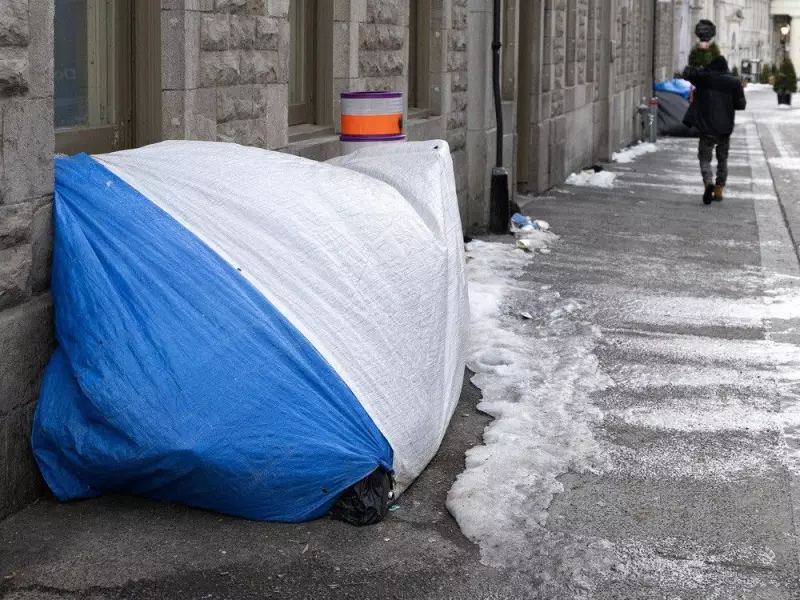
James Hughes, CEO of the Old Brewery Mission, confirmed that many are still braving the elements. "There’s homeless people outside right now — lots of them," Hughes stated. "They’re trying to get inside in the métro system, they’re trying to get inside in the hospitals, but they’re often outside, and they’re going to try to tough it out" in tents and retail doorways.
How Montrealers Can Help and Understand
Both Hughes and Watts outlined concrete ways the public can assist. Hughes urged people to "keep your eyes open" for individuals who may be in distress outdoors. If someone appears to be having a medical emergency, the immediate action should be to call 911.
For non-emergency situations, Watts pointed to the 211 helpline, a vital resource that connects callers to appropriate local services and support networks in their neighbourhood.
Understanding the complex decisions faced by those living on the streets is also key. "Homeless people can find themselves, for a variety of reasons, not sometimes making great decisions — staying outside when they shouldn't be outside," Hughes explained. "And many of them will be open to going inside if they’re given the chance."
The shelter system itself is under significant pressure. Overnight facilities are consistently at or near capacity. Montreal's network now offers over 2,500 overnight spots, a figure Hughes noted is 500 more than last year. However, he clarified that these are not all traditional beds or rooms, but often spaces with chairs or mats. "The focus is saving lives," he said bluntly.
While the expansion of emergency spaces from about 900 pre-pandemic to between 2,500 and 3,000 today is critical, Watts sees it as only a temporary solution. "That’s not the answer. The answer isn’t to see how many we can build up," he asserted. "The answer is to see how fast we can empty out that space" by focusing on permanent housing solutions and long-term prevention strategies to end homelessness for good.
As the deep freeze continues, the simple act of noticing, understanding, and offering help—whether through a direct call to 211 or a supportive gesture—can make a life-saving difference for Montreal's unhoused residents.