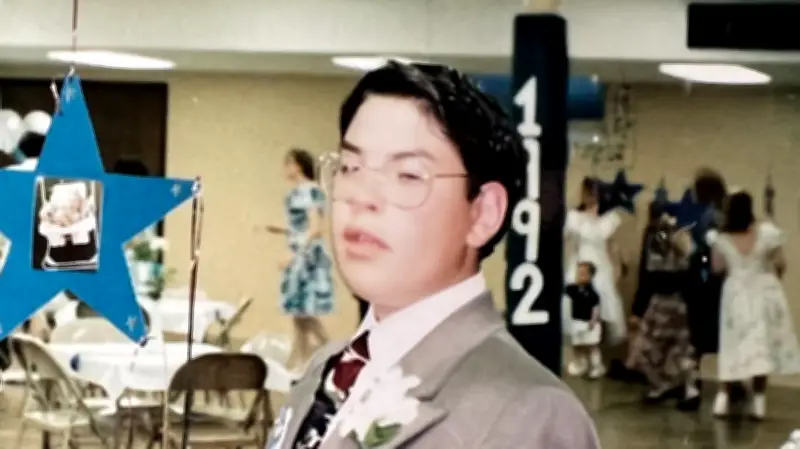
Coming of age in the early 1990s in a small city in southeastern Wisconsin meant growing up in a time and place where no one said "gay" (or "lesbian" or "bisexual" or "transgender" or "non-binary" or any other part of the LGBTQ+ community), and the only time you heard "queer" was if you were being called one by a bully who took turns making your life a nightmare, as if it were their proudest joy.
My town didn't need legislation like Florida's "Don't Say Gay" law, which prohibits discussing sexuality and gender identity with kids in kindergarten through third grade but is so vaguely worded it could apply to any grade. That was just how it was. Everywhere. Always.
"Don't Say Gay" was a way of life. Our way of life.

There were no gay people in Racine, Wisconsin, back then — and if there were (which there certainly were), they didn't talk about it. No one talked about it.
It was believed that the world of wicked queer people doing wicked queer things was somewhere else — out there, miles away, in big cities where bad things happened to bad people. Most small towns in America, and even many parts of big ones, believed the same. Yet there was still a danger glowing with a queasy, otherworldly glow somewhere uncomfortably close, requiring good, God-fearing citizens to vigilantly defend themselves and their families — or else everyone knew exactly what might happen.
Unfortunately, I didn't get the memo.
I've been gay since I sauntered out of my mother at St. Luke's Hospital in July 1978. Not just gay — gay gay. The kind of gay that people would whisper about, worry about, and that I could do nothing about. For the first four or five years of my life, I never thought to think about it because it was just who I was, and I didn't yet know I needed to hate or hide it.
Once I started kindergarten, I quickly learned how boys and girls were supposed to behave, and consequently, that how I behaved wasn't how I was supposed to behave. But no matter how hard I tried to change, nothing changed.
In eighth grade, my friend Krissy (I had been beloved by girls for my wit, sass, and My Little Pony collection, but as we got older, I seemed stranger and wronger, even to them) told me a boy in our class was saying I was gay. I didn't know exactly what being gay was, but I knew it wasn't something you wanted to be, and terrifyingly, because of my thoughts about other boys, I knew it was exactly what I was.
Even though I can't remember what I had for lunch yesterday, I still recall the look on Krissy's face when she asked if it was true and I said no. She looked relieved but also disbelieving. She knew. I knew. Soon everyone would know. So I spent the next six months begging God to make me straight. Worried simple prayers wouldn't suffice, I wrote him letters every night after dinner, pouring my heart out while listening to Madonna's "Like a Prayer."
And guess what happened? Nothing. I was still gay and headed straight to hell — aka high school. And it was hell. I had no friends in ninth grade. My gayness made me odious, poisonous, dangerous. I hadn't come out — that wasn't an option — but everyone still knew. How could they not? My gayness was undisguisable, unavoidable, inescapable.
No one wanted to be seen with me or talk to me unless they were torturing me, so I spent all my time alone, hiding, holding my breath, futilely trying to melt into the furniture. The torture was relentless and horrific. I was called every awful name imaginable. Often, someone behind me would slap my head or flick my ears during class. One Saturday, someone called my house pretending to be another unpopular boy, using a falsetto lisp to say, "Hi, Noah! This is your gay lover!" before growling, "WATCH YOUR BACK BECAUSE I HATE FAGGOTS." I was held down in the locker room and doused with deodorant. I was tripped down bleacher steps after a pep rally.
This was 1992. Not only did we not say gay at school or anywhere else, but there was no Ellen, no "Pose," no "Queer Eye," no Lil Nas X. RuPaul hadn't even released "Supermodel of the World." You had to use your imagination to find queer people on TV or in movies, and if they were there, they were villains or jokes. You had to squint to see yourself in the world. And too often, even if you caught a glimpse, there was no marriage equality, no gay adoption, and there was AIDS.

My uncle Ward came home from New York City to die of AIDS in my grandparents' house next door in 1990. I was 12. I saw him arrive, already a bag of bones helped up the driveway by my mom. I never saw his goofy grin again except in panicked daydreams where his death was my death, and it was clearer than ever that being gay would bring only death.
My parents were amazing. They loved my uncle, took us to see the AIDS Quilt, taught me acceptance and love, and loved me unconditionally. Looking back, I know they would have supported me if I'd come out, but at the time, I couldn't believe that. My shame was so thick it suffocated everything good. I thought I couldn't explain how hard I hurt or who I was, especially after losing my uncle. That's how revolting I believed I was. But I know I wouldn't be here without my family's love, though it almost wasn't enough.
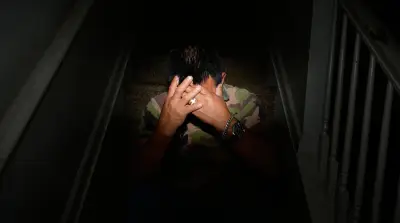
Because God never made me straight, and I wasn't sure I could face another day of high school, I began looking for ways to kill myself. I'll spare the grisly specifics, but if you can think of it, I thought of it. I researched it, fantasized about it. Several times I got as close to the edge as possible and hovered there, frozen, before backing away. Not saying gay — not hearing or seeing gay, not knowing that gay people lived healthy, happy lives — almost killed me. It almost made me kill myself.
I left high school a few weeks into 10th grade after telling my parents I wasn't happy. Four days later, I was at a new school. There, I forced myself to "butch up" as best I could. Since I wasn't going to die, I had to survive.
I still wonder who I'd be if I'd been able to be who I was supposed to be. I still think about that little boy and everything stolen from him. Just because I didn't die doesn't mean I lived. Not for a long time. It took years to gain confidence to order pizza or ask for directions, to stop cowering, to feel worthy of being seen and heard — even by myself.
Thirty years later, I'm proud to call myself gay and part of the queer community. So much has changed, but so much hasn't. I know there are kids who feel the way I felt, even with all the progress. Kids are who they are. Teaching them about queer people doesn't make them queer. Teaching them about straight people doesn't make them straight. Laws like "Don't Say Gay" teach kids that being queer is not only not OK but so offensive and dangerous we must not talk about it. That has real consequences. I know. I lived through it, but barely. Too many others didn't make it and won't.
So we must do something. I've been moved by kids — queer and not — who have walked out of schools in protest and taught queer history despite potential trouble. They are who I wish I had been, but they shouldn't have to fight to tell and hear queer stories. They should be anywhere doing anything but fighting to exist as who they are.
These kids grow up in a different world with more examples of who and how to be, which comforts and excites me. But we haven't won. Our enemies are furiously working to ensure we never feel seen or safe, and too many hold positions of power, cruel and crafty enough to stop us and force us backward. But never again.
From now on, when someone says we shouldn't say gay (and trans, lesbian, bisexual, queer, and all the words they fear) — say it anyway. Say it louder and more often. Say it to elected officials, to yourself when voting, to your kids. Say it whenever and wherever they say you shouldn't. Tell them you can, you will, you never won't. Tell them we've heard this story before, and it does not — we will not let it — end the way they think or want.
Tell them this story about a kid in Wisconsin who wanted to die decades ago because he was made to believe he was a sin, a slur, a scourge. Then tell them how he lived — how alive he is right now despite all the silence, sorrow, and terror. Tell them he is finally, most days, happy, but it took too many years and tears. Tell them there are no miracles, just the truth: we have come too far and refuse to go back.
Note: I wrote this piece four years ago when the first national "Don't Say Gay" law appeared in Florida, and I'm publishing it again in June 2026 — Pride Month — because it's still relevant. Since then, hundreds more anti-LGBTQ bills have been proposed and many signed into law. Countless LGBTQ books have been banned, funding for queer organizations cut. New trauma has been unleashed, but one thing hasn't changed: we continue to fight back. We refuse to be erased. We've been here before and know the only way forward is standing our ground. When we rally together, we win. When we tell our stories, we root ourselves here and create potential for others to share theirs. Too much of what I wrote is still true, but queer people have existed since the beginning of time and aren't going anywhere.
If you or someone you know needs help, call 1-800-273-8255 for the National Suicide Prevention Lifeline. You can also text HOME to 741-741 for free, 24-hour support from the Crisis Text Line. Outside the U.S., visit the International Association for Suicide Prevention for a database of resources.