Two weeks ago, the Government of Alberta made it official: cuts to operating budgets were on the way for over a dozen women's shelters.
On May 19, planned reductions of five per cent were announced for women's shelters in communities across Alberta. A combined $970,000 is set to be removed from their annual budgets. For organizations who already stretch every dollar, a reduction of this size means jobs will be lost, beds closed, and women turned away.
In rural communities, which were disproportionately affected by the reductions and which already have fewer support services and less access to transportation, cutbacks will hit especially hard.

In the days following the announcement, I spoke with the directors of many of the affected shelters. They all expressed a similar range of emotions: shock, anger, grief.
But if I had to sum up the mood from those meetings in one word, it would be exhaustion. Directors were exhausted by the prospect of cutting services that were already threadbare after over 10 years of stagnant investment from the province. They were exhausted from trying to support their burnt-out and underpaid employees. And they were exhausted from the ever-growing fundraising burden they carried. They knew that, this time, bake sales and bottle drives would not be enough.
Shelters are often described as social services. But at their core, they are more comparable to hospitals or police stations — they provide essential emergency services, often for people in immediate physical danger. Especially for those in rural communities, the local shelter might be a survivor's only realistic option to escape. When a shelter closes beds in urban centres, there may be another option across the city. When beds disappear in a rural community, the next safe place may be hours away.
In a province where 15 women per year are killed by a male partner, we simply cannot afford to treat women's safety as optional. Yet shelter funding has not kept pace with demand, leading to a longstanding shelter capacity crisis across the province. Last year, one in two people seeking a bed at an Alberta shelter were turned away due to capacity limitations. Forty per cent of those were children.
These numbers should alarm every Albertan. What would happen if police stations could respond to only half of the calls they received? How quickly would we mobilize to fix this problem?
Like hospitals and police stations, women's shelters should be considered an essential part of every community's safety infrastructure and funded accordingly.
All told, the proposed reductions to women's shelters amount to less than $1 million, 0.0012 per cent of Alberta's total annual budget. To the province, this number essentially amounts to a rounding error. But to women and children in crisis, the stakes are impossibly high.
The question before us is not whether Alberta can afford to fund women's shelters, but whether we can afford not to. If we truly believe that women's shelters are an essential part of our community's safety infrastructure, then it is time to fund them like it.
If you want to add your voice to our cause, visit our website to write your MLA and ask them to pause and reconsider these funding cuts. Learn more about our advocacy at acws.ca/protect-womens-shelters.
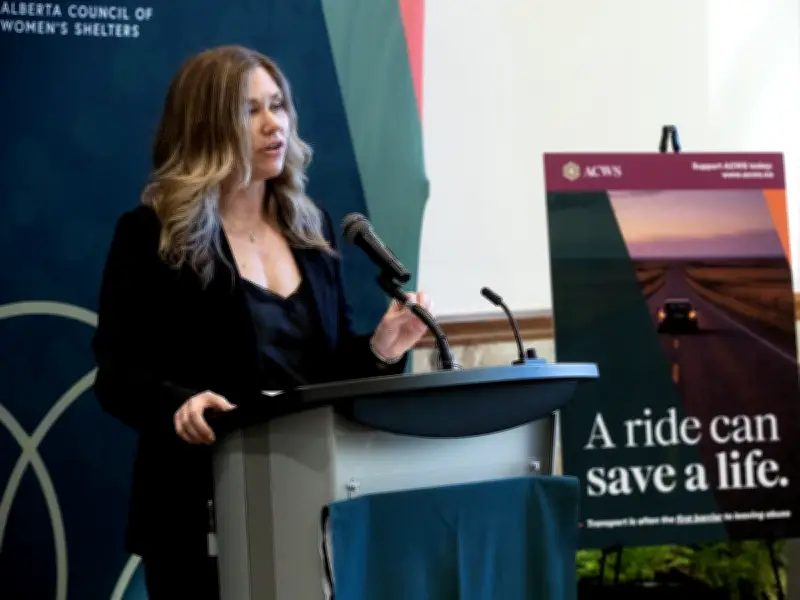
Cat Champagne is executive director, Alberta Council of Women's Shelters.