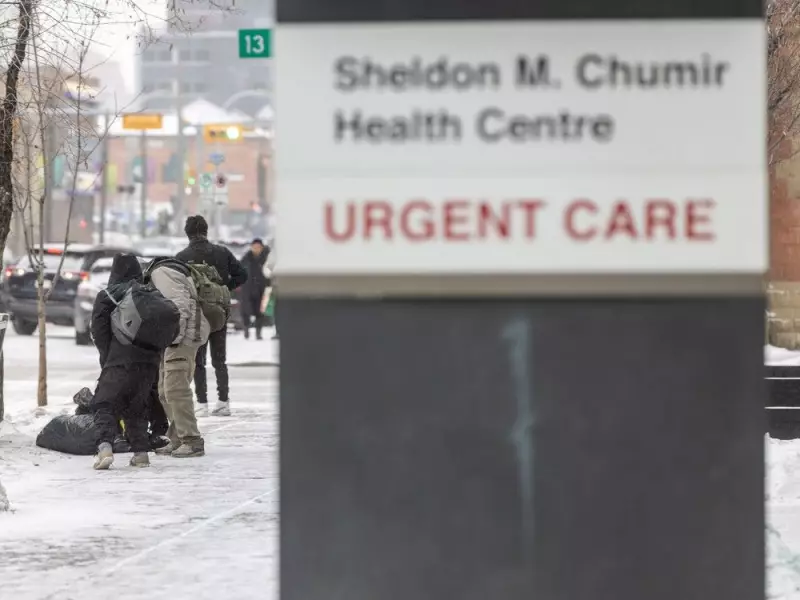
The provincial government's decision to permanently close the supervised consumption site (SCS) located at Calgary's Sheldon M. Chumir Health Centre has ignited a complex and urgent debate about public health, community safety, and the fate of some of the city's most vulnerable residents. This move, announced without a ready alternative in place, threatens to dismantle a critical lifeline that has saved lives and connected people to care since its opening in 2017.
The Human Cost on the Sidewalk
Outside the Chumir centre, a stark scene unfolds daily. Individuals gather, seeking communal warmth and a semblance of safety. The site's current rules permit only injection inside, forcing those who smoke substances to remain outdoors. This gathering is not mere loitering; it is often a queue for care that the broader system has failed to provide consistently. It is a place where hope is maintained because someone demonstrates they care whether these individuals survive.
The reality of the crisis is visceral. Witnesses describe friends' lips turning blue from overdose, the sound of a death rattle echoing, and the swift intervention of outreach teams armed with naloxone kits. These teams do more than reverse overdoses; they offer water, electrolytes, and hot chocolate—basic human dignities that rebuild trust. This site has become far more than a place to use drugs under supervision; it is a crucial entry point into healthcare and social services for a population that often faces barriers and judgment elsewhere.

Measurable Success and Misplaced Blame
The data from the site's operation tells a compelling story of success. After its launch, ambulance calls to the area decreased, emergency room visits related to substance use fell, and countless preventable deaths were indeed prevented. The SCS evolved into a low-barrier hub where individuals could access social workers, medical attention, and pathways to detox and treatment programs without facing immediate ultimatums.
However, the public narrative familiar to many Calgarians has been different. The site's visible location in the Beltline neighbourhood led to it being cast as a magnet for public disorder. The building itself became a symbol onto which broader societal anxieties about addiction and urban decay were projected. This visibility, while challenging for the surrounding community, also underscored the scale of the need.
A Dangerous Precedent: The Lesson from Lethbridge
The looming closure in Calgary follows a troubling pattern already set in Lethbridge. That city's SCS was once among the busiest in North America and was pioneering in Canada for offering supervised inhalation services—the most common method of use for many. It was a place where people were known by name, where coffee was served, and thousands of overdoses were successfully reversed.
Despite this, the provincial government forced its closure, citing a flawed review that independent researchers later deemed "irredeemable." The consequences were tragically predictable and swift. In the months following the Lethbridge closure, the local death toll rose. People who had once been revived safely inside with oxygen and naloxone began dying in public spaces.
As one Calgary nurse explained, the efficacy of these services hinges on consistent, compassionate, and proximate care. When accessible, low-barrier services exist—especially those that supervise all methods of use and offer wraparound supports—visible public drug use declines. People choose to go inside because they feel safe and respected, not because they are forced.
The closure of the Sheldon Chumir site without a proven, accessible alternative in place is not merely a policy shift; it is a withdrawal of care that will have human consequences. It risks severing the fragile threads of trust with a vulnerable population and will likely lead to more emergency calls, more hospital visits, and, ultimately, more deaths that could have been prevented. The question for Calgary and Alberta is not just about managing neighbourhood perceptions, but about whether we will choose evidence and compassion over fear when our neighbours need help the most.