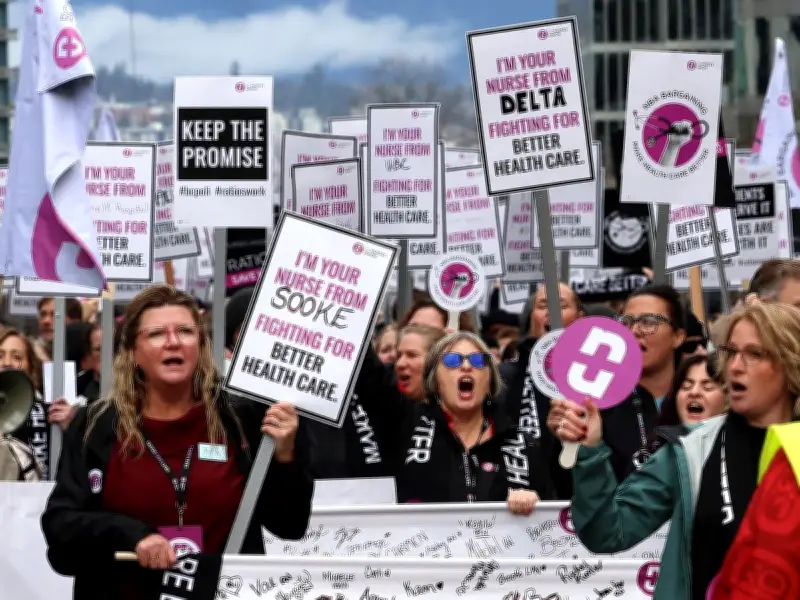
B.C. nurses have initiated limited strike action, starting with a ban on non-essential overtime and a refusal to perform non-nursing duties, following the expiration of a 72-hour strike notice this week. The action comes after 67 per cent of members voted to reject a tentative agreement reached in May, which offered a 12 per cent wage increase over four years and additional funding to improve minimum nurse-to-patient ratios.
Background of the Strike
The limited strike follows a strike vote in early May where 98.2 per cent of members voted in favour of job action. The Health Employers Association and the Nurses Bargaining Association had been bargaining since October 2025, but the tentative agreement was deemed insufficient by members, who felt it fell short of a general wage increase. The bargaining association represents more than 60,000 nurses in hospitals, long-term care, community and public health, and other settings across the province.
Union's Position
B.C. Nurses’ Union president Adriane Gear stated, “This is not the outcome nurses wanted.” She emphasized that nurses have been clear about what is needed to strengthen the profession and stabilize the health care system. “We have remained ready to bargain in good faith, but the government has not responded with the urgency this moment demands,” Gear said in a statement shared Thursday.

First Phase of Escalation
The overtime ban and refusal to perform non-nursing duties are described as “the first phase of a broader escalation plan” the BCNU expects to roll out if bargaining does not resume. Gear noted that the limited strike action is intended to prioritize patient care “while sending a clear message to government.” More than 50,000 nurses participated in the strike vote in early May.
Impact on Patient Care
Gear stressed that nurses do not want to disrupt patient care, and every action is guided by their commitment to the people and communities they serve. The rejected proposal included a 12 per cent wage increase over four years and additional funding for minimum nurse-to-patient ratios, but members felt it still fell short of a general wage increase. The union remains ready to bargain, but the government has not responded with the urgency required, according to Gear.