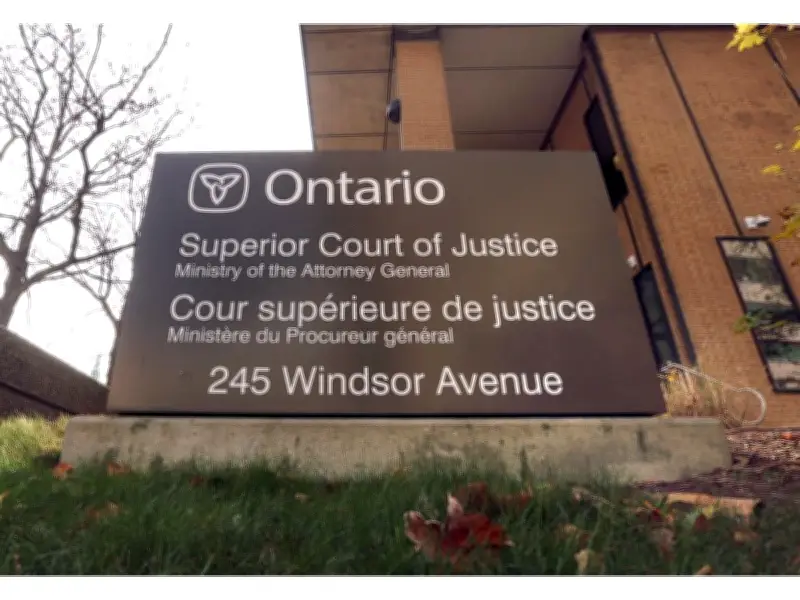
A Windsor drug trafficker caught with one of the largest fentanyl hauls in the city's history has been sentenced to 12.5 years in prison. John Jason Solinski, 55, previously pleaded guilty to one count of possession for the purpose of trafficking with more than 1 kilogram of fentanyl.
Details of the Case
An investigation by the Windsor Police Drugs and Guns Unit in May 2024 uncovered large quantities of illegal drugs at Solinski's apartment in the 1100 block of Erie Street West. Police found a safe containing 1,021 grams of fentanyl, 202.4 grams of crystal meth, and over $10,000 in cash. Additionally, officers seized 3.3 grams of crystal meth, 1.3 grams of crack cocaine, and 13.6 grams of fentanyl from Solinski at the time of his arrest on May 15, 2024.
According to the U.S. Drug Enforcement Administration, fentanyl is a synthetic opioid many times more potent than heroin and can be lethal at a mere two-milligram dose.

Sentencing Hearing
During the sentencing hearing in February, the Crown sought a 13-year prison sentence, while the defence argued for a 10-year term. On Monday, Superior Court Justice Paul Howard delivered the sentence, emphasizing the gravity of the crime.
“Trafficking in fentanyl is a crime that kills often and indiscriminately,” Justice Howard said. “It is a crime motivated by greed, and by a callous disregard for the untold grief and suffering it leaves in its wake.”
The judge noted the “sheer amount of fentanyl” as a significant aggravating factor and said Solinski’s moral culpability was “quite high” since he was not himself a user of fentanyl. The judge gave “no weight” to Solinski’s explanation that he had been motivated by a desire to help his friends by selling them what he believed was a safer alternative to street drugs.
Mitigating Factors
Justice Howard acknowledged the range of sentences for large-scale fentanyl operations “straddles the upper single-digits and lower double-digits,” but said sentencing judges “should feel justified” in applying harsher penalties—up to life in prison—in particularly aggravating circumstances. However, he pointed to Solinski’s guilty plea, troubled upbringing, and “real positive steps” he had taken “to change his life direction” as mitigating factors that justified a sentence in the lower double-digit range.
“Mr. Solinski comes before the court having already taken some very positive and concrete steps towards self-improvement,” the judge said. Solinski had undertaken extensive programming while in custody, worked in the kitchen department at Southwest Detention Centre, and demonstrated “satisfactory institutional behaviour with no evidence of misconduct, sanction or violence.”