A Mother's Journey Through Twin Pregnancy Loss and Grief
"Hey, you got twins in there or what?" The bus driver's cheerful shout cut through the quiet afternoon air as he waited near the school around the corner from our home. He had spotted my prominently rounded 9-month pregnant belly and offered what he intended as a lighthearted joke. But instead of laughter, his words triggered a visceral reaction that stopped my breath where I stood.
The Unexpected Trigger
Though it was late November in 2024, my body and mind were instantly transported back four years to our previous pregnancy when our son's identical twin brother died inside me. I had been forced to carry both boys—one deceased, one still living—until their eventual birth. The casual remark about twins reopened wounds that had never fully healed.
I pretended not to hear the driver and focused on my daily walk with our dog, using her reactivity as an excuse to hurry away. But he called out again, more insistently this time: "I said, 'You got twins in there?' I swear you got some twins!!" I restrained myself from shouting back the painful truth: "I did have twins, but one of them is dead!"

Instead, I scolded myself internally. Don't make him uncomfortable. With a weak smile and friendly wave, I replied, "No... just a week past my due date!" As I waddled down the sidewalk and rounded the corner, I could hear my heart pounding in my ears. I ignored the pelvic pain that signaled impending labor, praying the tears welling in my eyes would wait until I reached home.
The Evolution of Grief
As time passes, grief does become somewhat easier to carry. The panic attacks that once struck several times daily have subsided, and I can now fall asleep without crying. Yet there remain moments when the loss rattles me to my very core, feeling as fresh and devastating as if it happened just last week.
When I arrived home that day, my husband was in the kitchen. Without a word, I walked straight into his arms and sobbed as intensely as I had on the day we lost our sweet Killian. He held me with that familiar knowing—this was about our son.
A Dream Turned Complex Reality
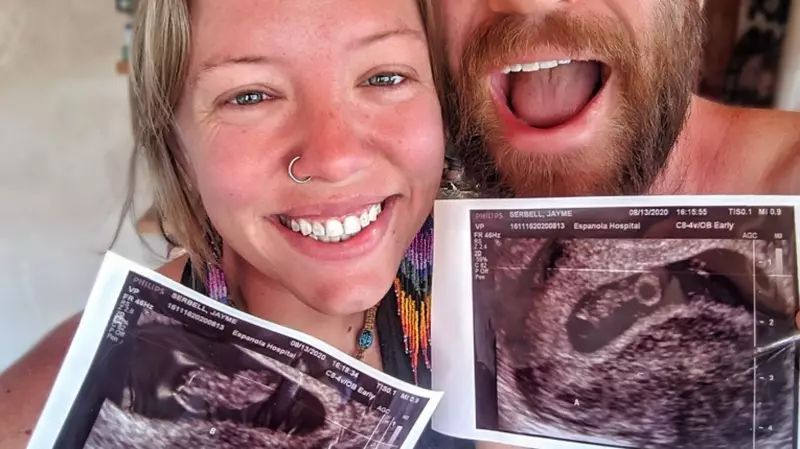
Back in 2020, we had bounced with joy upon discovering we were pregnant with two healthy identical twin boys, following three consecutive miscarriages. We had always talked about wanting twins, dreaming of the special bond they would share.
The doctors referred to them as Baby A and Baby B, but we had already chosen names: Seamus and Killian—two strong Irish names we loved. Yet even in our initial joy, sitting silently in the car examining our ultrasounds, a dark premonition surfaced.
"John," I said hesitantly, "I know this sounds morbid, but I want to name which baby is Seamus and which is Killian. In case we lose one of them... I don't want us needing to decide which name we keep later."
The Devastating Diagnosis
Tragically, halfway through the pregnancy, our fears materialized. We received an alarming diagnosis: Killian had become terminally ill with no chance of survival. Because he and his brother shared a placenta, doctors needed to cauterize Killian's umbilical cord—removing his life support and his connection to me—to save Seamus. Doing nothing would mean losing both boys.
For the remainder of the pregnancy, I carried both sons inside me. At each appointment, we would check on Seamus, watching him wiggle, pose, toss and turn. We'd joke about him becoming a dancer, gymnast or soccer player.
Then, with our permission, the ultrasound would scan over to Killian's lifeless body. Initially, he matched his brother in size and shape, but as the pregnancy progressed, he grew smaller and smaller. Eventually, Seamus's full-term size pushed Killian into a pocket under my right ribs. Every ultrasound revealed their distinct differences, reminding us of what would never be.
Society's Pregnancy Narrative
Growing up, I was taught that pregnancy represented a blissful time—new life was beautiful, an expanding belly was miraculous, something to celebrate openly. What I wasn't taught was how common miscarriage and pregnancy loss actually are.
I didn't know:

- That you could be pregnant and miscarry without even knowing it
- That you could suddenly experience the most painful period of your life without realizing the blood contained early stages of organs, fingers, toes—a child (2017 taught me this)
- That doctors could blandly inform you your pregnancy wasn't viable
- That you could be asked whether you wanted to "scrape out the dying tissue" now or pass it naturally at home, as casually as a grocer asking "paper or plastic?" (Spring 2019 taught me this)
- That asking "Why does this keep happening??" could land you in an overly fancy office where a doctor wearing a gaudy watch and designer suit would explain that a house downpayment might secure the possibility of maybe having children someday (Fall 2019 taught me this)
Navigating Dual Realities
Early in our twin pregnancy, when both boys seemed healthy, I still felt the sting of well-intentioned comments from strangers. "Oh, is this your first child?" they'd ask. Well, no, but hopefully they will be our first living ones, I'd think but never say.
After we lost Killian, we inhabited two starkly different realities. In public, people would excitedly ask, "Is it a boy or a girl??" How could I answer without trauma-dumping on someone simply wanting to bask in new life's presence? In private, we'd hold each other tight while removing the doubles of everything from our baby registry.
The Unspoken Complexity of Pregnancy
Pregnancy transforms a body into a conversation starter. A pregnant belly seems to invite questioning, guessing, commenting and even touching. Most of these interactions only make sense if pregnancy is assumed to be joyful, safe and inevitably headed toward a happy ending.
People ask, speculate and joke because pregnancy is often treated as a collective experience with predictable outcomes, not a private journey filled with uncertainty. It's easier to engage with the version of pregnancy we expect than the one that actually exists. I cannot recall a single stranger asking me how it was really going or whether it felt manageable.
What was missing from these interactions was any acknowledgment that pregnancy can be complicated, heavy or fragile. The assumption of hope and health didn't uplift me. Our reality didn't emotionally align with the comments we received, creating distance rather than connection.
Another Painful Encounter
Near the end of our twin pregnancy, while waddling through Walmart, a stranger struck up a conversation about a book I was holding. Living remotely during COVID-19's height, I missed human connection and felt excited to talk with someone new. Just as I was about to ask them another question, they playfully pointed and asked, "You sure you don't have two in there?"
Like the bus driver, they meant no cruelty—their voice carried warmth and playfulness. Yet my chest hollowed out like a cold underground cave, leaving me shivering with the remembrance of what I had lost.
Carrying Invisible Weight
Even when a pregnancy progresses smoothly, it can hold immense physical, emotional and psychological weight. Invisible grief proves deeply isolating, and I've come to understand how common such experiences actually are. People often carry more than they show.
Our experiences have fundamentally changed how I interact with pregnant individuals. I'm more careful with my words now. When appropriate, I ask about their heart: How are you feeling? I consciously avoid commenting on their bodies, having learned firsthand that physical appearance rarely tells the whole story. Sometimes, the most meaningful offering we can provide is simply space for whatever might live inside that unknown.