Kelowna Mother's Transplant Journey Hits Another Roadblock After 13-Month Wait
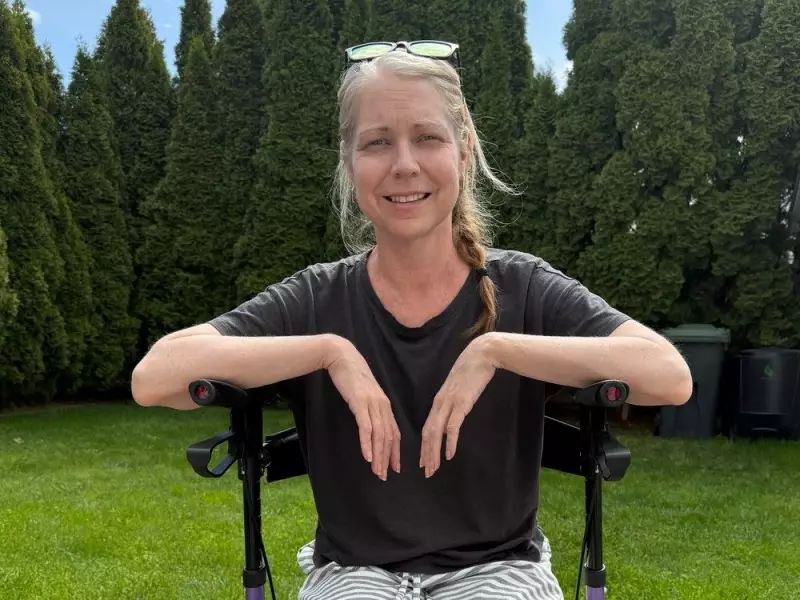
Lyndsay Richholt, a 43-year-old mother from Kelowna, British Columbia, is confronting a dire medical crisis as she continues to wait for a life-saving liver transplant after more than thirteen months on the waiting list. Her situation has intensified concerns about the challenges patients face within B.C.'s transplant system, particularly for those with complex medical conditions.
A Race Against Time with End-Stage Liver Failure
Richholt has been living with autoimmune hepatitis for eighteen years, a condition that has progressively attacked her liver and led to cirrhosis. Last spring, her doctors delivered a stark prognosis: without a transplant, she had approximately six months to live. Despite this urgent timeline, she has remained on the transplant list, navigating a system that she feels does not adequately account for her specific health needs.
The primary tool used to prioritize patients for liver transplants in B.C. is the Model for End-Stage Liver Disease (MELD) score. However, Richholt and her medical team argue that this scoring system fails to reflect the severity of autoimmune diseases. Her official MELD score is 11, which places her in a low-priority category. Yet, doctors have acknowledged that a more accurate assessment of her condition would yield a score of 25, significantly higher on the priority scale.

"It doesn't factor in the severity of the disease and all the symptoms and side-effects and complications that we're dealing with," Richholt explained. "The doctors at B.C. Transplant have acknowledged that the MELD score doesn't accurately calculate for autoimmune diseases."
Hope and Heartbreak in the Search for a Live Donor
Faced with the limitations of the deceased donor waiting list, Richholt turned to the possibility of a live donor transplant. An online plea resulted in an overwhelming response, with fifty individuals stepping forward as potential donors. Initially, health authorities were reluctant to approve a non-family member, but they eventually relented after extensive advocacy.
After months of rigorous testing, a compatible live donor was identified, and a transplant surgery was scheduled for December 10. However, just two days before the procedure, the donor suffered a fall on ice, forcing the cancellation of the surgery. This devastating setback has left Richholt in a state of limbo, with her health continuing to deteriorate.
Communication Breakdown and Systemic Challenges
Since the cancellation, Richholt has experienced significant difficulties in obtaining updates from healthcare providers. She reports that emails have gone unanswered, and phone calls have yielded little information. "The first person that picked up the phone just told me they couldn't tell me anything," she recounted, highlighting a frustrating lack of communication during a critical time.
A representative from B.C. Transplant clarified that the agency's role is primarily focused on working with donors and their families, rather than directly managing patient care for recipients. They emphasized that wait times are influenced by a multitude of factors beyond just the MELD score, and that live donation involves a separate, complex process requiring extensive compatibility testing.
The Broader Context of Transplant Delays in B.C.
Richholt's case is not isolated within the province's healthcare landscape. Recent reports have highlighted other instances of last-minute transplant cancellations and systemic strains, including a specialist shortage at Vancouver General Hospital that led to a lung transplant being called off, and scores of cardiac surgeries being postponed due to staffing issues. These incidents underscore ongoing challenges in B.C.'s medical system, particularly in specialized surgical fields.
As Richholt waits for a new surgery date, her story brings to light the human impact of bureaucratic and medical hurdles. It raises important questions about how transplant prioritization systems can be refined to better serve patients with autoimmune conditions and other complex health profiles. Her resilience in the face of such adversity continues to inspire, but the clock is ticking on her search for a life-saving solution.