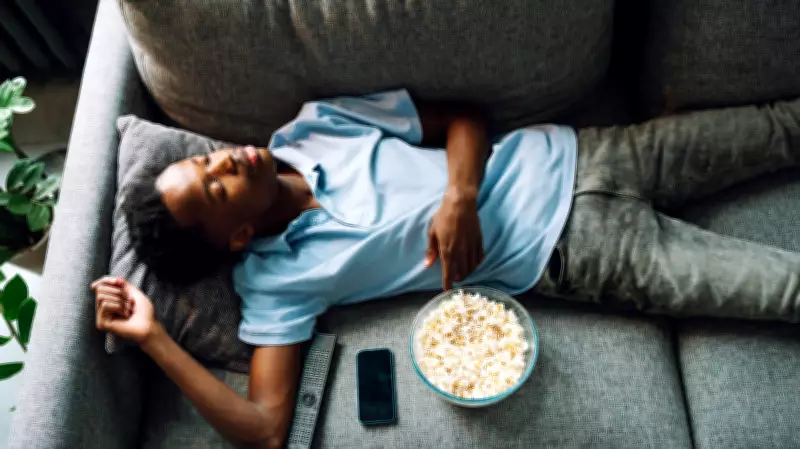
Why You Fall Asleep Watching TV: Sleep Experts Explain the Science
If you are like most individuals, you have likely experienced the phenomenon of drifting off to sleep shortly after starting a movie or television show in the evening. This common scenario often involves settling down with a partner to watch a highly anticipated season finale, only to nod off, wake up with a jolt, pretend you were awake all along, and continue viewing until sleep overtakes you once more. Sleep specialists have informed HuffPost that numerous factors contribute to this occurrence, with some being more alarming than others. Here is a detailed breakdown of what you need to understand.
The Role of Sleep Drive and Environment
When you engage in watching TV or films at night, you are typically in an environment conducive to sleep. Dr. Neal Walia, a sleep expert at UCLA Health in California, explained, "There are several environmental factors associated with watching TV or movies that promote sleepiness. In the morning, you develop what is known as a sleep drive, which represents your body's desire for sleep." Throughout the day, this sleep drive increases, reaching its peak at bedtime. Walia noted, "This drive is what initiates and sustains sleep." Most people watch entertainment in the evening after a demanding workday, when their sleep drive is at its highest, making it natural for the body to crave rest at this time.
Lack of Stimulation and Mental Distraction
Dr. Molly Atwood, director of clinical training in the behavioral sleep medicine program at Johns Hopkins Medicine in Baltimore, pointed out that a lack of stimulation often plays a key role. If you feel tired during the day, you might notice that fatigue dissipates when you engage in activities like scrolling on your phone or preparing a meal. Walia elaborated, "Your body has a mechanism to overcome sleepiness through stimuli." Watching TV or movies is generally a low-stimuli activity, unlike more engaging tasks such as browsing TikTok or folding laundry. Atwood added, "If you are lying down in a dark room, your body receives signals that it is nighttime. If the content is not very stimulating or is boring, any existing sleepiness can easily take over."

Another significant factor involves mental distraction. Walia stated, "Many patients with insomnia report difficulty turning their brains off. Throughout the day, our attention is usually occupied by something, often a screen, which diverts our focus." We rarely sit with our thoughts until bedtime, and if you are stressed about work or finances, this can hinder falling asleep. However, watching a show or movie shifts attention away from personal worries, encouraging the body to drift off.
Circadian Rhythms and Comfort Shows
Your body's natural circadian rhythm influences whether you are prone to falling asleep on the couch. Atwood explained, "For morning people, the body naturally promotes alertness early in the day and reduces it early at night." Individuals in this group tend to feel more tired in the evening, receiving signals that it is time for bed, which increases the likelihood of dozing off during TV viewing.
Additionally, rewatching familiar shows can make falling asleep more common. Many turn to comfort shows after a long day, and Atwood noted, "Our nervous systems become super calm and comforted compared to when watching an action or horror movie." Since you do not need to pay close attention to know the plot, your body can easily drift off.
Sleep Deprivation and Underlying Conditions
Most people are sleep-deprived, which facilitates falling asleep while watching TV. Walia emphasized, "A large portion of our population does not get the seven to nine hours of sleep needed each night." Individual sleep needs vary, but due to busy schedules, family responsibilities, and high-stress jobs, many do not meet their requirements. You might not realize you are sleepy until engaging in a low-stimuli activity like a movie, where sleep deprivation catches up.

Even those who sleep the recommended hours may experience poor sleep quality, leading to couch sleepiness. Walia said, "Many individuals have untreated or under-treated sleep disorders, such as sleep apnea, that disrupt sleep quality." If you occasionally fall asleep during a movie, it is not a major concern, but if it becomes a regular habit, evaluating your sleep is advisable.
When to Seek Professional Help
It is understandable to fall asleep on the couch after a hectic day or late night, but frequent occurrences warrant attention. Atwood advised, "If you are sitting upright with lights on and watching an engaging movie, yet still cannot stay awake, it might be time to reassess your overall sleep." If you believe you are getting enough sleep but still doze off during stimulating content, consulting a sleep specialist is recommended. A professional can test for underlying conditions that may disrupt sleep.
Indicators of Good Sleep Health
Being able to stay awake during nighttime TV or movies can signal good sleep health. Walia stated, "This is probably a good indication that you are not sleep-deprived or experiencing sleep disruptions." While some sleep disorders may prevent napping, overall, if you obtain sufficient high-quality sleep, you likely have robust sleep health.