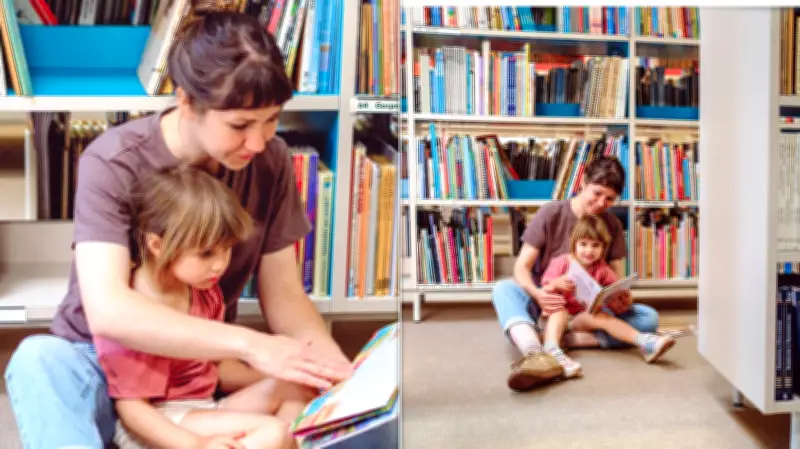
A parent's nightly ritual of reading to a child can yield significant developmental benefits, but educators say there are clear signs that reveal which children are being read to at home and which are not. According to literacy experts, differences in vocabulary range, comprehension, confidence with unfamiliar words, fluency, attention span, and willingness to engage with reading tasks are among the most apparent indicators.
Early Attitudes Toward Books
Sarah Calzone, program chair of early childhood education at Post University in Connecticut, explained that early attitudes toward books—such as exhibiting curiosity rather than avoidance—are a telling sign. Children who have been read to consistently often come to books with more confidence and comfort. They understand how books work: how to hold a book, turn pages, follow a story, look at pictures for clues, and recognize that print carries meaning.
These children are also more willing to participate in story time at school, make predictions, ask questions, retell parts of the story, and connect the book to their own lives. They tend to have stronger oral language skills, broader vocabulary, greater listening stamina, and more background knowledge—all of which support later reading comprehension.

Classroom Observations
Kathryn Starke, a national literacy consultant and author of "A Touchdown in Reading: An Educator's Guide to Literacy Instruction," noted that in preschool and kindergarten, it is very easy to see which children were read to at home. "These children are the ones who are drawn to the book nook and pick up books to 'pretend read' or identify high-frequency words or common words such as 'I, me, love, mom, dad,'" said Starke. They often have strong listening comprehension and are more likely to answer, ask, and interpret questions with ease before, during, and after reading.
Important Caveats: Access and Aptitudes
Experts stress that reading at home is not a magic fix for every family. Factors like access to books, learning differences, language development, bilingual households, and quality of instruction all play a role. Lisa Lightner, a special education advocate with A Day in Our Shoes, cautioned against oversimplifying reading challenges or immediately connecting them to a lack of being read to at home. She noted that up to 20% of students may have characteristics associated with dyslexia or other reading disorders.
"One of the biggest misconceptions in education is that struggling readers just need more exposure to books," Lightner said. Many families hear the question, "Have you tried reading to them at home?" and the answer is yes, for years. The issue may be that the child needs explicit, evidence-based reading instruction targeted to their disability.
How Often Should Parents Read to Children?
Tiffany Ohlson, an assistant professor of education at Flagler College and literacy specialist, recommends reading to children daily whenever possible, even if only for a short period. Consistency is more important than the length of each session. Reading aloud builds a foundation long before formal reading instruction begins, developing vocabulary, listening comprehension, memory sequencing, imagination, and attention.
Calzone added that it is recommended to begin reading aloud in the newborn period because shared reading supports early relationships, social-emotional development, and brain development. Allowing children to choose books increases motivation and engagement, while parent-selected books introduce new topics, vocabulary, and genres.
Reading Together Beyond Early Childhood
Parents do not need to stop reading aloud once children learn to read independently. Ohlson noted that reading together can continue through elementary, middle, and even high school years. Read-alouds expose children to more advanced language and ideas than they may be able to read on their own and provide opportunities for meaningful discussion. The activity can evolve from being educational to a bonding activity that keeps parents connected with their teenage children.