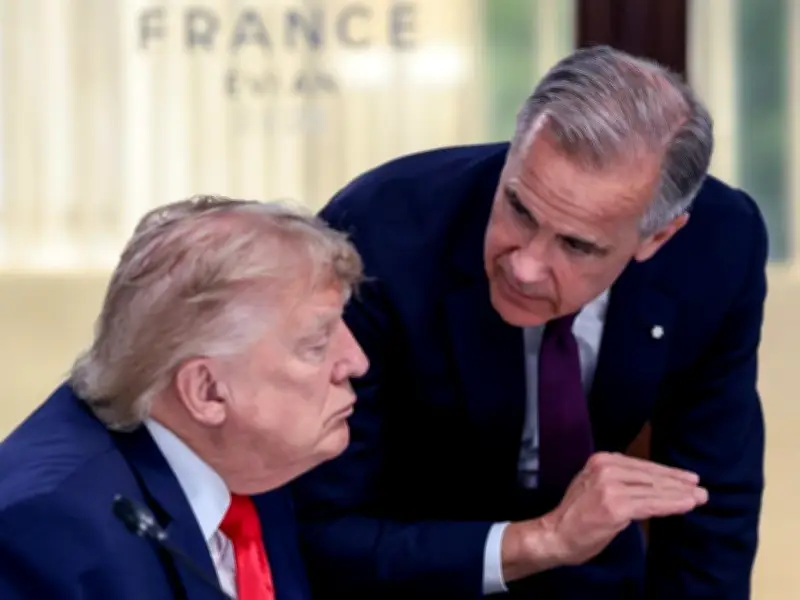
As the first formal review of the Canada-United States-Mexico Agreement (CUSMA) begins July 1, Canada is sending mixed signals that could undermine its negotiating position, according to agri-food policy expert Sylvain Charlebois. The review, which will shape investment, food prices and trade flows for years, demands clarity and consistency—qualities currently in short supply.
Mixed messages from Ottawa
Just weeks ago, the federal government released a video portraying Canada's reliance on the United States as a strategic weakness. Shortly after, Prime Minister Mark Carney told a New York audience that Canada could help "Make America Great Again." Charlebois argues these contradictory statements erode trust. "Trade policy is not branding. It is about confidence," he wrote. "Businesses investing billions in food processing plants, logistics networks and manufacturing facilities need to know where Canada stands."
Charlebois, director of the Agri-Food Analytics Lab at Dalhousie University, also challenged Carney's claim that Canada is creating jobs at twice the rate of the United States. Official data show Canada recorded a net loss of roughly 25,000 jobs over the past year, while the U.S. added nearly 900,000. "Canadians are entitled to their political preferences, but they are equally entitled to expect public statements to reflect publicly available data," he stated.

Export diversification: limited progress
While the government touts increased exports to countries beyond the U.S., much of the growth is driven by higher shipments of gold and other commodities. Statistics Canada notes that excluding precious metals, export performance is considerably weaker. Gains have largely come from established exporters selling more abroad, not from new Canadian firms entering foreign markets.
For agri-food, diversification remains minimal. Approximately 70 to 72% of Canada's agri-food exports still go to the United States. Charlebois calls this an economic reality, not a policy failure. "Geography matters. Integrated supply chains matter. Shared food safety standards matter. Decades of commercial relationships matter," he wrote.
Gordie Howe Bridge tensions
Recent disputes over the Gordie Howe International Bridge illustrate the stakes. Nearly one-quarter of all Canada-U.S. agri-food trade moves through the Detroit-Windsor corridor. The U.S. demand for a share of toll revenues—despite Canada financing construction—is seen by many as unreasonable. But Charlebois warns that trade negotiations are about leverage, not fairness. "Food supply chains do not respond well to diplomatic friction," he noted.
What Canada needs for CUSMA success
Charlebois emphasizes that successful trade negotiations require credibility, relationships and continuous engagement, not public rhetoric. "Canada has every right to defend its interests. It should do so firmly and confidently. But firmness is most effective when accompanied by consistency, accuracy and strategic discipline," he wrote.
CUSMA has created one of the world's most integrated food systems, benefiting millions through lower costs and resilient supply chains. As the review begins, Charlebois concludes: "Canada needs fewer slogans and more strategy. Our exporters, our farmers and Canadian consumers deserve nothing less."