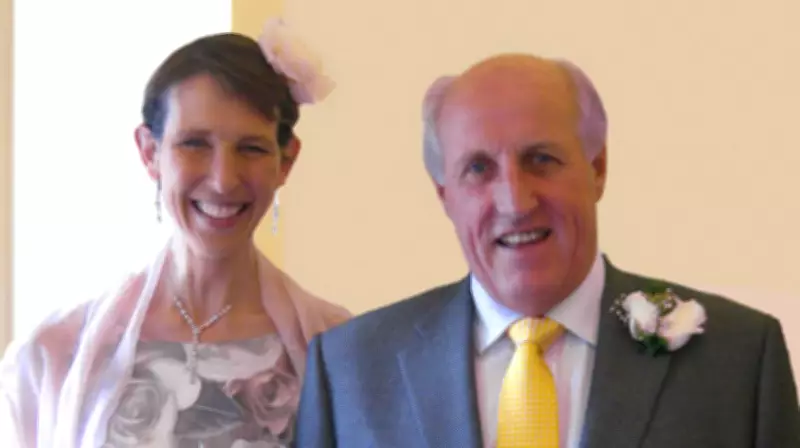
Sophie Olszowski and Simon appeared to be opposites when they first met. She was 38, cautious and complicated, while he was 54, brimming with unabashed zest for life. Their connection was immediate and profound, with Sophie realizing she was in love during a lazy summer evening spent lying beside a Trafalgar Square fountain, feeling joy seep through her skin.
A Life Built Together
Sophie moved into Simon's rural 15th-century cottage, which became their shared home and workplace. She worked in medicine while he worked in shipping, and together they discovered a previously unknown contentment. After a decade together, as many might contemplate retirement, Simon decided to retrain as a boatbuilder. They relocated to a stunning coastal town where he studied and eventually created a business with fellow graduates.
Simon transformed physically and emotionally through his new vocation—fitter, stronger, tanned, with resin in his hair and a pencil behind his ear. He declared he'd never known anything like their new life. Sophie felt the same, except for one persistent shadow: while loving him completely, she lived with constant dread of losing him.

The Roots of Fear
This fear wasn't entirely new to Sophie. A childhood marked by parental conflict had taught her to fear for her wonderful, careworn mother. She learned early that good things could turn bad, that night always follows day. At age seven, she developed a protective strategy: not to trust, believing that if she let her guard down, hell would break loose.
She sometimes forced herself to imagine her mother dying, reasoning that things were manageable if they weren't terminal. This exhausting logic persisted until she was thirty, when positive changes in her life shifted her focus and she worried less about her mother. Tragically, cancer soon shattered this truce, and her mother died at sixty-two.
This experience created a painful paradox: worrying about her mother hadn't kept her safe, but had worrying less allowed her to die? Having found Simon's all-embracing love, Sophie was determined not to take chances with losing him too.
Living with Secret Anxiety
Ashamed of what she considered unnatural fear, Sophie confided in only one friend about her relentless worrying. This friend became the voice of reason when Simon was late getting home or not answering his phone. Sophie needed this external perspective to remind herself that this was her problem to quell, not Simon's to survive.
She told Simon, "I can't believe, with you, one lovely day can follow another." This was both true and revolutionary for her. She occasionally glimpsed the possibility of disentangling loss from love, but only briefly.
Their shiny life together and her fear were so at odds that Sophie mostly kept her feelings hidden. She didn't want to oxygenate her anxiety with words. Simon knew its essence but not its magnitude. How could she burden him with feeling she doubted his competence when he'd managed fine without her for decades?
When they did speak of it, he would hug her, ask her not to mollycoddle him, and joke about her being scared when he went to the mailbox across from their house. But she was scared. She would go into their home office bathroom, turn on the light, and start the noisy fan so she'd miss any potential screech of tires and impact she feared was coming.
Medical Realities and Resilience
Simon once said, smiling, that he thought she'd like him best wrapped in cotton wool and kept in a drawer. In her defense—thin but true—Simon had a concerning cardiac record and had experienced some strange accidents. Their only skiing holiday ended after two hours when they found themselves in the hospital after Simon wrapped around a wooden post, blood trickling from his forehead.
Soon after, he fell backward while playing tennis, suffering three breaks in his wrist that required surgery. Such events, interspersed with "routine" procedures on his arteries and knees, oddly strengthened Sophie's resolve to stop worrying. He always survived, and was showing her, beautifully, how to live.

The Pandemic and Diagnosis
When the pandemic began, Simon suggested Sophie keep a diary. In April 2020, she noted he was safe while the world was at a standstill. By June, he was breathless. Her last entry in July contained a promise to herself: once he was okay, she would get help—psychiatrist, therapy, whatever it took—to shift her fear he would die so she could fully enjoy their life.
That same July, Simon was diagnosed with "stage 4 lung cancer in a non-smoker." When they were told that 25% of people with this diagnosis and suggested treatment "do well after six years," Sophie was inexplicably sure he would be among them. Seeing his confident smile in a photo taken on her birthday that year, as he held his favorite ice cream following his only treatment, now shreds her heart.
The Final Months
Steroids for the side effects he experienced after that one treatment elicited psychosis. As that eased, he had a stroke. Through ten weeks in the hospital, nine weeks at home, and a week in a hospice facility, Simon put all the strength his broken body and fractured mind could muster into being himself.
During that time, he insisted on wearing his favorite pink linen shirt for his palliative nurse's visits. He encouraged, with amusement, a complicated ramp construction that allowed his wheelchair into the garden so he could watch the sunset. He never admitted the futility of exercises his physical therapist said might help him walk again.
He ate pureed food—sometimes cooked just for him at his favorite restaurant even though it had been closed by COVID—fed by Sophie from a teaspoon. As they arrived at the hospice, even though he was barely speaking by then, he firmly said, "This is a good place to be when you're not feeling well." Sophie is certain he wanted to reassure her it was right to move him, even though he had to leave behind his beloved cat, garden, and view.
A few days later, he asked for whisky—it was his last breakfast. Simon died on March 3, 2021. He was seventy-one years old.
Aftermath and Questions
The undertaker let Sophie put a cookie in Simon's pocket before the funeral because he'd often told her he'd been scared since childhood about who would feed him in his grave. But did she fail him otherwise? She stopped worrying and her mother died. Was this the same?
Simon's relatives had heart disease and assorted medical emergencies but never cancer. She had blithely disregarded what was racing through him while making commitments in her diary to worry less. Tiny lapses in her arsenal of fear, and those she loved disappeared.
Searching for Understanding
Floundering in the slipstream of their life together, Sophie joined grief communities, forums, and online meetings. Connecting with others felt good, but she was still searching for someone like her—someone who had experienced the apparently irrational fear of losing their beloved, only to be left grieving in its wake.
She turned to the bestselling "Grief Works" by therapist Julia Samuel, who writes of losing a partner: "One of the most painful aspects ... is having to parent alone." This drove home the complex wound of childlessness alongside an obligation to accept her fortune—that she had been spared this particular facet of loss. Then Samuel plumbed her shame: "When couples commit, death is rarely something they envisage, certainly not until old age."
There Sophie was, on a dank March evening three years after Simon died, being told she wouldn't have anticipated this. Experts concede each experience of grief is unique but describe well-trodden healing paths. She felt increasingly isolated—no one talked about the grief that follows being so terrified your beloved will die that when it happens, you bounce between agony of their oblivion and shame at having rehearsed it.
She researched grief terminology. "Anticipatory grief" sounded accurate, but that's typically for those who are dying, not foreboding for people as alive as Simon during the years when sweat trickled down her back just from hearing a siren. She discounted "exaggerated grief"—it made her laugh, as she could hear Simon challenging: "How could grief for me be enough, let alone exaggerated?" Maybe "complex grief"? But no, an article subtitled "grief gone awry" stated, "We naturally resist thinking of our own death and even more so that of our loved ones."
Finding Resonance
Then she found a piece by Liz Jensen in the Guardian in which she wrote, "I was haunted by the terror that one day a child of mine would die. ... Superstitiously terrified that if I told anyone, it might come true, I kept it secret. But it was killing me." In her muddle of loss, Sophie finally felt seen as these tragic words chimed with her thoughts.
Could she have saved Simon by worrying better or harder or smarter? Did she somehow know he'd die an untimely death? She doubts both. One friend, finding middle ground, said, "I know you knew ... I just hoped you were wrong."
Life After Loss
Sophie has no idea how life would have felt, then or now, if she hadn't braced herself for this loss. Given their time again, she hopes she would live it without such turmoil. But this fear is part of her, and despite it, she was loved by an exceptional man.
Occasionally she feels herself sliding toward fear for loved ones—even for Simon, forgetting he's gone, or hoping he's safe wherever he is. But mostly, such unease is stilled now. Without him, she feels tethered to the earth by the thinnest thread, viscerally sure of what doesn't matter—almost all the preoccupations that backdrop our lives—and what does: love, love, love, kindness, open-heartedness, open-mindedness.
She has a to-do list, tatty now, that she wrote when he died, scared she might not know how to keep going or that she might even forget how to breathe: find cat; ring someone; bake; swim.
Finding Simon in Herself
Sophie can feel happy—it's striking and usually happens when she's doing "something Simon." Not just "his" jobs that no one shares now, or mending things in his shed, but when she catches herself thinking or behaving like him. He makes her a nicer person—and a better carpenter.
But beyond these moments, she doesn't know what's meant by "do enjoyable things," so she works and exercises because both deplete her sadness of its fuel. She regrets judging others who've spun like dervishes after loss. Perpetual motion isn't a sign you're fine—keeping going just keeps you going.
She longs to be invisible, except when needing company. She yearns for sleep and dreads hearing—and rarely answers—"How are you?" Any reply feels too complicated. But she recognizes it must be hard to imagine how she feels if she won't tell people, so she's glad she didn't rebuke the friend who listened, puzzled, while she explained how Simon is everywhere, then peered at her and said, "But you do know he's died?"
She does know. But she also knows that alongside his absence runs, at the best times, his presence far beyond memories. He's in each molecule and breath, every ripple, wave and cloud. She survives because she has him, not despite losing him.
A New Purpose
Part of Sophie's work now involves promoting better access to the sort of holistic hospice care Simon had, which means encouraging thought and talk of death, integrated with life. Not obsessively as she did, but in ways that support the dying and those left behind.
She's left behind in a place so beautiful it hurts. Simon can't feel today's sun on his face—her sadness at that leaves her able to see beauty, but no longer feel it. It's like taking a deep breath but being unable to fill her lungs.
She's not the person she was before Simon. She has strength built on his love and a new part of herself, carved by him, with capacity for joy. Maybe her life now is the pale price for such formative love, or perhaps she'll find it again. She couldn't have conjured up Simon, so all bets are off.
Sharing the Story
Sophie writes this not so readers can learn about her, but in case they might recognize themselves in her story. While nervous about revealing it, she believes Simon would say that if their story lights someone's darkness, then tell it.
Sophie Olszowski is a medical writer and journalist who has held senior roles in U.K. healthcare, written two books, and won awards for short fiction. She is now working to encourage greater openness about death and grief and improve understanding of what makes good end-of-life care while ensuring access for all who need it.