A Lifelong Family Competition Takes an Unexpected Turn
For decades, a playful yet persistent competition has defined my family dynamic. My brother Tony and I, now 57 and 59 respectively, have maintained this tradition since childhood, despite our parents divorcing 25 years ago. Whenever we gather and someone says something amusing, the question inevitably arises: "Who's the funniest in the family?" The voting always follows a predictable pattern—my brother votes for himself, my mother votes for herself, and I vote for myself, creating a perpetual three-way tie. My father never received a single vote, not even his own, because he simply never said anything particularly funny.
A Hospital Visit Reveals Surprising Humor
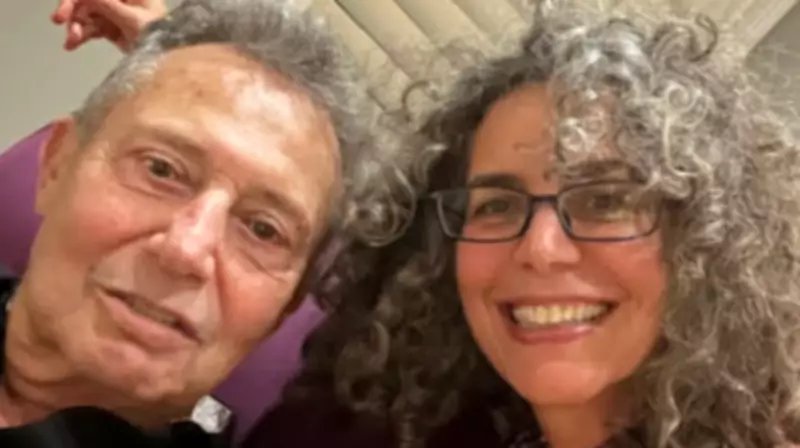
Everything changed during a hospital visit last month. My 21-year-old daughter accompanied me to see my father, who has been struggling with dementia. While physically okay, his memory lapses have become severe enough to land him in the hospital four times in the past year—he forgets to drink water, though he somehow remembers to eat cheeseburgers. As we sat by his bedside, my daughter noticed what appeared to be a pillow-like bulge under his hospital gown covering his stomach. "What's in there?" she asked curiously.
My father opened his eyes, spread his arms wide, and declared with perfect timing: "Lunch?" The three of us erupted in laughter. In that moment, I realized something profound—if my mother and brother had been present, this would have been my father's golden opportunity to finally call for that family vote. For the first time in my life, I would have voted for him as the funniest. Dementia had unexpectedly revealed a humorous side of my father I had never known.

Reevaluating a Distant Childhood Relationship
Looking back on my childhood, my father always seemed somewhat disinterested in my brother and me. At dinner, my stories would meander through what my mother called "branches that had branches." While my mother found my repetitive storytelling charming, my father would grow visibly impatient, his attention drifting to his food or changing the subject entirely. I constantly craved more of his time and attention, often feeling rejected.
When I began competing in sports, he showed slightly more interest, but it remained my mother who drove me to weekend tennis tournaments, sat through my wins and losses, and provided emotional support during our car rides home. My brother Tony agrees with my assessment—our childhood world revolved primarily around our mother. We referred to their bedroom as "Mom's room," and when seeking permission for anything, we knew to approach her first.
The Quiet Provider Who Imparted Lasting Wisdom
My father worked diligently as an optometrist, commuting an hour each way to his downtown office and even working half-days on Saturdays. He provided for our family with kindness but remained largely absent from our day-to-day lives. Despite this emotional distance, he managed to impart several pieces of wisdom that have guided me throughout my life.
One memorable lesson occurred during a family fishing trip to Duck Key, Florida, when I was about eight years old. As we rapidly reeled in yellowtail and snapper, filling our bucket to overflowing, a passing fisherman asked if we were catching anything. "Nah," my father replied casually. Once the man was out of earshot, he explained: "Never tell anyone you're catching fish at your favorite fishing hole."
Years later, as I panicked about leaving for college, my father offered another gem while seemingly absorbed in a television game. Without taking his eyes off the screen, he assured me: "Fantasy is always better or worse than reality." Then, during the summer after my first year of college, he initiated our first private conversation over vodka on the rocks, offering this Zen-like observation: "It's better to love than be loved."

Dementia Creates a New Connection
Now, during my weekly visits, my father displays a newfound interest in my life that feels both precious and bittersweet. He regularly asks, "What's the good word?" and listens intently as I discuss my tennis competitions. We've had the same conversation countless times—I mention I'm ranked third in the state for my age division, he expresses admiration, and I declare I'm "gunning for number one." Each time, he responds with encouraging words: "I think you can do it, sure, why not?"
Recently, when I confessed to being in a funk about caring more about improving my second serve than changing the world, he responded simply: "Same thing." This ambiguous statement has left me pondering its meaning—does he believe pursuing personal passions matters as much as grand ambitions, or is he suggesting both endeavors are equally futile? Perhaps he understands something I have yet to experience fully.
The Business Partner Who Lost His Mentor
For my brother Tony, our father's dementia represents a particularly painful loss. About 35 years ago, our father transitioned from optometry to commercial real estate, eventually bringing Tony into the business as his partner. My father possessed remarkable financial acumen, performing complex calculations with pencil and paper, remembering intricate details across multiple properties without ever using a calculator. Tony credits him with teaching everything about business and people management, noting they now "think exactly alike."
Tony first noticed cognitive changes about five years ago during an accounting meeting when our father repeated calculations he had just completed. These days, Tony occasionally consults him to maintain involvement and test his own reasoning, but he feels profoundly alone without his mentor and business partner. When asked about his memory struggles, our father responds with characteristic acceptance: "What can I do?"
Embracing the Father I Actually Have
Reflecting on my childhood desires for a different kind of father—one who listened attentively to my school stories and weekend adventures—I realize that if I've learned to think like him, he might respond: "Wanting is different than having. Notice what you have." No father is perfect, and I no longer want to miss what I actually have.
My father, even with dementia, continues to teach me the big things that matter. Next week, when we go out for burgers and maybe share vodka on the rocks, it won't feel awkward because we've grown accustomed to simply talking. I'll update him on my tennis and my feelings, and he'll give me his full attention for as long as I want. I might even ask what he meant by "same thing." Whatever emerges from our conversation, I'll have my father—perhaps more present now than ever before.