A Son's Tribute: His Father's Final Battle with Cancer and Unyielding Hope
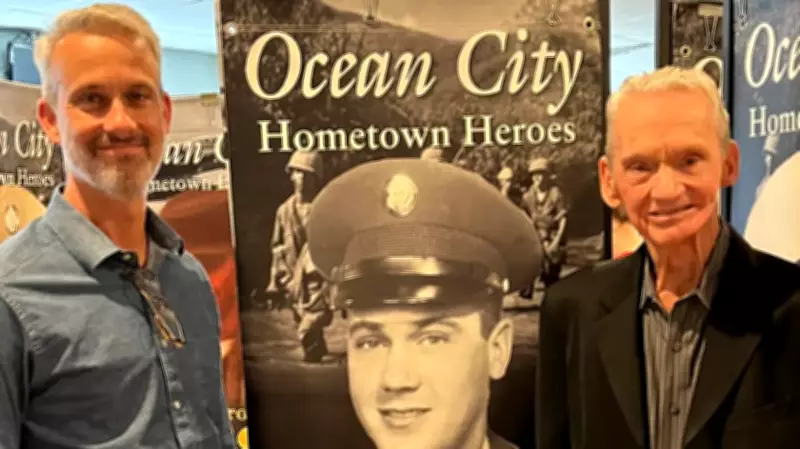
My father was always determined to go down swinging. This was a man whose life began with a year-long stay in a neonatal intensive care unit, receiving radiation for an enlarged thymus. He later served in Vietnam as the conflict escalated uncontrollably. Twenty-five years ago, he first conquered oral cancer. So, when doctors discovered another tumor in his mouth at age 80, he braced himself for yet another fight.
The Accumulated Burden of Illness
The challenge was that by this point, he was merely a shell of his former self. Decades of illness, numerous hospitalizations, and multiple surgeries had taken a severe toll on his body. Beyond the oral tumor, he battled prostate cancer, COPD, hypertension, a bovine aortic valve, a bionic hip, and countless other ailments too extensive to list. His frailty was evident to everyone—except my father himself. If he recognized it, he steadfastly refused to concede defeat.
I drove across the country to stay with him and my mother during his diagnostic testing. I accompanied him to Philadelphia's Penn Medical Center to consult with Dr. Ara Chalian, the surgeon who had operated on him decades earlier. Dr. Chalian had anticipated potential long-term consequences from the initial treatment, emerging around twenty years later. However, he confessed with some embarrassment that he never expected my father to survive this long.

Treatment Options and a Critical Setback
The proposed treatments included surgery, radiation, and chemotherapy. Given my father's fragile condition, Dr. Chalian recommended an oncologist's evaluation to assess their feasibility. Before that could occur, another crisis struck. During dinner one evening, he began choking, his skin turning a bluish-gray as he gasped for air. He had aspirated food through holes in his mouth—a lasting effect of the radiation decades prior. This was his third aspiration incident in recent years, each nearly fatal.
In the emergency room, the chief physician noted my father's do-not-resuscitate order, which specified no lifesaving measures if they would only prolong suffering. Did we wish to honor it? My mother and I agreed he would want the opportunity to recover. Given his fierce will to live, the decision felt straightforward. Yet, as we signed the paperwork, a sense of unease settled in—had we overstepped a boundary he intended to maintain?
Recovery and Relentless Determination
We remained by his side throughout the night, and true to form, he rebounded, as he always had. Intubation proved unnecessary. After four days in the hospital, he transferred to a rehabilitation center a few towns away. He complained about going but acknowledged the need to rebuild strength for the challenges ahead.
Over the next two weeks, I visited daily, bringing magazines, sneaking in McDonald's milkshakes, and sitting with him until exhaustion from rigorous physical therapy claimed him. His objective was to regain enough strength for surgery, and he approached his treatments with stoic resolve. Upon release, he had regained some vigor but weighed under 90 pounds, his ribs protruding sharply. He relied on a walker and an oxygen tank, yet he was thrilled to be home. I had purchased an OLED TV and a recliner for him; he sank into it like a general returning from battle.
The Oncology Consultation and a Father's Optimism
The day of the oncology consultation finally arrived. The biopsy identified spindle cell sarcoma. We learned surgery would be too risky, especially after his recent hospitalization, and chemotherapy too toxic. Only radiation remained a viable option. The doctor clarified they could not administer a curative dose but might manage to contain the cancer.
"Great!" my father exclaimed enthusiastically. "So you're telling me I might get another 10 or 15 years after this?" The doctor glanced at me, perplexed. Did this man, seemingly at death's door, genuinely believe he could live to 95? Yes, I nodded. He did. My father, ever the prankster, had mastered the art of self-deception, a trait I couldn't help but admire.

The doctor presented another alternative: doing nothing. The tumor appeared localized and might remain in his mouth without spreading, allowing him to live out his remaining time comfortably. My father dismissed this idea outright.
The Journey Forward and Difficult Choices
During the long drive home, as I worried over the news, my father was nearly giddy. After two months of anxiety that nothing could be done, we now had a plan. Watching him animatedly recount familiar stories, I wondered if he, hard of hearing, had comprehended the doctor's explanation that radiation wouldn't cure him, or if he understood the term "palliative." Yet, I couldn't bring myself to shatter his hope. Perhaps I was shielding him—or maybe myself.
We persevered. I arranged visits from his friends, uncertain if these were final goodbyes. His oldest childhood friend jokingly threatened to "whoop his behind" if he didn't recover. Two pals from Pennsylvania shared a final beer, reminiscing about better days. My daughters flew in from California. These encounters lifted his spirits and renewed his determination for the fight ahead.
The Final Hurdle and a Heartfelt Moment
Finally, we met with the radiation oncologist. He warned that radiation would be arduous, with exhausting side effects. He advised extracting my father's six remaining teeth and insisted on a feeding tube—both procedures daunting for a man in his condition. This was the pivotal moment.
The feeding tube proved his undoing. As I assisted him into a surgical gown, the cumulative strain of recent months was evident. His mind and spirit remained resolute, but his body continued to decline, and for the first time, I sensed doubt creeping in. Changing clothes left him breathless and weary. Once settled, he turned to me with a smile and said something unforgettable: "I'm glad you're here." He might have meant the pre-op room, but the glint of fear and hope in his eyes suggested a deeper meaning. I wanted to express that I couldn't imagine being elsewhere, that helping him was an honor and a privilege, a small repayment for all he had done. Instead, I patted his shoulder and smiled back. "I'm glad I'm here too, Dad."
The Final Chapter and a Lasting Lesson
The surgery proceeded smoothly, and I departed the next day to drive my wife and dogs back to California, with my sister arriving to relieve me. She called as we passed Toledo: the feeding tube had caused internal bleeding, and my father was back in the hospital, requiring intubation. We had little time to decide.
I realized we had never revisited his DNR order after overriding it initially. Back then, I knew he wanted to recover to fight the cancer—a desire that still burned within him. But this situation felt different; he was exhausted, in pain, with slimmer survival odds. In a panic, we authorized intubation, not wanting regrets, and trusting my mother's intuition after 57 years together.
As I drove toward California, lost in thought, my sister called again near Salt Lake City. He wasn't improving; it was time to make the call. After life support was withdrawn, doctors anticipated his passing within hours, but they underestimated him. He held on for another day and a half.
It devastated me not to be with him at the end. Lying in bed, receiving updates, I prayed for him to find the strength to let go. I spoke aloud, as if he could hear across the continent, expressing pride, assuring him he didn't have to fight anymore, promising we'd be okay. He had lived a meaningful, joyful life, leaving the world better. Even in dying, he demonstrated life's beauty and worth fighting for.
He taught me that hope isn't denial—it's choosing to find meaning in the struggle. It's showing up daily, even when the outcome is known. It's going down swinging.