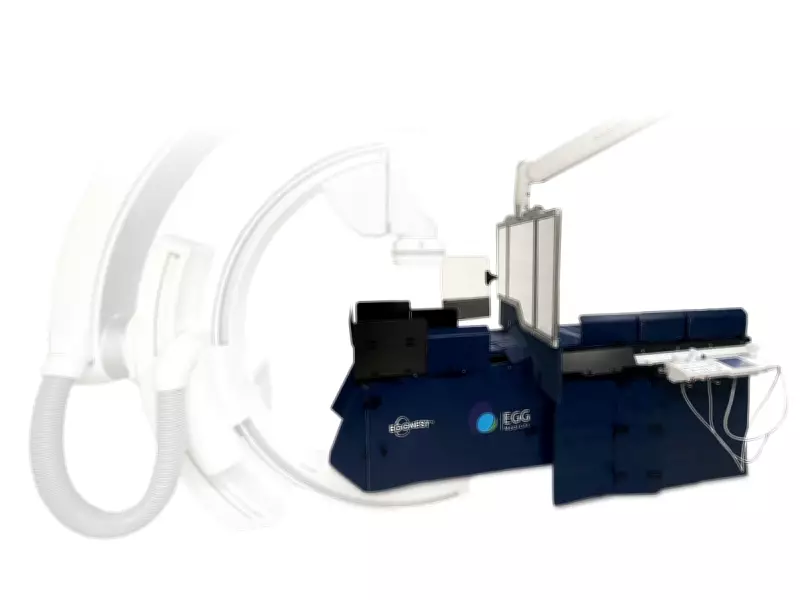
Egg Medical, a prominent developer of enhanced radiation protection devices, has unveiled groundbreaking clinical trial results at the Cardiovascular Research Technologies (CRT) 2026 conference. The data reveals that the company's EggNest system significantly reduces scatter radiation exposure for interventional teams, potentially eliminating the need for traditional lead aprons.
Revolutionizing Radiation Safety in Medical Procedures
The Late-Breaking Trial, presented by Dr. Santiago Garcia of The Christ Hospital, demonstrates that the EggNest platform provides superior radiation shielding compared to current standards. This innovation allows medical professionals to perform procedures safely without lead aprons or while wearing significantly lighter protective gear.
Ending the Decades-Long Compromise
"For decades, interventional specialists have faced a difficult choice: protect themselves from radiation exposure by wearing heavy lead aprons that cause back and joint damage, or risk long-term health effects," explained Dr. Garcia, the study's lead presenter. "This data proves we no longer need to make that compromise. The EggNest system provides superior protection for the entire team, whether working apron-free or with lightweight alternatives."

Key Clinical Findings
The study produced compelling evidence of the system's effectiveness:
- Annualized collar dose measurements showed significant reductions: 25.5 mrem for primary operators, 9.8 mrem for assistants, and 10.2 mrem for nurses when using traditional lead aprons
- When combined with ultralight aprons, total annualized body doses dropped dramatically to 1.41 mrem for primary operators, 2.1 mrem for assistants, and 1.0 mrem for nurses
- At these reduced exposure levels, clinicians would need to work an entire career to receive the radiation dose they currently experience in just one year under standard protocols
Personalized Protection Approach
The company advocates for a "Protection Is Personal" philosophy, recognizing that modern medical laboratories require flexible safety solutions. This approach empowers clinicians to choose whether to work apron-free based on their individual preferences and needs.
"Our objective is to provide clinicians with meaningful choices supported by rigorous, published data," stated Gavin Philipps, Chief Commercial Officer at Egg Medical. "Choice represents strength in responsible safety programs, not weakness. Through live dosimetry and personalized data, the EggNest system supports apron-free or ultralight apron workflows where approved, rather than imposing specific behaviors."
Transforming Clinical Practice
The study confirmed that whether clinicians opt for apron-free procedures or choose aprons that are 55% lighter than standard lead alternatives, the entire interventional team maintains radiation exposure levels below traditional thresholds. This advancement promises to protect the next generation of medical professionals from both radiation hazards and the physical strain of heavy protective equipment.
The EggNest system represents a significant step forward in medical radiation protection, offering healthcare providers enhanced safety options that could fundamentally change how interventional procedures are conducted worldwide.