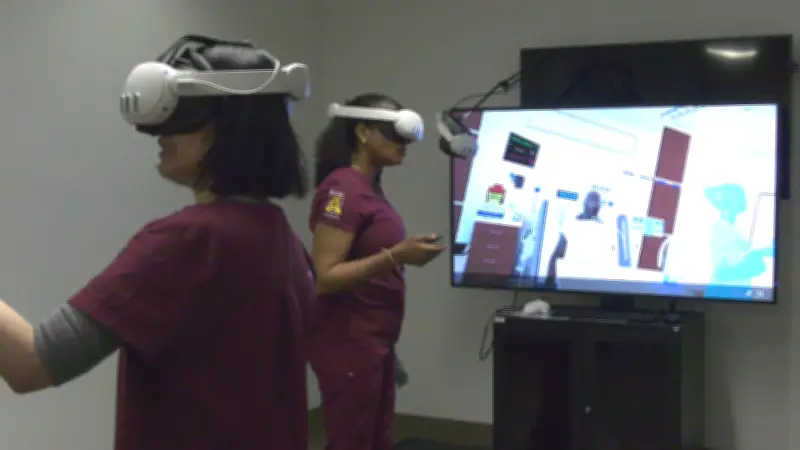
The University of Alberta's nursing faculty is expanding its virtual reality (VR) training program after a successful first year, according to a report by Alex Antoneshyn. The program, which uses VR to simulate scenarios such as resuscitation, has shown promising results in enhancing students' clinical skills.
Program Expansion Details
After a year of implementation, the faculty decided to broaden the VR training initiative to include more scenarios and reach more students. The initial success demonstrated that VR can effectively complement traditional nursing education by providing immersive, hands-on practice in a safe environment.
“The feedback from students has been overwhelmingly positive,” said a faculty representative. “They feel more prepared for real-life emergencies after practicing in VR.”

Impact on Nursing Education
The VR training allows students to repeatedly practice high-stakes procedures without risk to patients. This aligns with broader trends in healthcare education, where technology is increasingly used to bridge the gap between theory and practice. The expansion is expected to include additional modules for other critical care situations.
According to the university, the program has helped improve student confidence and competence in resuscitation techniques. The faculty plans to integrate VR more deeply into the curriculum over the next academic year.