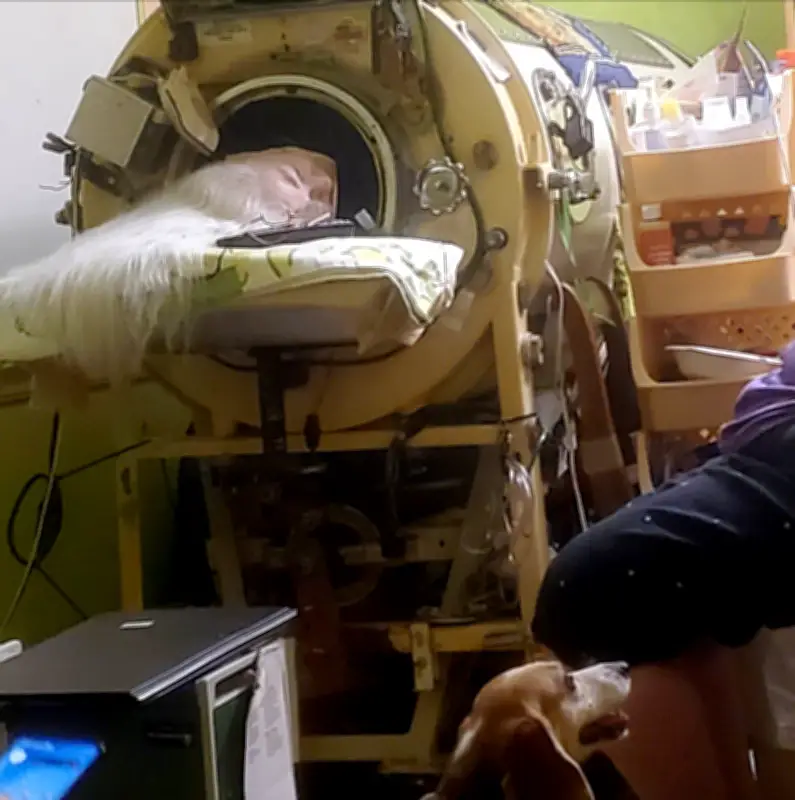
Martha Lillard, the last known polio patient in the United States who relied on an iron lung to breathe, died at age 78 in Oklahoma. Her death was confirmed by family members on July 10, 2026. Lillard had been living in Shawnee, Oklahoma, and used the iron lung for more than seven decades after contracting polio in 1952 at the age of 5.
Life with the Iron Lung
Lillard was one of the last remaining individuals in the U.S. to depend on an iron lung, a negative-pressure ventilator that encased her body up to the neck. She required the machine to breathe after polio paralyzed her respiratory muscles. According to her sister Cindy McVey, Lillard remained positive and resilient throughout her life, despite the limitations imposed by the disease. McVey described her sister as a "fighter" who never complained.
Polio outbreaks in the early 1950s infected thousands of children annually in the U.S. before the introduction of the Salk vaccine in 1955. Lillard was among those stricken before widespread vaccination. The iron lung, once common in hospital wards, became obsolete with the development of modern ventilators and the near-eradication of polio in the Western Hemisphere.

Legacy and Impact
Lillard's story drew attention to the lasting effects of polio and the history of medical technology. She was featured in local news reports and documentaries highlighting the iron lung's role in polio care. Her family noted that she maintained a positive outlook and enjoyed visits from relatives and friends. "She was an inspiration to everyone who knew her," McVey said in a statement.
Polio remains a global concern, with cases still occurring in Afghanistan and Pakistan. The World Health Organization continues efforts to eradicate the disease worldwide. Lillard's death marks the end of an era for polio survivors in the U.S., where the iron lung is now a relic of medical history.