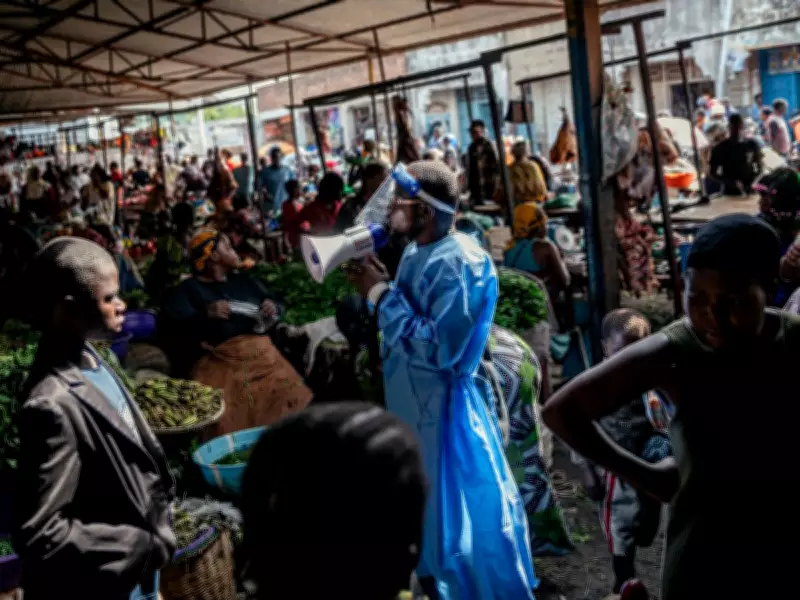
The number of confirmed Ebola cases in the Democratic Republic of Congo has climbed to 260 as officials updated their estimates of the outbreak's size and international health organizations warned of the risk of further spread.
Health Minister Roger Kamba reported the revised tally Saturday at a press conference in Bunia, the city at the epicentre of the outbreak, and said U.S. health authorities had agreed to support Congo's use of an experimental antibody treatment in a mid-stage trial. The research will help determine the efficacy of the medication, "which is very promising," he said.
Outbreak Details and Response
The outbreak, caused by the rare Bundibugyo strain of Ebola virus, has been reported across more than a dozen health zones in three Congolese provinces. Uganda has recorded nine cases, one of them fatal. Doctors Without Borders says the epidemic may be spreading faster than responders can fully assess, with hundreds of samples still awaiting testing.

"The reality today is that nobody knows the true scale and severity of this outbreak," said Alan Gonzalez, deputy director of operations with the medical group also known as Médecins Sans Frontières, in a statement Saturday. "Never before has an Ebola outbreak recorded so many cases so soon after its declaration."
The number of suspected cases fell to 349 on Thursday from a peak of 1,077 reported Tuesday after investigations and laboratory testing confirmed some infections and ruled out others, according to health ministry data.
Authorities have conducted more than 900 Ebola tests and expanded laboratory capacity to process 200 to 300 samples a day, Kamba said, helping investigators clarify the scale of the outbreak after weeks of uncertainty about how widely the virus had spread.
Testing Backlog and Health Worker Infections
Still, new suspected cases are being reported daily, and "hundreds of samples remain untested," Gonzalez said.
Among 84 newly confirmed cases reported late last week were five health-care workers in Bunia, raising concern that infection control is inadequate in health facilities.
Congo received support from the U.S. Centers for Disease Control and Prevention to pursue use of an experimental antibody treatment in a so-called phase-2 trial, Kamba said, without specifying which one. The therapy has shown promise in animal studies and early human testing, he said, with initial doses expected to arrive soon for further evaluation.
Candidate Therapeutics
Independent experts advising the World Health Organization last week recommended prioritizing three candidate therapeutics for evaluation in clinical trials among confirmed Bundibugyo cases: the monoclonal antibodies MBP134 and Maftivimab, as well as Gilead Sciences Inc.'s antiviral remdesivir.
Even though there are no approved vaccines or treatments for the Bundibugyo strain, WHO Director-General Tedros Adhanom Ghebreyesus encouraged those affected to seek early treatment.