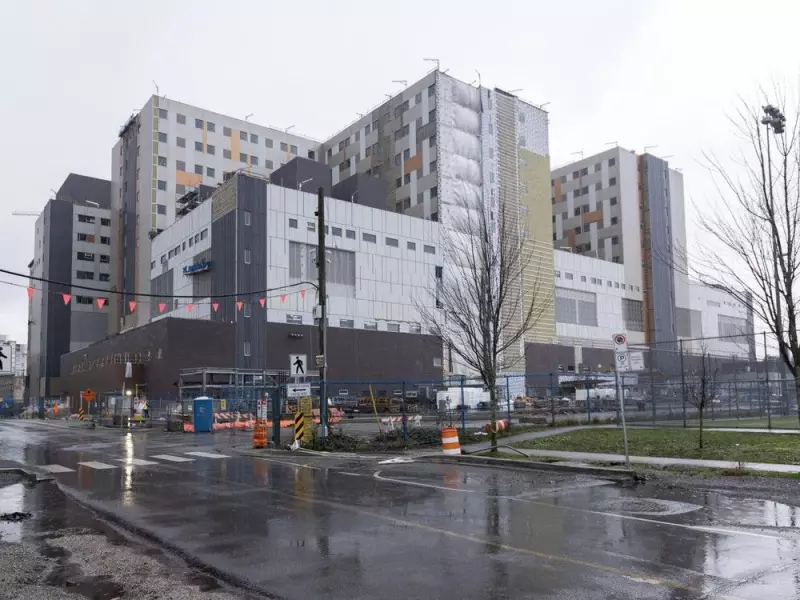
Vancouver is witnessing the rise of a monumental healthcare project that aims to redefine medical infrastructure for the 21st century. The new $2.18 billion St. Paul's Hospital, currently under construction in the False Creek Flats, represents a colossal leap from its humble 19th-century origins to a campus designed for technologies that have yet to be invented.
From Frontier Outpost to Modern Marvel
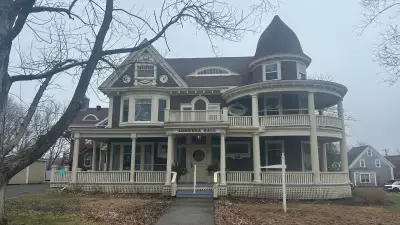
The story of St. Paul's began in the late 1800s, when Vancouver was a burgeoning frontier town. A group of nuns from Quebec, the Sisters of Providence, arrived by train and purchased seven lots of land on Burrard Street for $9,000. In November 1894, they opened a four-storey, 25-bed facility hailed by The Province newspaper as "an epoch in the history" of the young city.
That original hospital, built for under $27,000 excluding furnishings, was described as modern for its time, equipped with bath-rooms and operating-rooms. Managed by the Sisters of Providence—the namesake for today's operator, Providence Health Care—it served patients of all faiths and backgrounds, from labourers to paupers.

However, over a century later, the aging Burrard Street building faced severe challenges: leaking pipes, electrical issues, hazardous asbestos, and infrastructure at risk of catastrophic failure. By 2012, the situation was so dire that Providence's then-CEO, Dianne Doyle, stated the facility was "on life support."
Building a Health Campus for the Future
The solution, announced in 2015, was a radical relocation and expansion. The new site is located three kilometres east of the original, on a seven-hectare campus next to the Pacific Central train station near Main Street and Terminal Avenue.
This is not merely a new hospital building; it is envisioned as Canada's first integrated health campus, drawing inspiration from world-renowned models like the Cleveland Clinic and Johns Hopkins in the United States.
The scale is immense. The new acute care hospital will span 2.1 million square feet, nearly double the size of the current facility. It will be connected by a skybridge to a 375,000-square-foot research centre, fostering a direct link between clinical care and medical innovation.
A Construction Site Like a Small Village
A recent tour of the Station Street construction site revealed the staggering effort behind this vision. At present, more than 2,000 people are working on the project daily. Over the entire lifespan of the build, that number will exceed 10,000 workers.
The site buzzes with activity, resembling a small, dedicated village focused on a single goal: creating a hospital designed not just for today's medical technology, but for advancements that do not yet exist. This concept of "future-proofing" is central to the design, ensuring the facility can adapt and evolve for decades to come.
The journey from a $27,000, 25-bed hospital serving a frontier town to a $2.18 billion health campus preparing for the future encapsulates Vancouver's own growth. The new St. Paul's stands as a testament to the enduring mission of its founders—to serve all members of the community—while boldly stepping into its next role as a cornerstone of Canadian healthcare innovation.