Water Pipe Failure Causes Significant Flooding at Montreal's Douglas Hospital
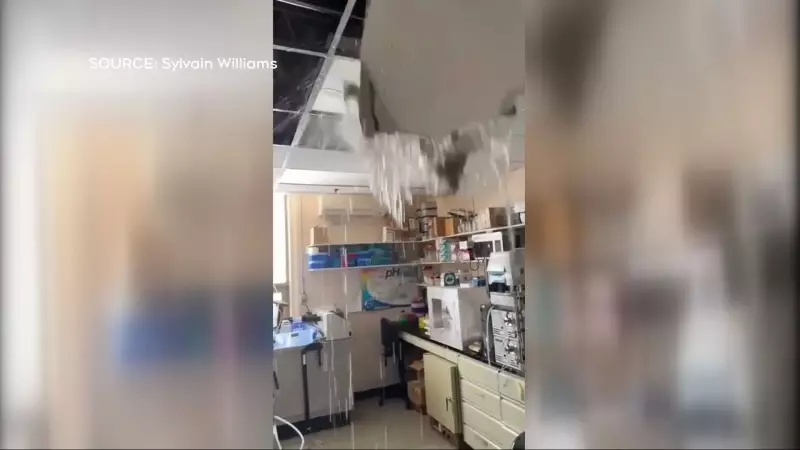
A sudden and substantial water pipe rupture at the Douglas Mental Health University Institute in Montreal has resulted in extensive flooding within the facility's research laboratories. The incident, which occurred on Monday, January 26, 2026, sent torrents of water cascading onto sensitive laboratory equipment, potentially causing considerable damage to critical research infrastructure.
Video evidence submitted to media outlets captures the dramatic moment when ceiling tiles collapsed under the weight of accumulating water, highlighting the severity of the infrastructure failure. The Douglas Hospital, officially known as the Douglas Mental Health University Institute, is a major psychiatric teaching hospital affiliated with McGill University and plays a vital role in mental health research and treatment within Quebec.
Impact on Research Operations and Infrastructure
The flooding incident raises immediate concerns about the integrity of specialized laboratory equipment used for psychiatric and neurological research. Such equipment often represents significant financial investment and is crucial for ongoing studies into mental health conditions, brain function, and treatment development.

Hospital administrators and facility managers are now faced with the dual challenge of assessing the extent of the damage while simultaneously working to restore normal operations. The timing of this incident is particularly unfortunate given the hospital's important role in advancing mental health science during a period when such research has never been more critical to public health.
Broader Implications for Hospital Infrastructure
This pipe failure at a major Montreal healthcare institution underscores the ongoing challenges facing aging hospital infrastructure across Canada. Many healthcare facilities, particularly those constructed decades ago, require substantial investment in maintenance and modernization to prevent similar incidents that can disrupt patient care and research activities.
The Douglas Hospital incident serves as a reminder that infrastructure vulnerabilities can have direct consequences for healthcare delivery and medical research. As investigations into the specific cause of the pipe failure continue, questions will likely emerge about preventive maintenance schedules, infrastructure funding, and contingency planning for such emergencies in healthcare settings.
While no injuries were reported in connection with the flooding, the disruption to research activities and potential equipment damage represents a significant setback for the institution's scientific work. The hospital community now faces the task of recovery and assessment as they work to minimize the long-term impact of this unexpected infrastructure failure.