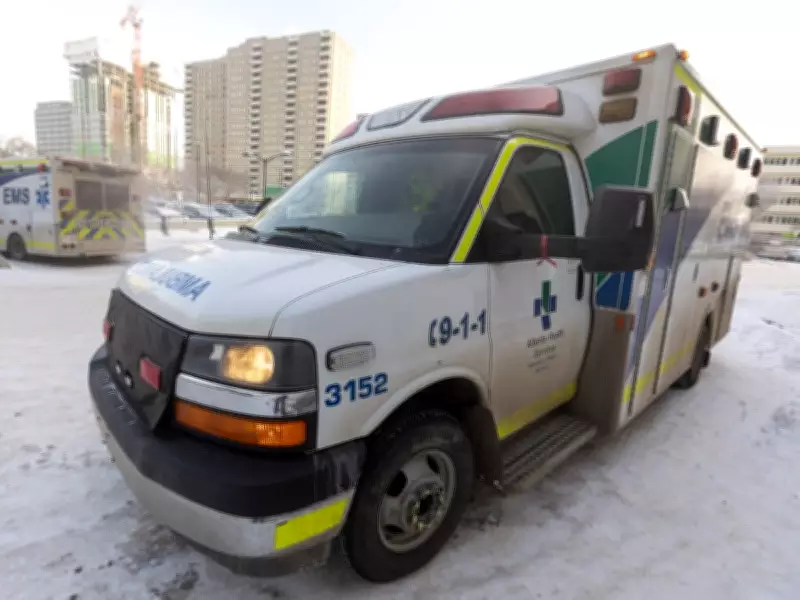
When does a medical situation require an ambulance, and when might alternative care be more appropriate? This question lies at the heart of a new initiative launched by Alberta Emergency Health Services (EHS-Alberta), designed to optimize emergency response and patient outcomes across the province.
A Shift in Emergency Response Strategy
Currently, data from EHS-Alberta reveals a striking statistic: approximately 40 percent of ambulance calls do not result in patients being transported to hospitals. With each ambulance typically staffed by two emergency medical technicians (EMTs), this represents a significant allocation of time and personnel to calls that may not necessitate hospital-level care. More critically, when ambulances are deployed for non-urgent matters, it reduces the availability of these vital resources for individuals experiencing genuine medical emergencies.
"People are calling for help," explained Les Fisher, managing director of EHS-Alberta. "And, to this point, our default option for help has been to send two paramedics in an ambulance and take the patient to hospital. That approach isn't always the best for patients or for the system, as it ties up emergency ambulances unnecessarily."

The HELP-U Pilot Project: A New Approach
To address this inefficiency, EHS-Alberta is launching the HELP-U pilot project, commencing March 17 in Edmonton and Calgary. This innovative program introduces six specialized vehicles—three in each city—dedicated to handling calls where medical assistance is needed, but hospital transport is unlikely to be required.
Each vehicle will be operated by a single primary caregiver, who will arrive at the scene to assess and treat the patient. Rather than automatically transporting individuals to emergency wards, these caregivers will guide patients through after-care options, which may include scheduling doctor's appointments, contacting family members, or arranging transportation for follow-up medical care. They will also provide information on available walk-in clinics and consult with pharmacists regarding immediate medication needs.
Common Non-Emergency Calls and Patient Navigation
Fisher noted that the types of non-emergency calls vary widely, but often involve minor injuries or complaints such as sore throats, where individuals are uncertain about the appropriate course of action. "We have a range of options, and we can help them navigate the system," he said. "Whether it's a referral to 811 for advice or an assessment by a paramedic over the phone, we'll inform them of their choices. Frequently, patients can be driven by family members to receive care, or they may benefit from a comprehensive assessment followed by guidance through the healthcare system."
The new vehicles, which will be clearly marked but not equipped with lights or sirens, represent an additional tool in EHS-Alberta's arsenal. "This is just another tool to ensure we're meeting our patients' needs effectively," Fisher emphasized.
Broader Implications and Future Outlook
By diverting non-urgent calls away from traditional ambulances, the HELP-U pilot aims to enhance overall emergency response capabilities. This initiative could lead to reduced wait times for critical cases, better resource allocation, and improved patient satisfaction by offering tailored care solutions. As the pilot progresses, EHS-Alberta will monitor its impact on call volumes, ambulance availability, and patient outcomes, potentially paving the way for broader implementation across the province.
This strategic move underscores a growing recognition within healthcare systems that not all calls for help require the same level of response. By integrating more nuanced approaches, Alberta is taking proactive steps to streamline emergency services and ensure that every patient receives the most appropriate care in a timely manner.