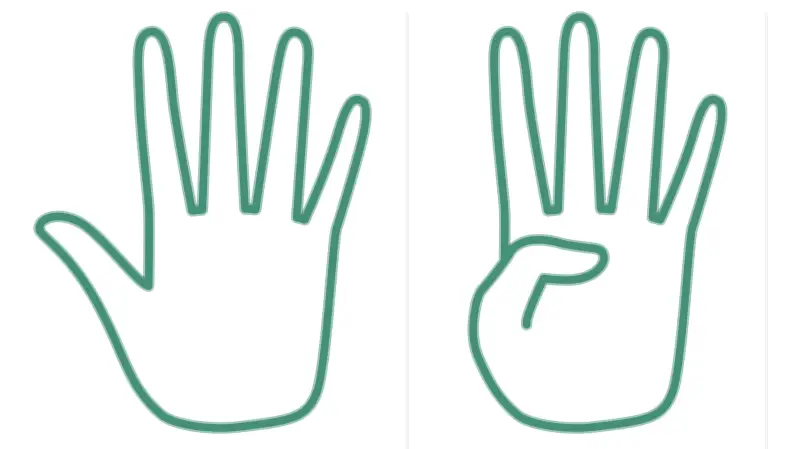
The thumb test is a simple maneuver that involves laying your thumb across your flat palm to assess joint laxity. While many people perform routine health checks at home, such as checking pulse or breast self-exams, the thumb test is less familiar but potentially revealing. This test can offer clues about a possible heart issue, specifically an aortic aneurysm. Cardiologists explain what the thumb test entails and its significance.
What Is the Thumb Test?
According to preventive cardiologist Dr. Tracy Paeschke, the thumb test is an easy way to check for an increased risk of aortic aneurysm. It involves placing your thumb across your flat palm; if the thumb extends beyond the edge of the palm, it indicates joint laxity or stretchiness, which can be associated with connective tissue diseases. Conditions like Marfan syndrome and Ehlers-Danlos syndrome are linked to a higher risk of aneurysms, particularly aortic aneurysms, due to weakened blood vessel walls.
Also known as the thumb-palm test, a positive result does not confirm an existing aneurysm. Instead, it helps detect joint hypermobility associated with these disorders, which carry an increased risk of aneurysms. A 2021 study found that individuals with a positive thumb sign had a high likelihood of having an ascending aortic aneurysm, a widening of the large blood vessel in the chest that carries blood from the heart to the body.

Limitations of the Thumb Test
Dr. Marc Bonaca, a cardiologist and vascular medicine specialist, emphasizes that the thumb test is not diagnostic. Most people with an aortic aneurysm will have a negative thumb test, and those with a positive test may have a connective tissue condition but not necessarily an aneurysm. The 2021 study also noted that the majority of aneurysm patients do not have a positive thumb-palm sign, so a negative result does not rule out an aneurysm.
Dr. Tarak Rambhatla, a cardiologist with Miami Cardiac & Vascular Institute, states that the thumb test is not accurate or reliable as a screening tool. Many healthy individuals may test positive without any connective tissue disease or vascular issues, while others with aneurysms may have a normal thumb test. Screening for aneurysms requires imaging such as echocardiography, CT, or ultrasound, not physical maneuvers. He warns that a positive result can cause unnecessary anxiety, and a negative result may provide false reassurance. Over-reliance on the thumb test could delay proper screening in high-risk individuals.
Dr. Glenn Hirsch, a cardiologist at National Jewish Health, notes that other factors are more predictive of aortic aneurysms, such as cardiovascular issues or family history. High blood pressure is another cause of aortic aneurysms, where the thumb test is less helpful.
What to Do If You Have a Positive Thumb Test
If you have a positive thumb test, Dr. Bonaca advises discussing with your doctor whether it suggests an underlying connective tissue disease and if additional testing is needed. Your doctor may perform a more complete physical exam and order scans. Aneurysms are diagnosed with imaging, and guidelines recommend testing for specific reasons in at-risk individuals.
Dr. Rambhatla adds that if a positive thumb test is accompanied by features suggestive of Marfan syndrome, Ehlers-Danlos, or a family history of aneurysm or dissection, a physician should be consulted for formal evaluation and aortic imaging. In an otherwise healthy person, an isolated positive test usually does not warrant urgent concern but can be mentioned at a routine medical visit.
Dr. Hirsch recommends discussing risk factors with your physician to determine appropriate screening and monitoring. Risk factors for aortic aneurysms include age over 65, male sex, smoking, high blood pressure, connective tissue disorders, family history of aneurysms, and bicuspid aortic valves. Other signs of connective tissue disorders include being double-jointed, joint dislocations, and even tooth loss.

Key Takeaways
- The thumb test is a simple home check for joint laxity linked to connective tissue diseases.
- A positive test does not confirm an aneurysm; imaging is the gold standard for diagnosis.
- Consult a doctor if you have a positive test, especially with other risk factors or symptoms.
- The thumb test should not replace medical evaluation or guideline-based screening.