Measles remains a significant public health challenge across the United States, with outbreaks causing widespread illness, particularly among unvaccinated individuals. Over 90% of measles cases in the U.S. during 2024 and 2025 have occurred in people who were not vaccinated. In 2025, a major outbreak in West Texas resulted in the deaths of two children, and additional outbreaks have emerged in South Carolina, Utah, and other states. The country is now at risk of losing its measles elimination status, which requires no continuous transmission for 12 consecutive months.
World Cup Concerns and Vaccine Hesitancy
As the U.S., along with neighboring Mexico and Canada, continues to experience outbreaks, medical professionals are increasingly concerned, especially with the World Cup approaching this summer. Research indicates growing hesitancy toward the MMR vaccine, which protects against measles, largely fueled by anti-vaccine rhetoric from high-profile figures.
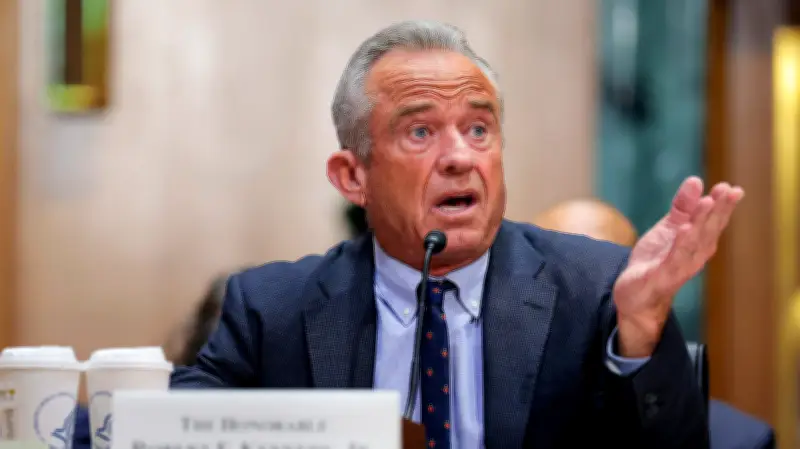
Health and Human Services Secretary Robert F. Kennedy Jr. has a history of making anti-vaccine statements and falsely claiming that the MMR vaccine has not been safety tested. During the Texas outbreak, Kennedy promoted vitamin A and cod liver oil as treatments for measles while failing to emphasize the MMR vaccine as the most effective preventive measure.

Impact of Kennedy's Vitamin A Claims
Kennedy's advocacy for vitamin A appears to have directly influenced public behavior. A study published in the Journal of the American Medical Association found that online searches for "vitamin A" and "measles" surged in 2025. Specifically, vitamin A searches increased by 44% on February 26, 2025, and by 100% on March 22, 2025.
Concurrently, the American Poison Centers reported a 38.7% increase in vitamin A exposures among children between January 1 and March 31, 2025, compared to the same period in 2024. Kennedy made his vitamin A treatment claim during a Fox News interview on March 4, 2025.
Missing Context and Exaggerated Claims
Dr. Elizabeth Soda, an infectious disease physician and volunteer with the National Public Health Coalition, noted that Kennedy's statements contain a kernel of truth but lack crucial context. "He never actually claims that vitamin A would prevent measles. He talked about vitamin A being a treatment for measles, and so on face value, that's actually true," she said. Vitamin A can be used to treat severe measles in hospital settings. However, Kennedy downplayed the role of vaccination in preventing measles, shifting the narrative away from proven prevention methods.
Timothy Caulfield, co-founder of ScienceUpFirst and author of "The Certainty Illusion," emphasized the real-world impact of such misinformation. "This information can kill people, and it creates trends that can be very difficult to reverse once the belief or even the doubt sets in," he said.
Broader Consequences of Health Misinformation
Health misinformation is affecting everyone, regardless of personal beliefs. Childhood vaccination rates are declining across the country, and communities with low vaccination rates experience measles spread, putting vulnerable groups at risk, including infants too young for vaccination, chemotherapy patients, and those with advanced HIV. Infected individuals can also transmit the virus while traveling on planes or trains.
Dr. Soda stressed that these forces are having a profound impact on public health. "Without a doubt, it is affecting the way individuals are thinking about health right now, 100%," she said. Caulfield added that the problem is systemic and affects entire communities, not just those who believe the misinformation.
The Role of Social Media and AI
Misinformation spreads rapidly on social media, where 36% of people obtain health information. Caulfield warned that emerging AI technology could exacerbate the issue. "Layer on top of that now the ability to make AI content that can be incredibly persuasive," he said. "This is going to be a generational issue."
The persistence of anti-science rhetoric and established distrust in public health systems makes recovery challenging. As Dr. Soda noted, "It's amazing how it's so hard to build up — think about all the time, effort, people, years that went into building up some of these public health systems for them to be decimated in months."