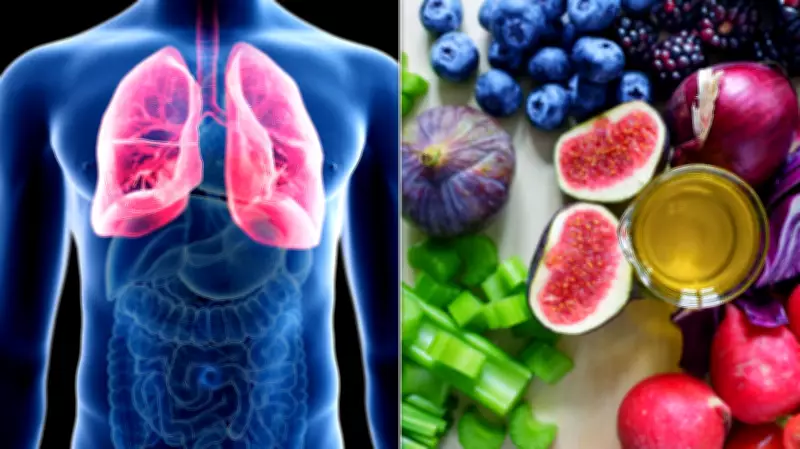
USC Research Uncovers Paradoxical Link Between Nutritious Diets and Lung Cancer in Young Non-Smokers
A groundbreaking study from the University of Southern California has uncovered a startling correlation that challenges conventional health wisdom. Researchers examined 187 lung cancer patients under the age of 50, the majority of whom had never smoked, and discovered they maintained diets significantly healthier than the national average. This unexpected finding suggests there may be hidden environmental risks associated with certain fruits, vegetables, and grains that warrant urgent scientific investigation.
Dietary Patterns and Biological Differences in Lung Cancer
The patients in this study were diagnosed with a biologically distinct form of lung cancer, different from the type commonly linked to smoking. What stood out remarkably was their dietary profile. These individuals achieved an average Healthy Eating Index (HEI) score of 65 out of 100, which is notably higher than the national average of 57. Each participant consumed greater quantities of fruits, vegetables, and whole grains compared to typical American adults.
"Our research indicates that younger non-smokers who eat a higher quantity of healthy foods than the general population are more likely to develop lung cancer," explained Dr. Jorge Nieva, the lead investigator and a medical oncologist at USC Norris Comprehensive Cancer Center. "These counter-intuitive findings raise crucial questions about an unknown environmental risk factor for lung cancer related to otherwise beneficial food that needs to be addressed."

Gender Disparities and Study Limitations
The study also revealed gender-based patterns. Women in the same age demographic were diagnosed with lung cancer more frequently than men, despite neither group having a smoking history. Female patients reported consuming even more fruits, vegetables, and grains than their male counterparts. However, researchers emphasize several important limitations to this research.
First, the results demonstrate only a correlation between healthier diets and lung cancer incidence among participants—not direct causation. Second, the study involved a relatively small sample size, making it unclear how these findings might apply to broader populations. This research should be viewed as preliminary and exploratory rather than conclusive.
Pesticides as a Potential Environmental Culprit
Dr. David Carbone, a contributing researcher and leading lung cancer expert at Ohio State University Comprehensive Cancer Center, has observed this pattern throughout his decades-long career. "I've been in this business 30 or 40 years now, and I have noticed that it seems like our young patients with lung cancer seem to be the people who are objectively the healthiest," Carbone told HuffPost.
One hypothesis centers on pesticide exposure. Fruits, vegetables, and whole grains typically contain higher pesticide residues compared to dairy or meat products. Agricultural workers who handle these chemicals regularly show elevated lung cancer rates, supporting this theory. However, Carbone cautions that pesticides aren't definitively proven as the cause.
The study didn't measure actual pesticide levels in patients' foods or bodies through blood or urine samples—instead relying on estimated exposure levels. Additionally, no subset analysis examined lung cancer patients who exclusively consumed organic produce grown without pesticides.
Global Context and Practical Considerations
Carbone highlighted that this was a U.S.-based study, while European countries with stricter pesticide regulations still diagnose young non-smokers with lung cancer. This suggests the issue may involve multiple factors beyond just agricultural chemicals.
Regarding common protective measures, Carbone noted that "a lot of these [pesticides]—especially the insecticides—are designed to stick to the fruit and not wash off when it rains, so I'm not entirely sure how effective [washing the fruit] is." This raises questions about whether peeled fruits like bananas and oranges might pose less risk than unpeeled varieties like apples.

Research Biases and Future Directions
Carbone also pointed to potential selection bias in the study. Patients who volunteer for clinical research often maintain healthier-than-average diets and feel more comfortable sharing personal information, which could skew results toward health-conscious participants rather than representing all young non-smokers with lung cancer.
"This is certainly not proof that eating these things causes lung cancer—that is way overextrapolation of the data," Carbone emphasized. "This is association, not causation." He described the study as exploratory, looking for signals, with healthy diets emerging as one such signal requiring further investigation.
The researchers conclude that while these findings are provocative, they primarily indicate the need for more comprehensive studies examining environmental factors in lung cancer development among young non-smokers. All hypotheses generated by this research should be rigorously tested through larger, more diverse population studies before any definitive conclusions can be drawn about the relationship between diet and lung cancer risk.