Wildlife Advocates Demand Investigation After Bear Cub Suffers Burns in Slash Pile
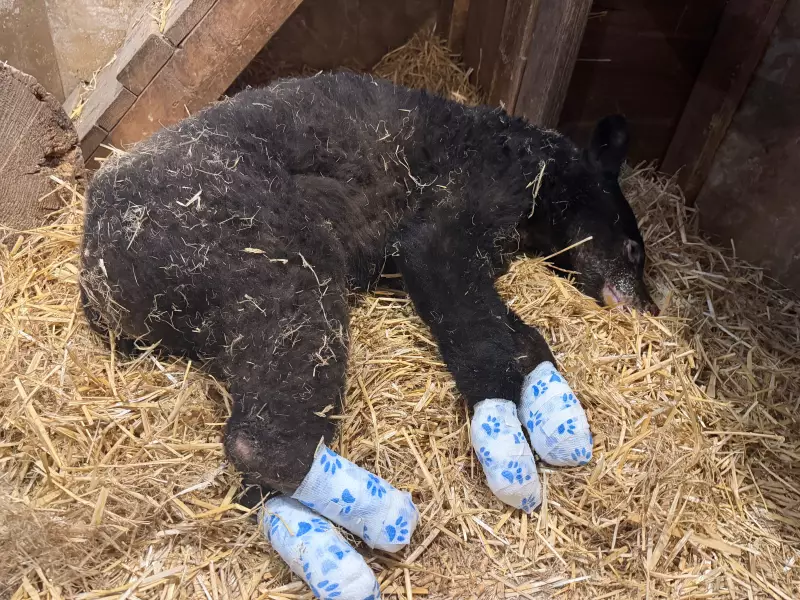
A distressing wildlife incident in British Columbia has sparked urgent calls for an official investigation. A black bear cub, discovered in sub-zero temperatures and snowy conditions, is now facing a long and challenging road to recovery after rescuers found the animal had sustained significant burn injuries.
Rescue Operation Reveals Additional Trauma
The young bear was initially located in a vulnerable state, struggling to survive the harsh winter elements. Wildlife responders quickly mobilized to provide emergency care, but during their assessment, they made a shocking discovery. Beyond exposure to the cold, the cub exhibited severe burns that required immediate veterinary attention.
Preliminary evidence suggests the injuries may be connected to forestry slash piles—accumulations of woody debris left after logging operations. These piles are sometimes burned as a disposal method, potentially creating hazardous conditions for wildlife in the area.

Growing Concerns Over Forestry Practices
Local conservation groups are now demanding a thorough investigation into the circumstances surrounding the cub's injuries. They question whether proper protocols were followed regarding slash pile management and whether adequate measures were taken to protect wildlife from potential harm.
"This incident raises serious questions about current forestry practices and their impact on vulnerable wildlife populations," stated a representative from a Vancouver-based wildlife organization. "We need to understand exactly how this cub came to be burned and ensure proper safeguards are in place to prevent similar tragedies."
Recovery Challenges Ahead
Veterinary specialists report that burn injuries present particular complications for wildlife rehabilitation. The cub requires specialized wound care, pain management, and monitoring for potential infections. Beyond the physical trauma, the psychological impact of such an experience can affect the animal's ability to eventually return to the wild.
Rehabilitation experts emphasize that successful recovery depends on multiple factors, including the extent of the burns, the cub's overall health, and its response to treatment. The process may take several months before any consideration of release back into its natural habitat.
Broader Implications for Wildlife Protection
This incident has reignited discussions about wildlife protection measures in areas where industrial activities intersect with natural habitats. Conservation advocates argue that more stringent regulations and monitoring may be necessary to prevent similar occurrences.
"Wildlife doesn't recognize human boundaries or industrial zones," noted an environmental policy expert. "When we conduct operations in forested areas, we have a responsibility to consider and mitigate impacts on all species that call these places home."
The burned cub's case has captured public attention, with many expressing concern about the welfare of British Columbia's bear population and calling for greater accountability in forestry management practices.