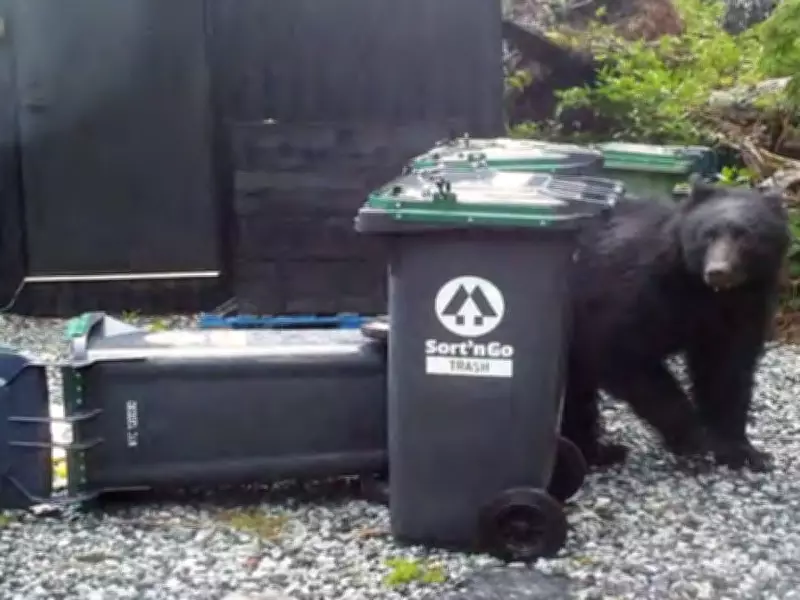
Ucluelet Records Highest Black Bear Fatalities in British Columbia for 2025
The small coastal tourist community of Ucluelet, located on the west coast of Vancouver Island, has unfortunately earned a grim distinction. According to data from the B.C. Conservation Officer Service, Ucluelet was the deadliest community in the province for black bears during the 2025 calendar year.
Alarming Statistics and Provincial Context
Conservation officers were forced to kill 13 black bears within Ucluelet last year due to public safety concerns. This sobering figure places the town of approximately 2,000 residents at the top of a list no community wishes to lead. For comparison, Campbell River and Sechelt ranked second with seven bears killed, while nearby Tofino recorded two black bear fatalities.
Across British Columbia, conservation officers euthanized a total of 211 black bears in 2025. This number includes 178 animals killed for public safety reasons and 33 that were critically injured, typically by vehicles. While this represents the lowest provincial total since statistics were first published online in 2011, the concentration of incidents in Ucluelet remains a significant concern.

Root Causes and Community Responsibility
Wildlife experts point directly to human behavior as a primary contributor to the conflict. Sergeant Daniel Eichstadter of the Conservation Officer Service reported that of the 268 black bear reports in the Ucluelet area, 104 were directly related to garbage issues. This highlights a critical failure in proper waste management that attracts bears into human settlements.
Bob Hansen of WildSafe B.C. notes that human-bear conflicts in Ucluelet have evolved since the implementation of the residential garbage cart system in fall 2022. A very high percentage of these carts are not properly anchored to solid structures, creating an easy target for bears to access. This single oversight, according to Hansen, initiates a dangerous learning path where bears develop break-in skills that ultimately lead to lethal outcomes.
Community Response and Proposed Solutions
Abby Fortune, Ucluelet's director of community planning, emphasizes that the district takes this issue very seriously. Municipal staff are currently drafting a wildlife attractant bylaw and exploring several proactive measures. These include discussions with developers of a new housing complex to create a pilot project for communal garbage collection, which could significantly reduce individual household attractants.
The district is also considering contracting a wildlife safety response officer to enhance public education and support enforcement of environmental laws. This approach recognizes that responsibility cannot fall solely on the under-resourced B.C. Conservation Officer Service.
Broader Implications for Tourism and Reputation
Lesley Fox, executive director of the Association for the Protection of Fur-Bearing Animals, expresses particular concern about the town's reputation. Protecting bears is really a shared responsibility, Fox states, noting that Ucluelet's position at the top of this list reflects poorly on a community that depends heavily on tourism. Visitors are drawn to the area precisely for its natural beauty and wildlife, making these fatalities fundamentally incompatible with the town's values and economic interests.
Fox advocates for substantial investment in education, infrastructure, and enforcement, warning that there is genuine reputational risk at stake. The hope is that the community can come together to implement effective solutions that protect both residents and wildlife, turning this troubling statistic into an opportunity for improved coexistence.