A disturbing trend of unethical wildlife photography is posing a significant new threat to one of the planet's most visually unique amphibians: the rare Galaxy Frog.
The Starlit Amphibian Under Pressure
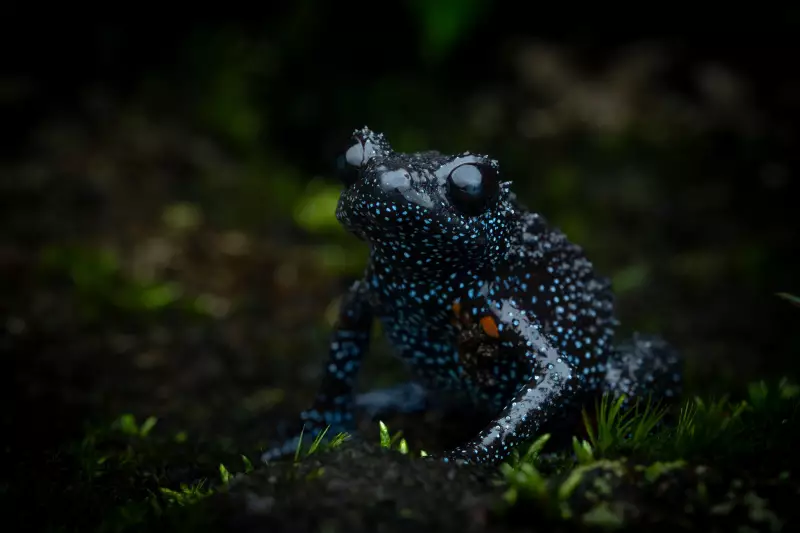
Native exclusively to the Western Ghat mountain range in southern India, the Galaxy Frog (Melanobatrachus indicus) is renowned for its spectacular dark skin speckled with tiny, bright spots that resemble a starry night sky. This distinctive appearance, however, has made it a coveted subject for photographers, leading to harmful encounters.
According to a report highlighted by CNN on December 18, 2025, certain photographers are prioritizing the perfect shot over the well-being of the species. Their intrusive methods are disrupting the frogs' sensitive habitats and causing them undue stress, adding to the existing pressures of habitat loss and climate change.

Disruptive Practices in Fragile Habitats
The core of the issue lies in the methods employed to capture images of these elusive, nocturnal creatures. To get clear, close-up photographs, some individuals are reportedly manipulating the environment, disturbing the frogs during their critical resting periods, and using bright, continuous lighting that can disorient and harm the amphibians.
These actions are not merely a nuisance; they can have serious physiological consequences for the frogs, affecting their feeding, breeding, and predator avoidance behaviors. For a species with a limited and fragmented range, such persistent disturbances can have population-level impacts.
A Call for Ethical Wildlife Engagement
This situation underscores a broader conflict within nature photography and eco-tourism: the balance between documentation and conservation. The plight of the Galaxy Frog serves as a stark reminder that the pursuit of imagery must never come at the expense of the subject's welfare.
Conservationists and ethical photographers are urging for stricter adherence to guidelines that prioritize minimal disturbance. This includes using appropriate lenses to maintain distance, employing low-impact lighting techniques like red filters, and always leaving the habitat exactly as it was found. The survival of remarkable species like the Galaxy Frog depends on respectful observation, not disruptive intrusion.