Newborn Southern Resident Orca Calf Spotted in Strait of Juan de Fuca
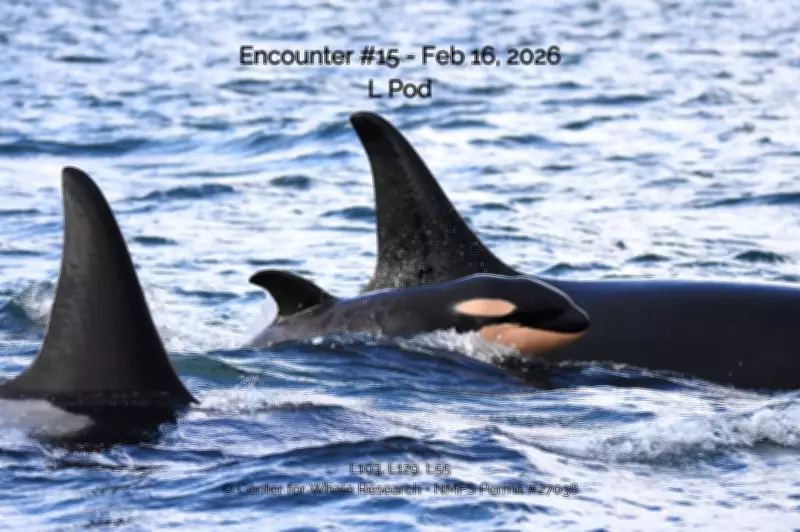
A newborn southern resident orca calf has been observed in the waters off Vancouver Island, providing a glimmer of hope for the critically endangered population. The calf was photographed on February 16, 2026, in the Strait of Juan de Fuca, according to images released by the Center for Whale Research.
Significance of the Sighting
The southern resident orca population, which frequents the coastal waters of British Columbia and Washington State, has been struggling with declining numbers due to factors such as prey scarcity, pollution, and underwater noise from vessel traffic. This newborn calf represents a vital addition to the group, which currently consists of only a few dozen individuals. Researchers emphasize that every new birth is crucial for the long-term survival of this iconic species.
Details of the Observation
The calf was spotted during a routine monitoring expedition by the Center for Whale Research. The organization, which has been tracking these orcas for decades, captured clear images showing the young whale swimming alongside its mother. The sighting occurred in the Strait of Juan de Fuca, a key habitat area for the southern residents. While the exact age and health of the calf are still being assessed, initial observations suggest it appears vigorous and well-integrated into the pod.

Conservation Challenges and Efforts
Southern resident orcas face numerous threats that complicate their recovery:
- Chinook Salmon Decline: These orcas primarily feed on Chinook salmon, whose populations have been dwindling due to overfishing and habitat loss.
- Pollution: Toxins like PCBs accumulate in their blubber, affecting reproduction and immune function.
- Noise Pollution: Vessel traffic disrupts their echolocation, making it harder to hunt and communicate.
Conservationists are advocating for enhanced protection measures, including:
- Strengthening salmon restoration projects.
- Implementing stricter regulations on vessel speeds and distances.
- Reducing pollutant runoff into marine environments.
Broader Context and Future Outlook
This sighting comes amid ongoing efforts by governmental and non-governmental organizations to bolster the southern resident population. While the birth is a positive development, experts caution that sustained conservation actions are necessary to ensure the calf's survival and the population's recovery. Continued monitoring will be essential to track the calf's progress and assess the effectiveness of current protection strategies.
The discovery underscores the importance of long-term research and proactive conservation in safeguarding marine biodiversity. As climate change and human activities continue to impact ocean ecosystems, such sightings remind us of the urgency to protect vulnerable species like the southern resident orcas.