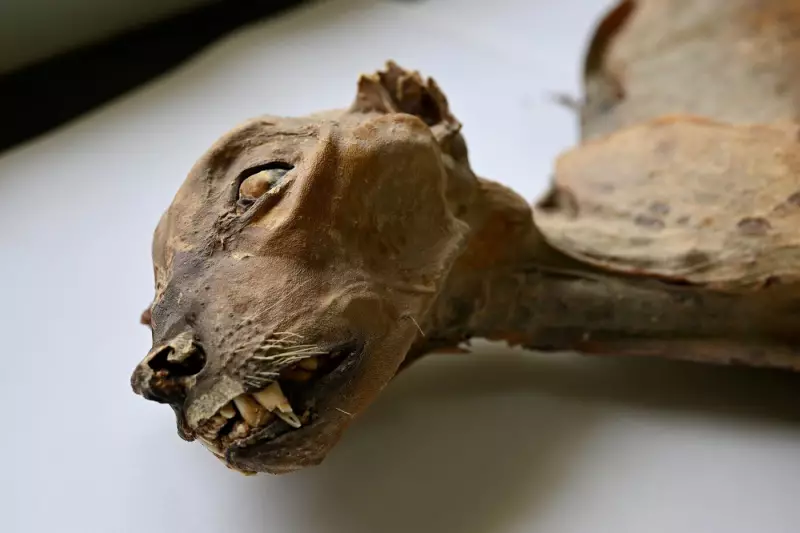
In a discovery that reads like a page from a natural history thriller, scientists have unearthed mummified remains of cheetahs in caves within Saudi Arabia. This remarkable find, detailed in the journal Communications Earth and Environment, is shedding profound new light on populations of the big cat that have long since vanished from the region.
A Window into a Lost World
The mummified specimens, found in a state of exceptional preservation within the arid cave environments, provide a rare and direct biological record. Unlike fossilized bones, these mummies retain soft tissue, offering a much richer source of genetic and morphological data. Researchers, including those involved with the study led by Ahmed Boug, can now analyze details that were previously inaccessible.
This allows scientists to construct a far more accurate picture of the cheetahs that once roamed the Arabian Peninsula. The analysis focuses on understanding their genetic diversity, physical characteristics, and how they relate to modern cheetah populations in Africa and Iran. The findings are pivotal for piecing together the puzzle of the species' historical range and the factors that led to their local extinction in Saudi Arabia.

Implications for Modern Conservation
The study of these ancient cats is not merely an academic exercise. The data gleaned from the mummies has significant, real-world implications for the conservation of critically endangered cheetahs surviving today. By understanding the genetic health and adaptability of past populations, conservationists can better assess the vulnerabilities of current groups.
"This is a unique opportunity to look back in time," the research suggests. The insights can inform breeding programs and habitat restoration efforts aimed at ensuring the species' future. It highlights how historical ecology—using the past to understand the present—is becoming an increasingly vital tool in the fight against biodiversity loss.
Scientific Techniques and Future Research
Employing advanced techniques in paleogenetics and radiocarbon dating, the team is working to pinpoint the age of the mummies and sequence their DNA. This will help establish a timeline for their existence and eventual disappearance from the region, potentially linking it to climatic changes or human activity.
The discovery, reported by The Associated Press in January 2026, underscores the importance of remote and unexplored regions as archives of Earth's biological history. It opens the door for further expeditions and studies, suggesting that other caves in the area may hold similar secrets waiting to be uncovered.
For wildlife biologists and conservationists in Canada and globally, this discovery reinforces the interconnectedness of ecosystems across time and geography. Protecting today's endangered species requires understanding the stories of those we have already lost.