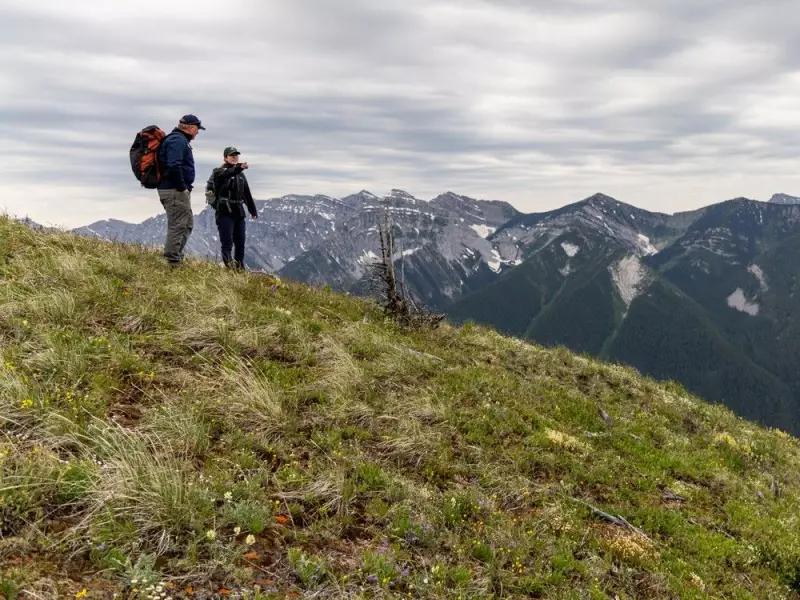
In a landmark achievement for Canadian conservation, more than 450 square kilometres of forestry land in southeastern British Columbia has been permanently secured against logging. The Nature Conservancy of Canada (NCC) announced the completion of the multi-decade project this week, heralding it as one of the nation's largest private land conservation efforts.
A Sanctuary for Wildlife and Ancient Forests
The protected area, known as the Kootenay Forest Lands, is situated within the traditional territory of the Ktunaxa Nation, which has formally endorsed the initiative. This vast landscape serves as crucial habitat for iconic and at-risk species, including grizzly bears, wolverines, lynx, and bull trout. It encompasses rare high-elevation grasslands and ancient forests that have stood for centuries.
A significant hydrological feature is also preserved: 930 kilometres of streams that feed into the renowned Elk River, a world-class destination for fly fishing. Protecting these waterways is vital for ensuring clean water and bolstering native fish populations for generations to come.

Two Decades of Collaboration and a $90 Million Investment
This conservation victory is the result of over twenty years of partnership between First Nations, local communities, governments, and private donors. The total project cost reached approximately $90 million, funded through a collaborative model.
Major contributions included $22.6 million from Environment and Climate Change Canada, $7 million from the B.C. government, and a $20 million commitment from Elk Valley Resources, a company operating coal mines in the region. The Nature Conservancy of Canada raised the remaining funds from other businesses, foundations, and private individuals.
Integrating a Critical Link in a Continental Corridor
The newly protected Kootenay Forest Lands now form a key piece in a much larger conservation puzzle. The project contributes to an already established network of over 7,000 square kilometres of protected land stretching through the Canadian Rocky Mountains and into Montana, U.S.A. This connectivity is essential for allowing wildlife to roam and for building ecosystem resilience against climate change.
Catherine Grenier, President of the Nature Conservancy of Canada, stated that the project exemplifies the power of collaboration. "Projects like this turn ambition into action: protecting nature, supporting communities, and proving that conservation is one of our most powerful climate solutions," Grenier said. "It's proof of what we can accomplish when we come together for nature."
The agreement ensures the Kootenay Forest Lands will be held under conservation stewardship indefinitely, delivering ecological, cultural, and community benefits on a scale rarely seen in Canada.