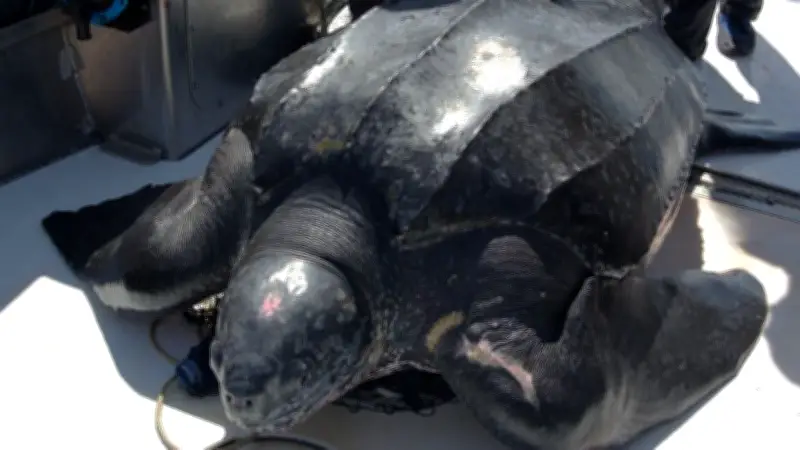
Eight leatherback sea turtles tagged off the coast of Nova Scotia have been tracked to nesting sites near the equator, according to researchers from Fisheries and Oceans Canada (DFO). The findings provide critical insights into the migration patterns of these endangered creatures.
Tagging Efforts in Atlantic Canada
Scientists attached satellite tags to the turtles during summer feeding expeditions in the waters off Nova Scotia. The devices transmitted location data for several months, revealing that the turtles traveled thousands of kilometers southward to tropical beaches where they laid their eggs.
“This is the first time we have documented such a direct link between our local feeding grounds and distant nesting sites,” said Dr. Kathleen Martin, a marine biologist with DFO. “It underscores the importance of protecting these turtles throughout their entire range.”

Migration Route
The tagged turtles followed a consistent path along the Atlantic coast, passing near the Caribbean islands before reaching nesting beaches in countries like Costa Rica, Panama, and Colombia. The journey took between 60 and 90 days, with the turtles traveling at an average speed of 30 kilometers per day.
One turtle, named “Halifax,” traveled over 4,000 kilometers to a beach in Suriname, where she laid approximately 100 eggs. Another, “Lunenburg,” nested on the coast of French Guiana.
Conservation Implications
Leatherback sea turtles are listed as vulnerable globally and endangered in Canada. They face threats from fishing gear entanglement, plastic pollution, and climate change, which can alter beach temperatures and affect hatchling sex ratios.
“By identifying these critical nesting sites, we can work with international partners to enhance protection measures,” said Dr. Martin. “It is a collaborative effort to ensure the survival of this species.”
The DFO plans to continue the tagging program in coming years to gather more data on turtle movements and to assess the effectiveness of conservation strategies.