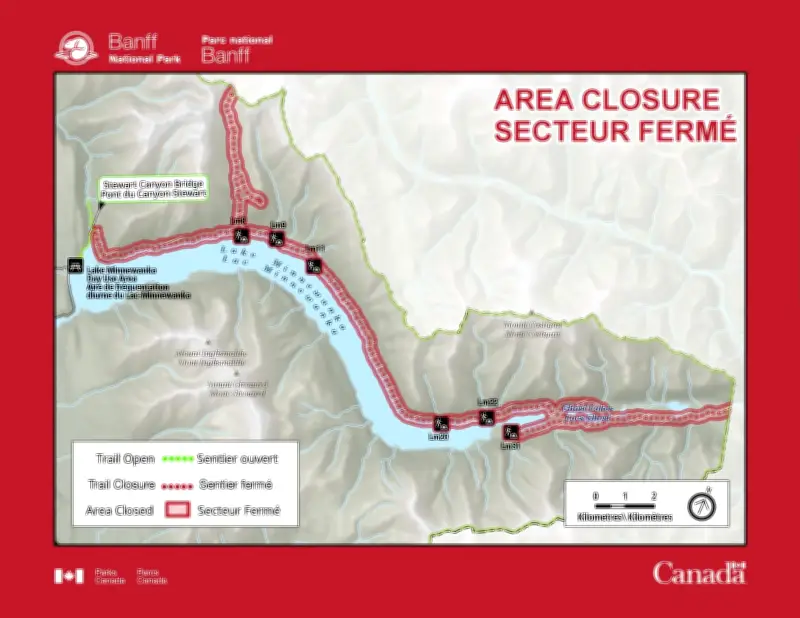
Parks Canada has closed a significant portion of Lake Minnewanka's shoreline in Banff National Park as of Tuesday, following multiple sightings of hungry black bears in the area. The closure aims to ensure public safety while the bears are active.
Bear Activity Prompts Immediate Action
The decision to close the shoreline came after reports of several black bears displaying food-seeking behavior near popular hiking and camping spots. Parks Canada officials emphasized that the bears are in a state of heightened hunger, which increases the risk of human-wildlife encounters.
“We are taking this precautionary measure to protect both visitors and the bears,” said a Parks Canada spokesperson. “It is crucial to give these animals space, especially during periods when natural food sources may be scarce.”

Impact on Visitors and Local Tourism
The closure affects a major stretch of the lake’s shoreline, which is a key attraction for tourists and locals alike. Visitors are advised to avoid the area and seek alternative recreational activities within the park. Parks Canada is monitoring the situation closely and will reopen the shoreline once the bears move on and the risk diminishes.
Local tourism operators have expressed concern about the potential impact on summer bookings, but most support the closure as a necessary safety measure. “We understand the importance of wildlife management,” said a local guide. “The bears’ safety is just as important as ours.”
Safety Recommendations
Parks Canada urges all visitors to Banff National Park to follow wildlife safety guidelines, including storing food properly, keeping a safe distance from animals, and reporting any bear sightings to park authorities. The agency also reminds the public that feeding wildlife is illegal and dangerous.
This incident highlights the ongoing challenges of balancing human recreation with wildlife conservation in national parks. As climate change affects natural food cycles, bear encounters may become more frequent, requiring adaptive management strategies.